The Acropolis Statues

Explore the artistic richness of the Acropolis statues, such as the Caryatids or the controversial Elgin Marbles. Here, you will understand which pieces you can see on the ground and which require a visit to the museum.

The Porch of the Caryatids

Why is there so much controversy surrounding the Acropolis sculptures?

Before visiting the Acropolis, you should know about a cultural conflict that has been open for decades between Greece and the United Kingdom. To understand it, one must travel back to the early 19th century and meet Thomas Bruce, better known as Lord Elgin, who was the British ambassador to the Ottoman Empire. At that time, Greece was under Turkish rule, and Elgin obtained a permit, the interpretation of which remains highly debated, to remove pieces from the temples.

What happened next changed the face of Athens forever. 

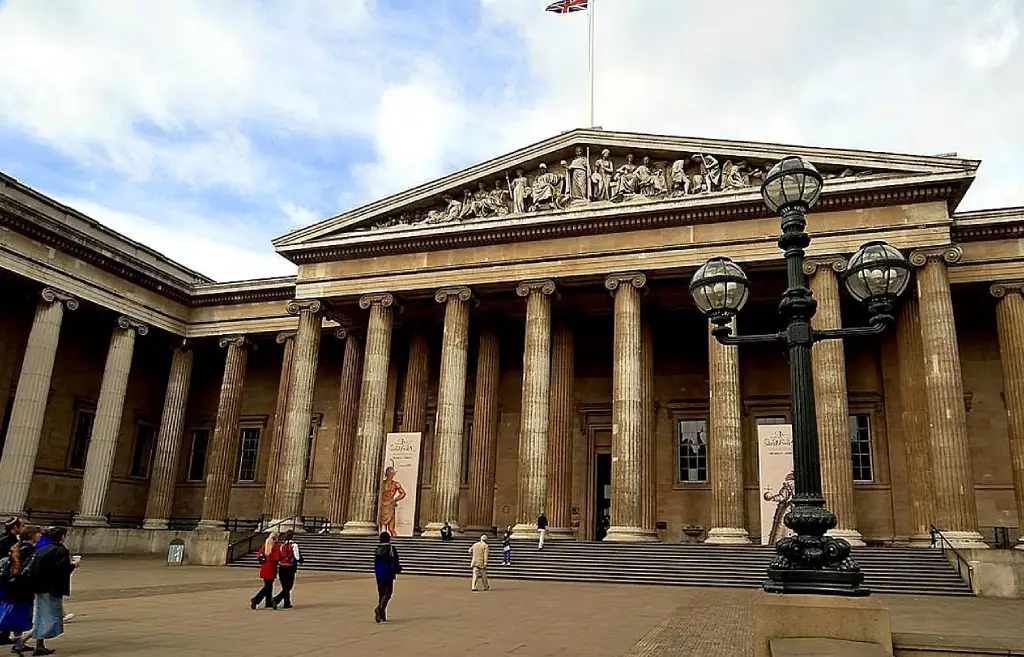
Elgin ordered the removal and transport of a large number of reliefs and figures, mainly from the Parthenon, but also from the Erechtheion, the Temple of Athena Nike, and the Propylaea. These pieces ended up being sold to the British government and, since 1817, the British Museum in London has exhibited them as one of its most prized collections.

Therefore, if you wonder where are the Parthenon marbles now, the answer is that they are divided: a significant portion is in London and the other in Athens.

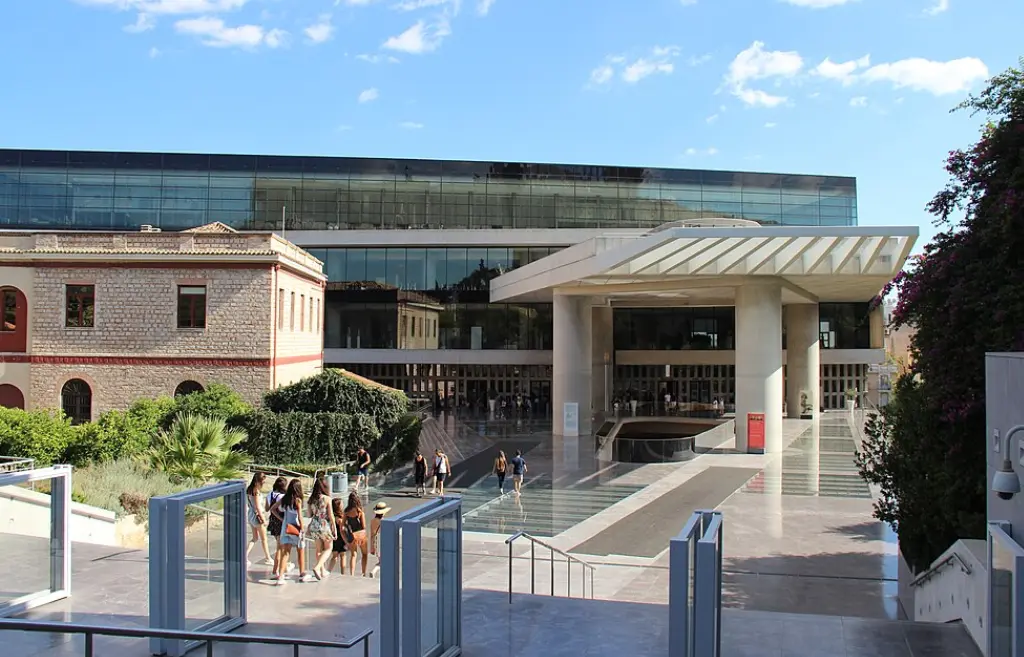
The Greeks argue that these works were looted illegally while the country was not sovereign, calling the act a dismemberment of a national monument. For its part, the British institution has always argued that Elgin saved the sculptures from destruction and neglect. However, with the opening of the new Acropolis Museum in 2009, Greece eliminated one of London’s technical arguments by demonstrating that it has state-of-the-art facilities to house and protect these masterpieces.

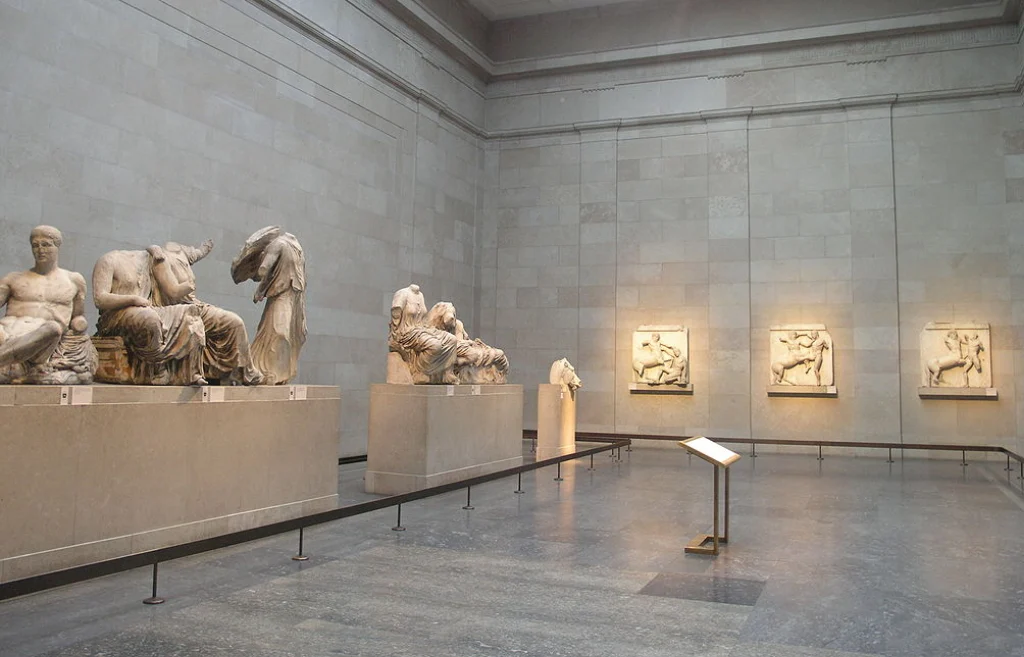
If you decide to visit, when you walk through the Parthenon Gallery in the Athenian museum, you will see something striking: curators have placed the original pieces that remained in Greece alongside plaster replicas of the Elgin Marbles. The color contrast between the original marble and the white plaster visually highlights everything that is missing. 

As one Reddit user put it: “On the top floor of the Acropolis museum there’s an empty plinth and a plaque that says the Parthenon (Elgin) marbles belong here, but instead, they’re at the British museum.”

It is a silent but powerful way to demand the reunification of an artistic set that was conceived as a narrative unity. Therefore, it is not just a matter of ownership, but of archaeological and artistic integrity, as many of these sculptures are part of a continuous frieze that told a specific story of the city.

Statues visible on the Acropolis Hill

When you finally climb to the top of the hill, you will notice that architecture dominates the landscape, but the Acropolis statues are still present, albeit in a different way than you might imagine. It is important to know that what you see today outdoors are, for the most part, highly accurate reproductions. The originals were moved to the museum years ago to protect them.

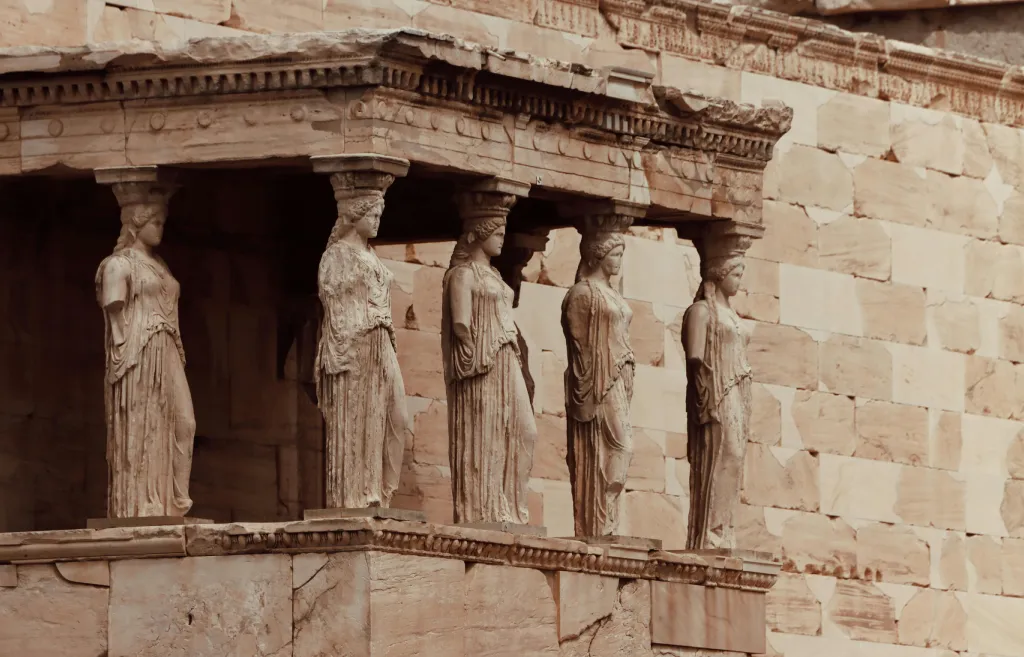
Each temple had its own sculptural decoration. In the Erechtheion, for example, you will see the iconic Caryatids supporting the weight of the south porch. They are magnificent and, despite being copies, they allow you to appreciate the scale and the original intention of the architects. The same applies to certain reliefs on the Temple of Athena Nike.

The Parthenon: Pediments and Metopes

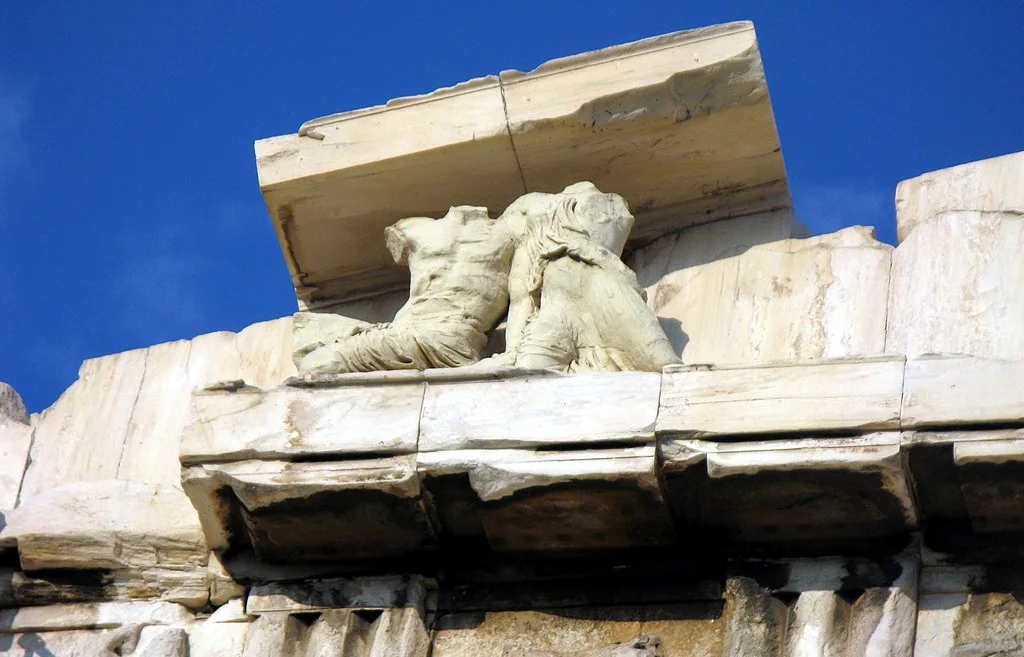
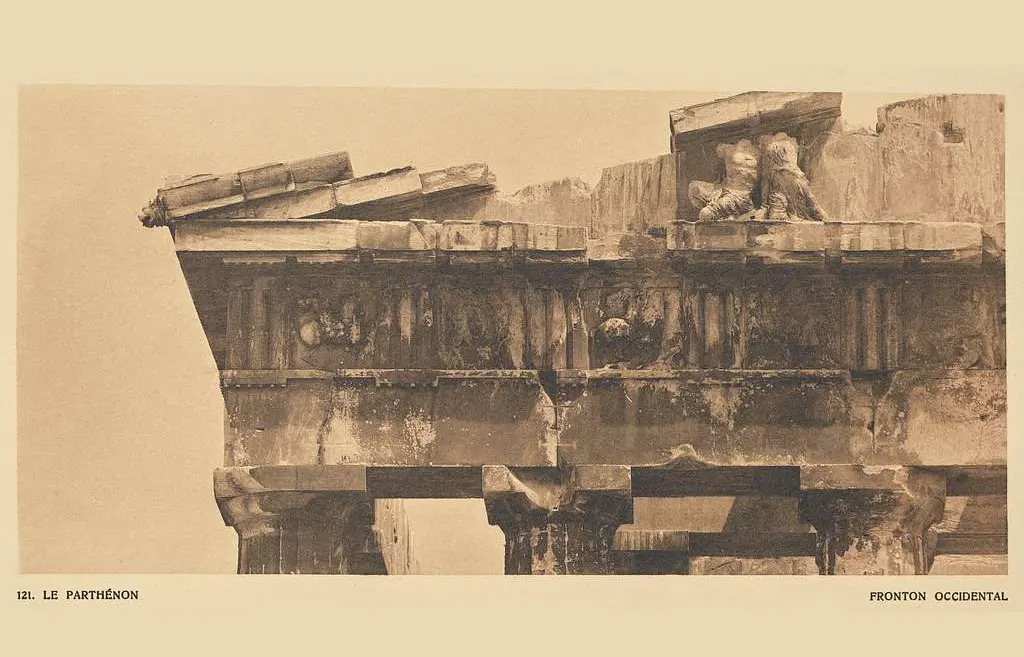
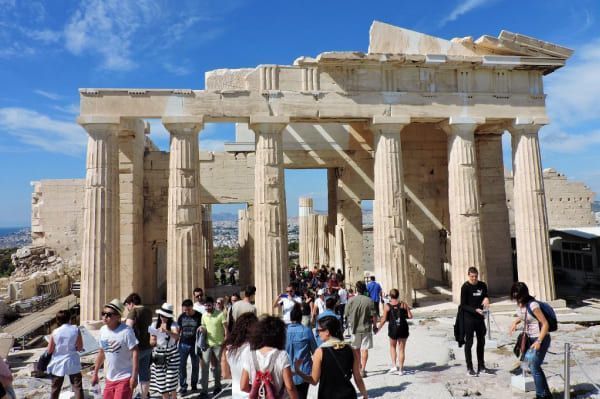
If you look at the upper ends of The Parthenon, in those triangular spaces called pediments, you will see some remains of human figures and horses. Originally, these spaces narrated two key moments: the birth of Athena from the head of Zeus on the east side, and the contest between Athena and Poseidon for control of the city on the west. Today, only eroded fragments remain on-site, but their mere presence gives you an idea of the grandeur of the ensemble.

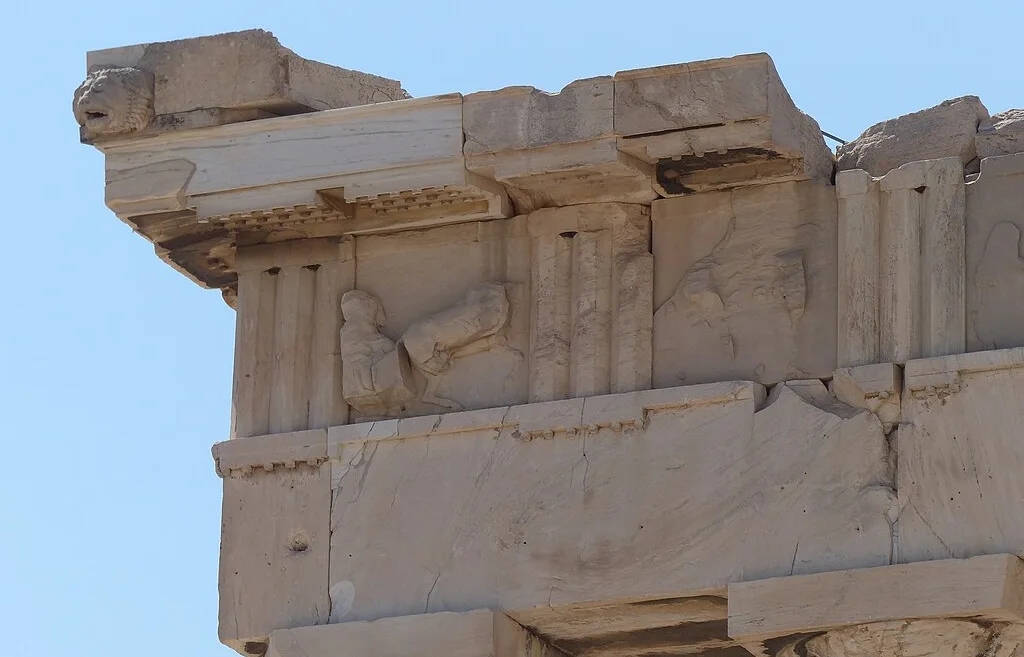
Just below the roof, on the sides of the temple, are the metopes. These are square panels sculpted in high relief, of which there were originally 92. They depicted mythical battles, such as the Gigantomachy or the Centauromachy, symbolizing the triumph of civilization and order over barbarism. Although many that remain on the building are badly damaged by centuries of wear and historical explosions, you can still appreciate the muscle tension and dynamic movement in the figures that have survived.

The Erechtheion: The Porch of the Caryatids

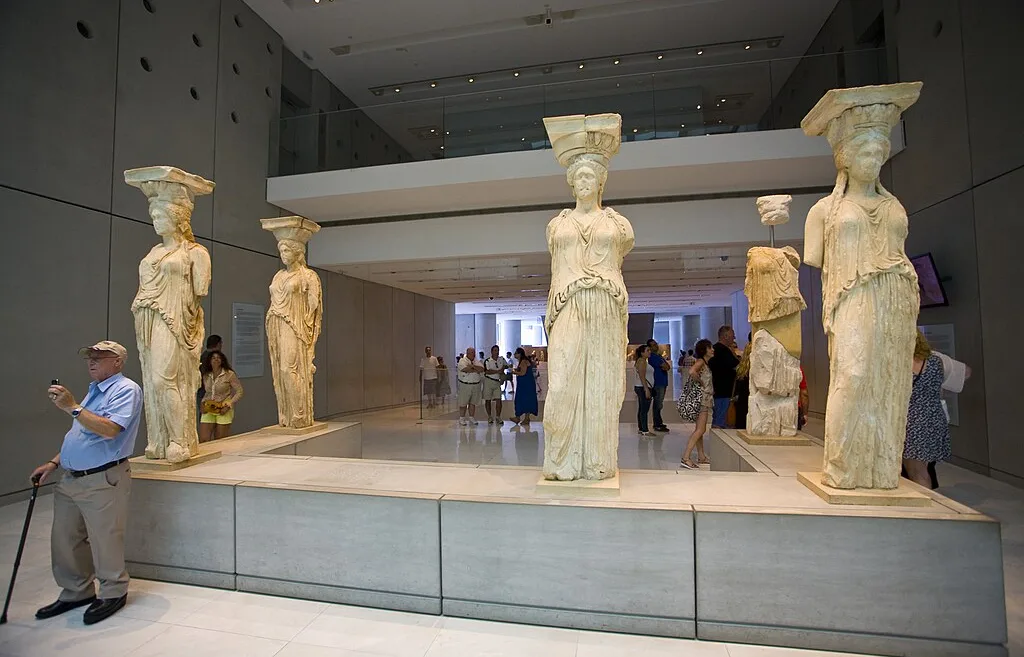
The Erechtheion is arguably the most elegant building on the sacred rock. What will strike you most is the famous Porch of the Maidens (Caryatids), where six female figures act as columns. Again, remember that the figures you see up there, exposed to wind and sun, are cast concrete replicas. The originals were removed in 1979 to prevent pollution from dissolving the Pentelic marble they were created from.

These statues represent women from Caryae, a city in Asia Minor, and are a marvel of ancient engineering. If you look at their posture, you will see they have one leg slightly bent, giving them an appearance of lightness despite supporting tons of stone on their heads. The Acropolis Museum preserves five of the originals, arranged so that you can walk around them and even see the intricate hairstyles on their backs. There is a very significant empty space in the exhibition, reserved for the sixth sister that Lord Elgin took and which remains in the British Museum today.

The Temple of Athena Nike: Friezes

This small temple, located right next to the Propylaea (the main entrance), is often ignored by visitors rushing toward the Parthenon. However, its reliefs are a jewel of delicacy. The frieze surrounds the top of the building and depicts battle scenes, both mythical and historical, including the Greek victory over the Persians. Unlike other temples, gods and humans mingle here in a very fluid way.

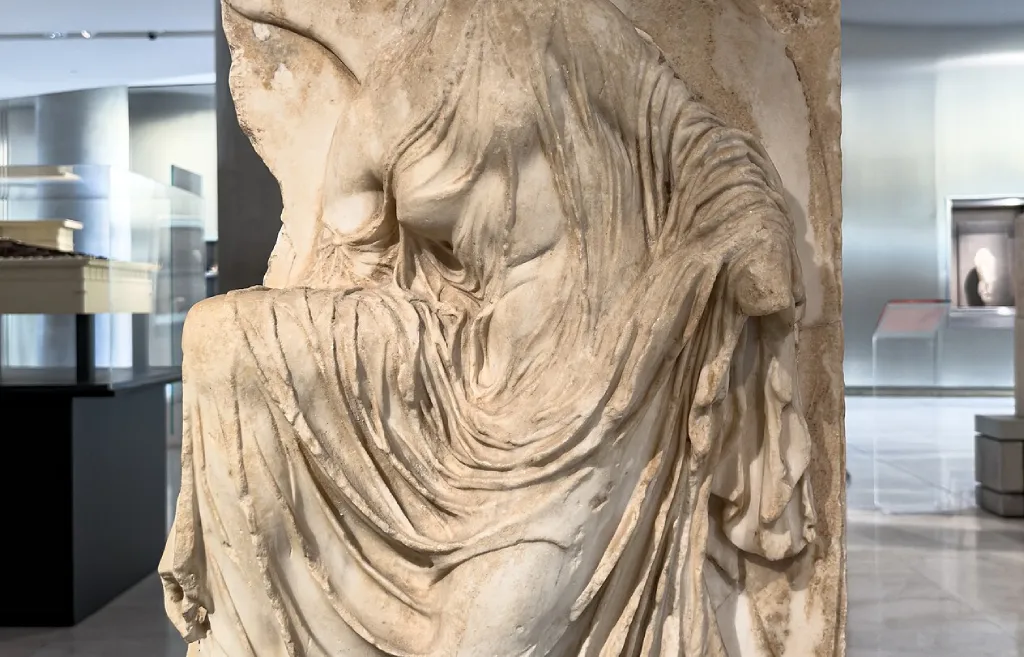
In the museum, you can see one of the most famous pieces that belonged to its balustrade, the “Nike Adjusting Her Sandal.” It is a low relief where the artist managed to make the marble look like wet, transparent fabric, revealing the form of the body beneath the folds of the dress.

Even though you can only see the structure and a few remains of the friezes in the current building, knowing what they represent helps you understand that this place was dedicated to celebrating Athens’ victory and its gratitude toward its patron goddess. Our recommendation is that, when you visit, you take a few minutes to observe the precision of the reliefs that still withstand the passage of time.

Must-see sculptures in the Acropolis Museum

Once you have descended from the hill, visiting the Acropolis Museum is essential. Here, the Parthenon Marbles are displayed at eye level, allowing for a unique perspective. In addition to the original Caryatids, the museum houses world-renowned Acropolis statues and other artistic treasures that are sure to leave you speechless:

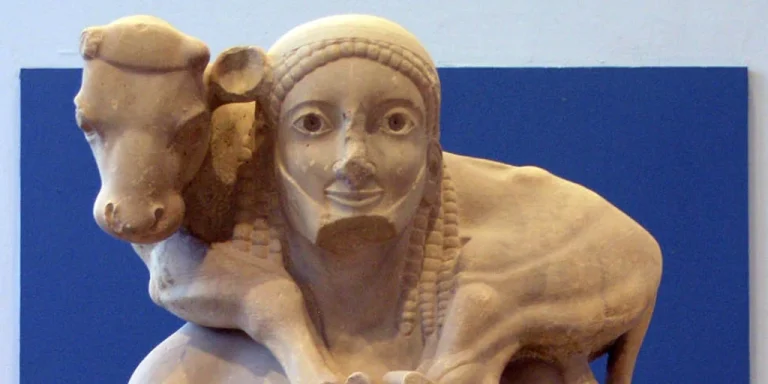
The Moschophoros

The Moschophoros

Also known as ‘The Calf-Bearer,’ it is a masterpiece of the Archaic period representing a young man carrying a calf on his shoulders. It is fascinating to observe the “Archaic smile” on his face, a typical feature of the era.

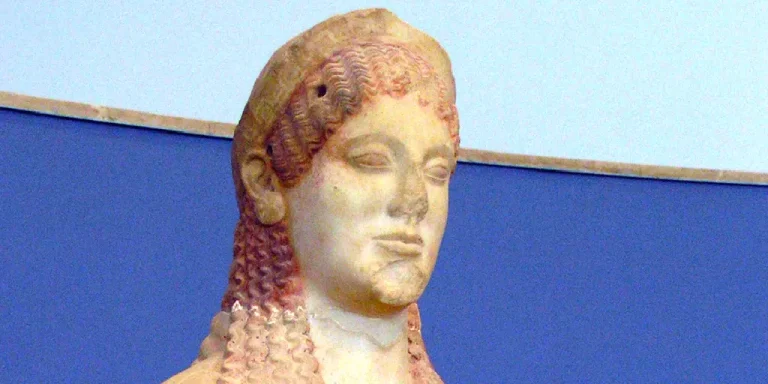
The Kore Collection

The Kore Collection

Figures of young women with meticulously decorated dresses. These statues still retain traces of their original polychromy in some spots, reminding us that the ancient world was full of color!

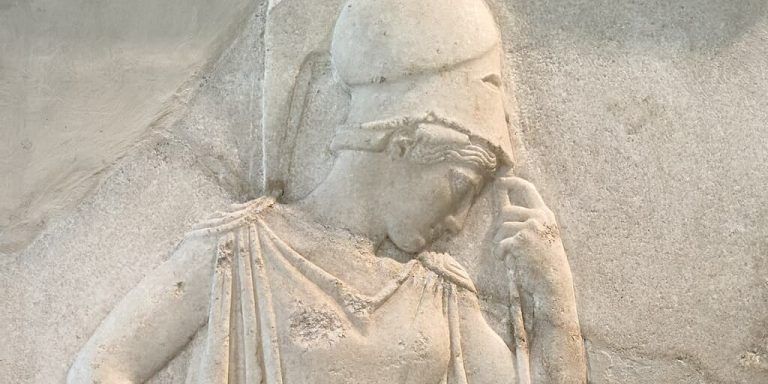
Mourning Athena or Pensive Athena

The Mourning Athena

It is also known as the ‘Pensive Athena’. In this relief, the goddess appears leaning on her spear with her head bowed before a stele, showing a vulnerability and humanity unusual in depictions of divinities.

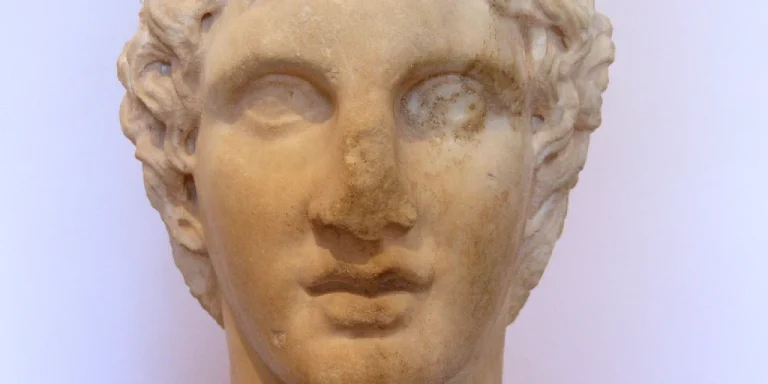
Statue of Alexander the Great in the Acropolis Museum.

Head of Alexander the Great

A sculptural fragment in Pentelic marble representing the famous Macedonian king. Dating from the late Classical period, it is characterized by an idealized face and flowing hair, reflecting both youth and power.

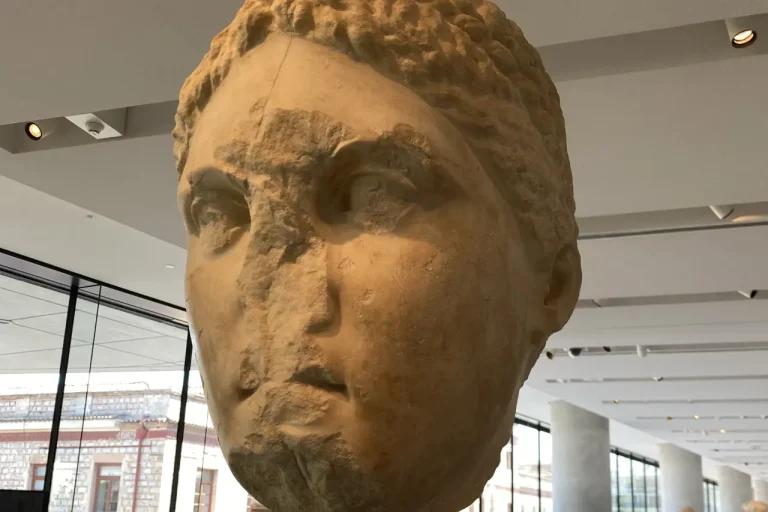
Statue of the head of Artemis Brauronia

Head of Artemis Brauronia

Attributed to the sculptor Praxiteles, this 4th-century BC piece stands out for its soft features and naturalism, associated with the goddess’s sanctuary on the Acropolis.

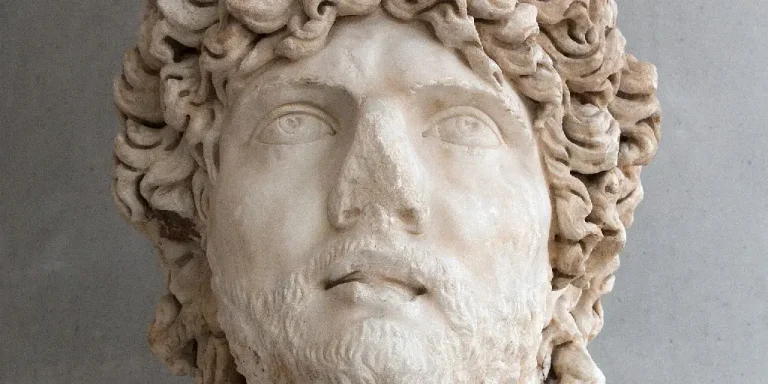
Head of a Priest

Head of a Priest

From the Roman period, this sculpture is distinguished by a double diadem, a symbol of religious authority, combining facial realism with symbolic status.

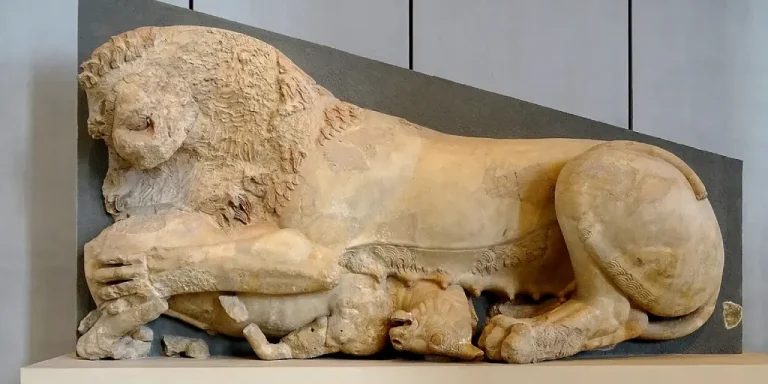
Statue of the Lioness and the Calf

Lioness and Calf

This limestone sculpture (c. 570 BC) was part of the Hekatompedon temple. It depicts a violent, symbolic scene of dominance influenced by Near Eastern artistic traditions.

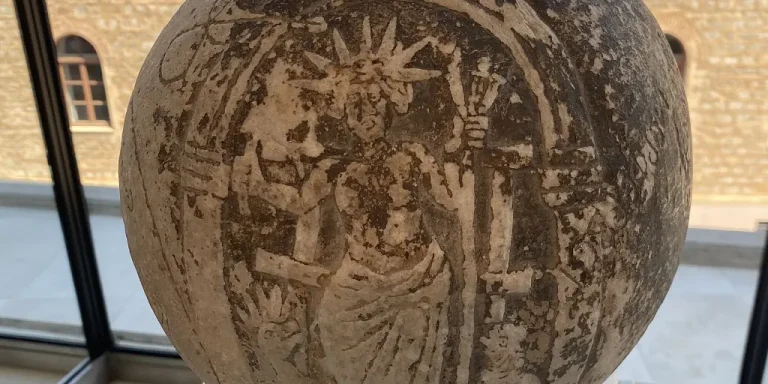
The Magic Sphere in the Acropolis Museum

The Magic Sphere

A Roman-period marble object found at the Theater of Dionysus. It is carved with complex magical and astral iconography, featuring the god Helios at the center as the sovereign of the cosmos.

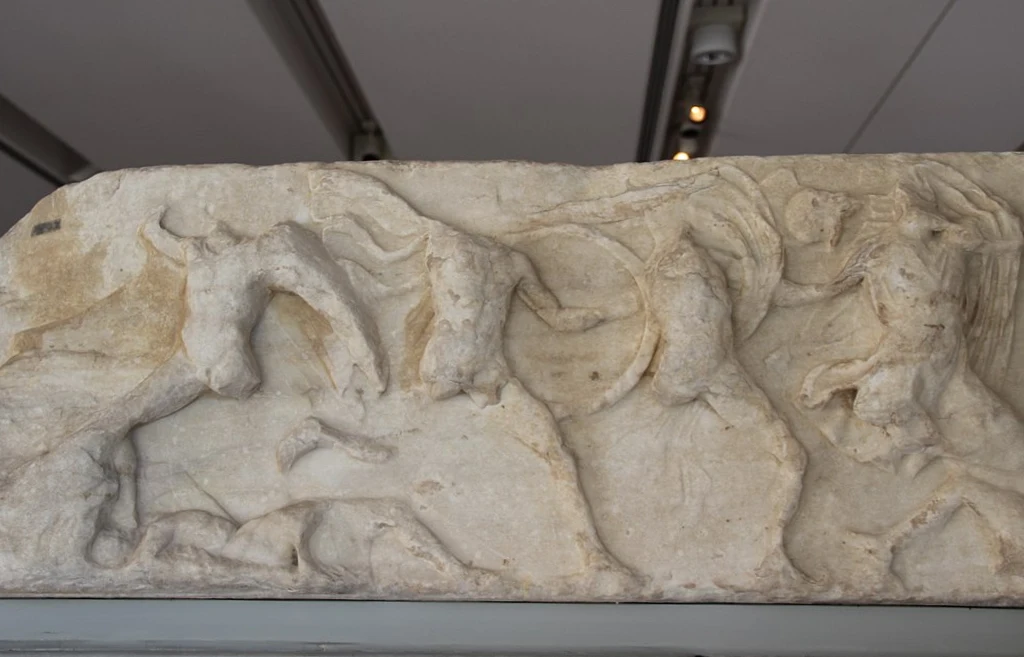
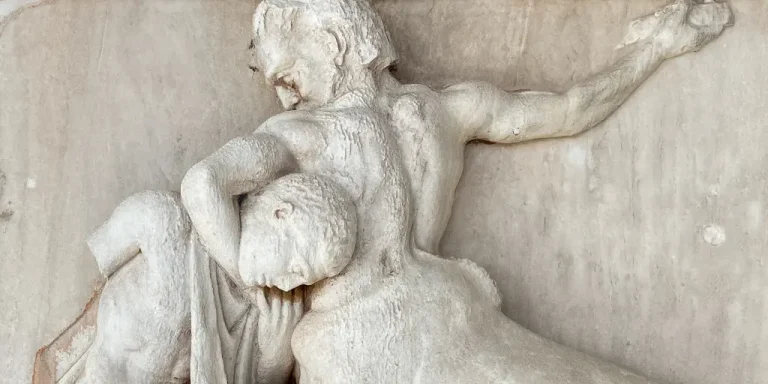
Parthenon south metope 1

Parthenon south metope 1

It depicts one of the most dynamic scenes of the Centauromachy, the mythical battle between the Lapiths (a people from Thessaly) and the centaurs. It is a marble piece, sculpted in high relief.

More information

The Acropolis ticket grants visitors access to the archaeological site of the Acropolis and its slopes, including the Parthenon, the Theater…

The Theater of Dionysus is one of the most important archaeological sites in Athens, Greece…

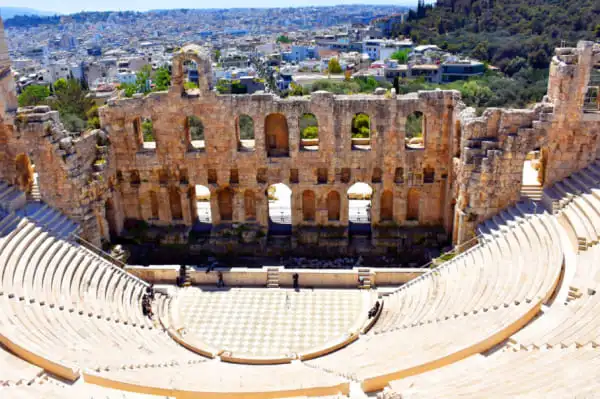
The Odeon of Herodes Atticus is a beautifully preserved Roman-era amphitheater located…