
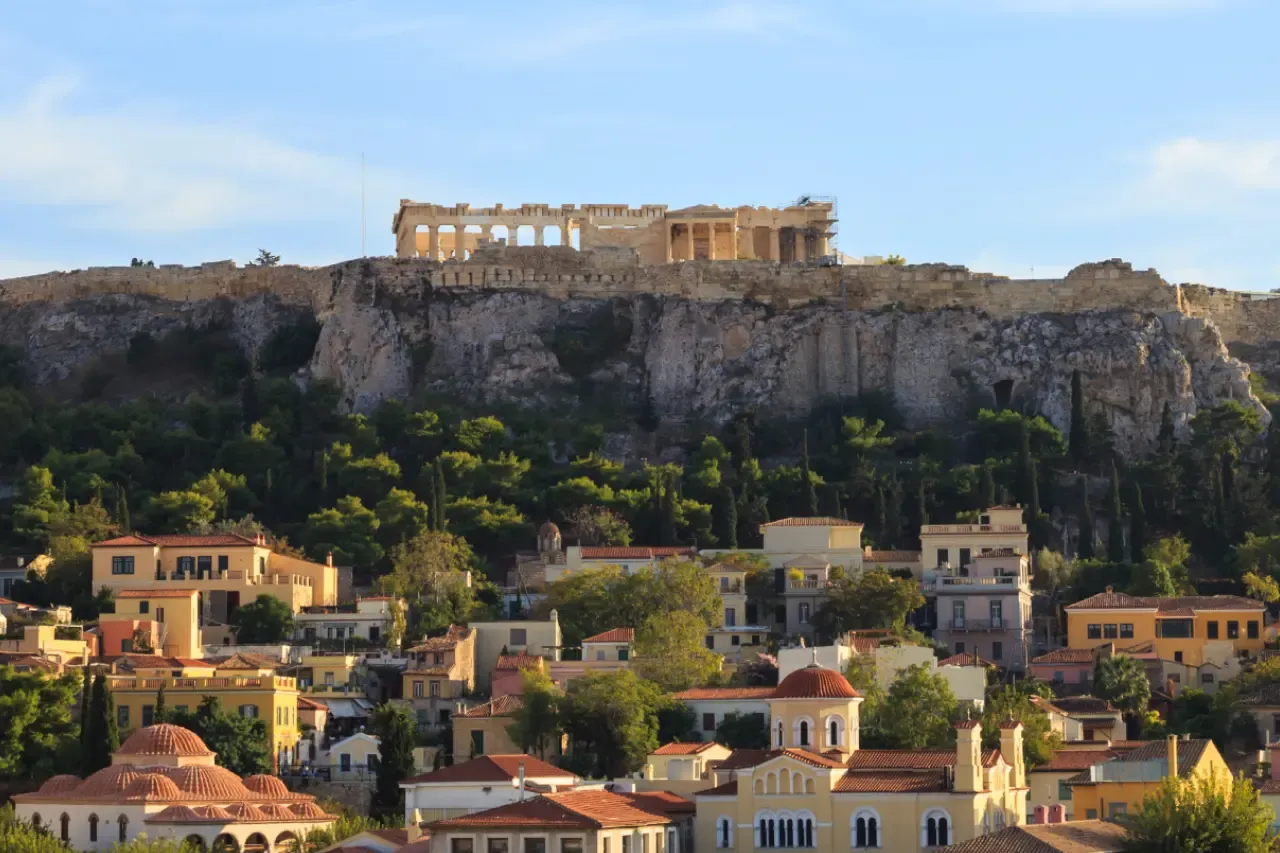
Things to do near the Acropolis
After exploring the ancient ruins, you can continue your journey through the surrounding historic neighborhoods and cultural landmarks. Discovering the various things to do near the Acropolis allows you to fully immerse yourself in the atmosphere of Athens, from local markets to world-class museums just a short walk away.
All the must-see near the Acropolis
So you’ve already walked around the Acropolis and taken in all its magnificence. What now? The great news is that Acropolis is not the end of the road. The areas surrounding the famous hill are packed with history, incredible food, and some of the best views in Athens:
Exploring the Acropolis Museum
The Acropolis Museum is far from a traditional gallery, housing over 4,000 artifacts, including the original Caryatids and sections of the Parthenon frieze. Its architectural brilliance shines in the top-floor Parthenon Gallery, which is perfectly aligned with the ancient temple above. This allows visitors to view the sculptures while seeing the monument itself through the glass.
Located in the Makrygianni area, it is the perfect follow-up to an Acropolis tour. The museum typically opens at 9:00, and a 2-hour visit is recommended to appreciate the collection. Tickets and audio guides are available on-site or online, offering a seamless experience that bridges the gap between Greece's golden past and the present day.
Experiencing the Odeon of Herodes Atticus
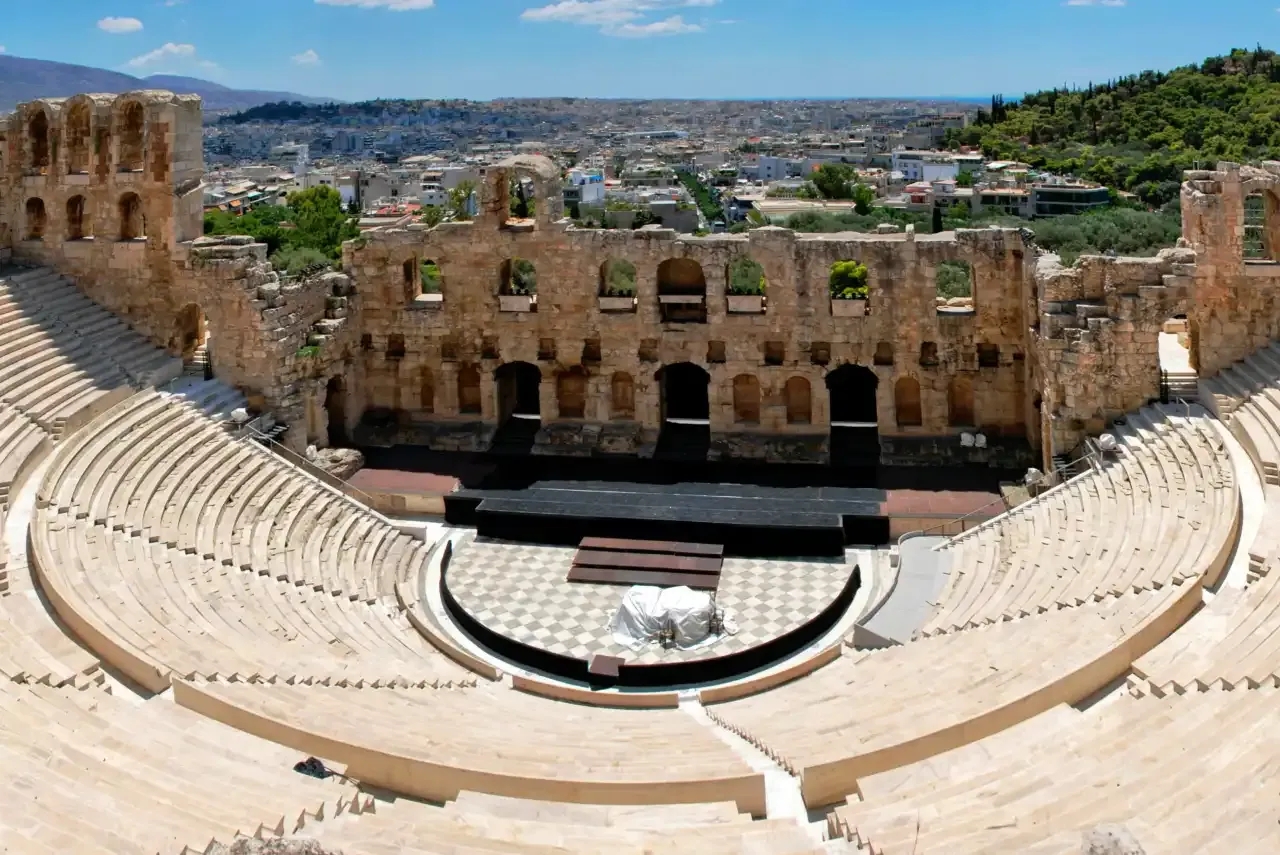
Nestled into the southwest slope of the Acropolis, the Odeon of Herodes Atticus, locals call it the “Herodeon”, tells a story that’s equal parts romance and resilience. Built between 160 and 174 AD by the immensely wealthy Tiberius Claudius Herodes Atticus, this magnificent theater was his memorial to his wife, Appia Annia Regilla. Love expressed in marble and stone.
The original design featured a three-story stage building with soaring arches, a semi-circular orchestra paved in black and white marble, and seating for nearly 5,000 spectators.
But here’s the catch: you can’t just wander in whenever you’d like. Entry is generally restricted to ticket holders for performances, which actually makes any visit more special.
Walking through the Ancient Agora
Walking through the Ancient Agora
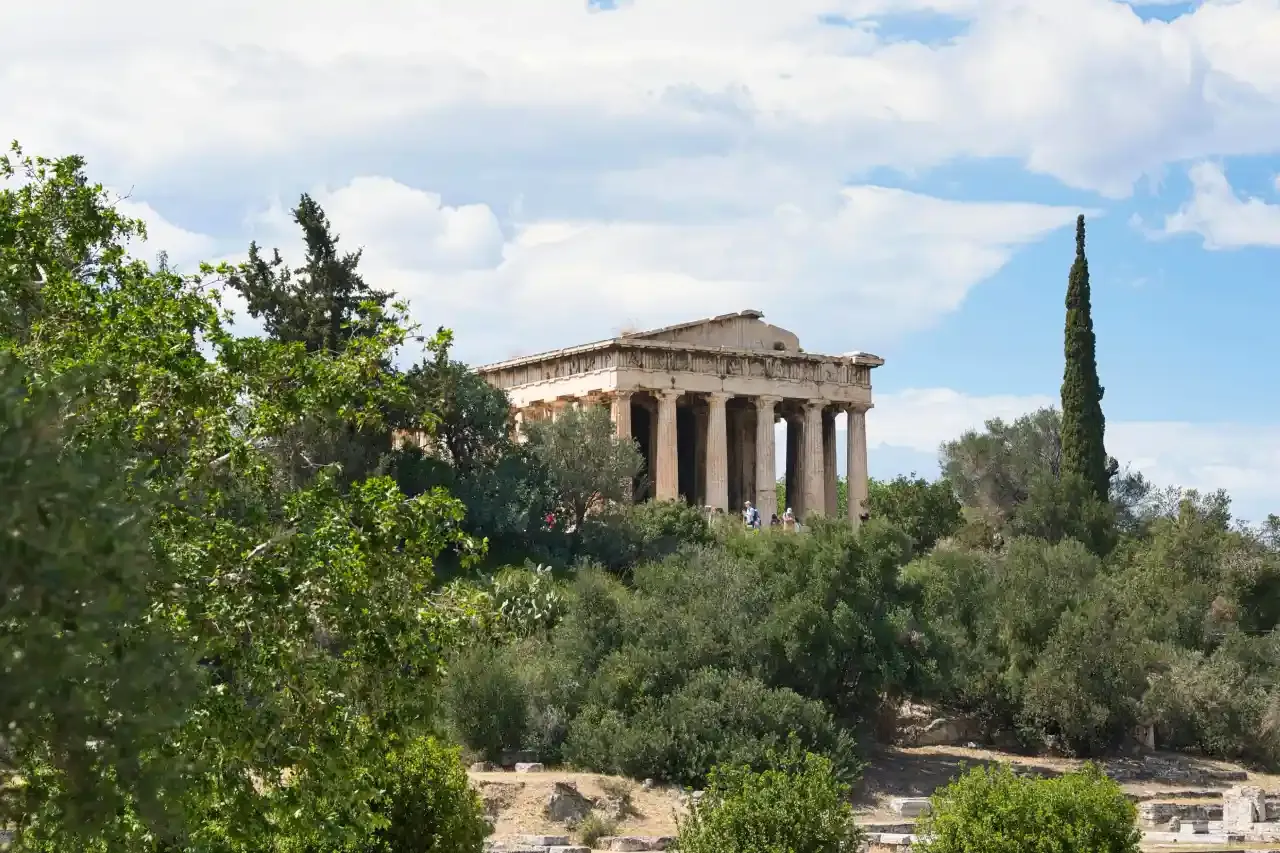
If you want to understand how ancient Athenians actually lived, how democracy worked in practice, where people shopped, argued, voted, you need to walk through the Ancient Agora. This was the true center of classical Athens. The name literally means “gathering place,” and that’s exactly what it was: marketplace, political arena, social hub all rolled into one.
As you wander the site, you’ll encounter the Stoa of Attalos, a reconstructed 2nd-century BCE covered colonnade that once housed shops. Today it holds the Museum of the Ancient Agora, where coins, pottery, and inscriptions help you picture the bustling scene that once filled these spaces.
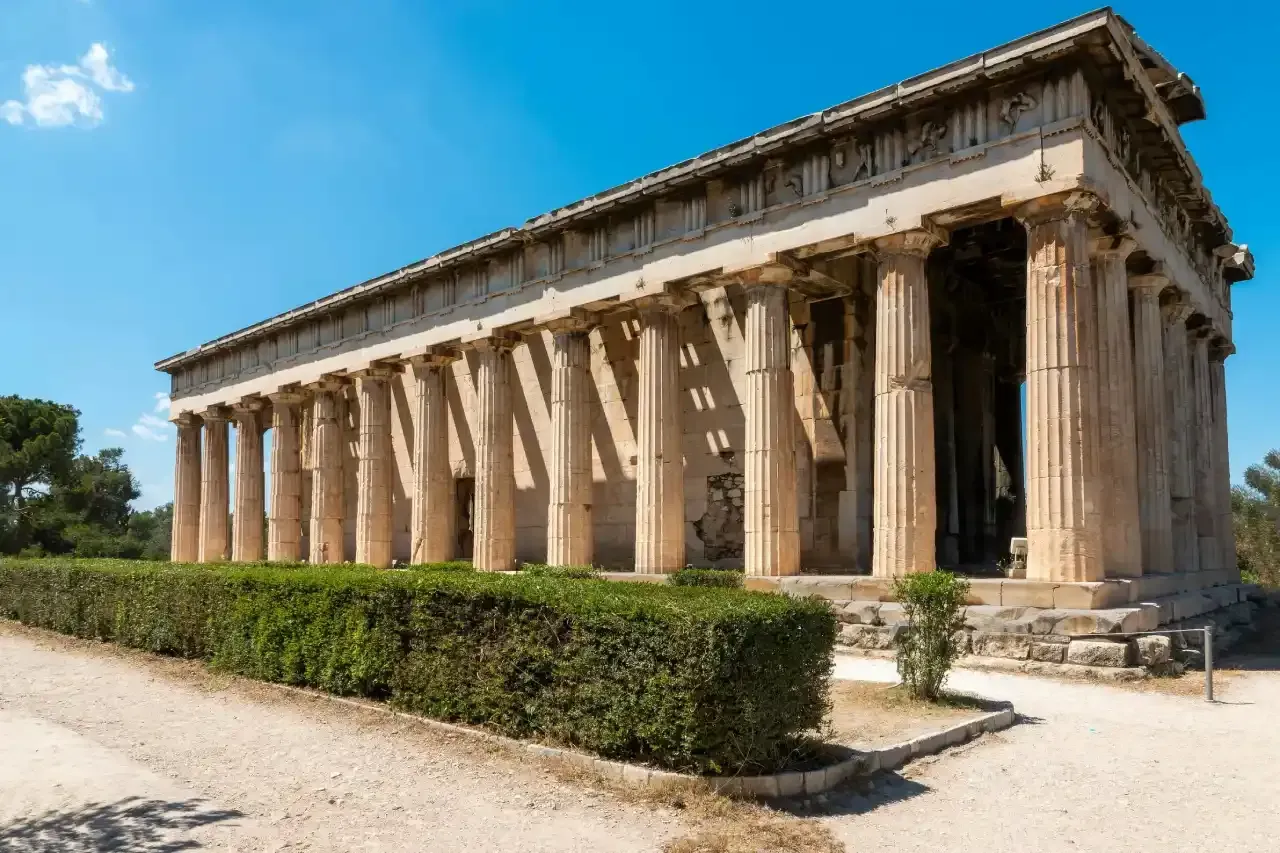
The Temple of Hephaestus: Athens' best-preserved ancient temple
The Temple of Hephaestus stands almost completely intact. Built in the late 5th century BCE and dedicated to Hephaestus (god of metalwork) and Athena, this Doric temple sits on a small hill at the Agora’s northwest corner.
Walk up to it and you’ll get a rare sense of how these classical temples actually looked when they were new, the proportions, the columns, the pediments all in place. Sometimes called the Theseion, it’s survived remarkably well compared to its more famous neighbor up the hill.
The Filopappos Monument
The Filopappos Monument is a majestic 2nd-century CE marble mausoleum crowning the tree-covered summit of Filopappos Hill. This ancient structure, featuring grand carved friezes and towering columns, serves as one of the most significant historical landmarks southwest of the Acropolis.
While many visit the hill for its quiet atmosphere, the monument's location offers a peerless architectural perspective of the Parthenon. From this vantage point, you can appreciate the Acropolis in its full urban context while maintaining enough proximity to see the sharp details of its marble columns.
To see the Filopappos Monument and the Parthenon at their best, arrive about an hour before sunset. The fading light highlights the intricate carvings of the mausoleum and casts a golden glow over the ancient city below.
Visiting the Roman Agora and Tower of the Winds
Just north of Plaka’s shopping streets, you’ll find two neighboring sites from a different era entirely. The Roman Agora (technically the Agora of Caesar and Augustus) was built in the 1st century BCE when Athens fell under Roman rule. This was their new marketplace and gathering place, with partially restored colonnades and remains of shops and fountains.
Standing within the archaeological site is the Tower of the Winds, a clocktower completed around 50 BCE. It’s carved with reliefs of the eight wind gods and once functioned as an ancient clock and weather vane. Remarkably, this Hellenistic building still stands virtually intact, its eight faces still showing you which winds brought which weather.
Across the way sits Hadrian’s Library, a massive Roman building erected in 132 CE by the emperor himself. It housed Athens’ largest book collection and lecture halls.
Photography routes
Athens offers a diverse range of photographic perspectives for those seeking to capture its layered beauty:
- Anafiotika, a Cycladic-style village tucked beneath the Acropolis, provides an intimate, island-like contrast to the monumental ruins above.
- For sweeping panoramas, Filopappos Hill is the premier choice; arriving an hour before sunset allows photographers to capture the Parthenon glowing in golden light against the sprawling cityscape.
- For a more dramatic, close-range experience, the rocky outcrop of Areopagus offers immediate views of the ancient ruins.
Ultimately, the most compelling photography in Athens results from blending these distant panoramas with the city’s unique, intimate neighborhood textures.
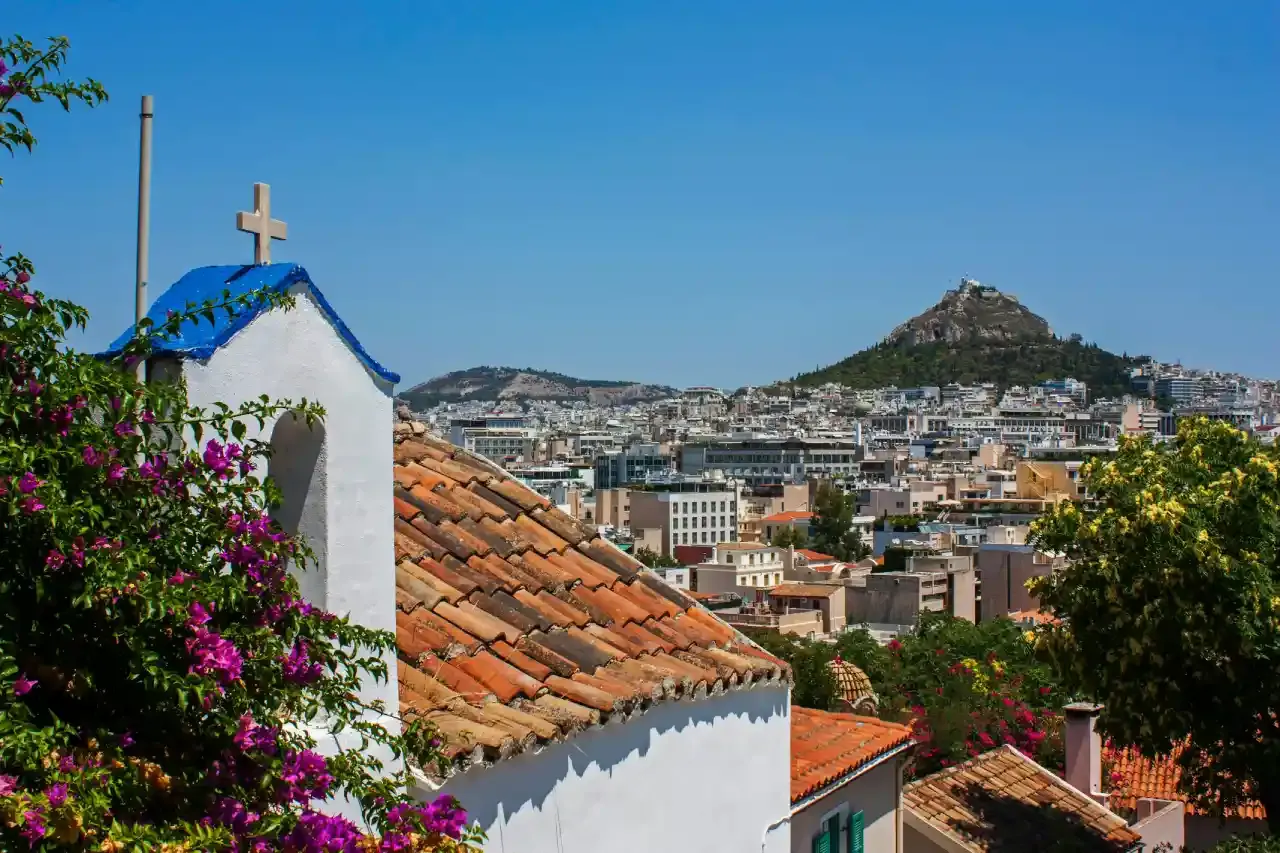
Discovering Plaka
Winding pedestrian alleys, cobblestone lanes, neoclassical houses painted in warm colors, bougainvillea cascading from balconies, it’s largely car-free, which means you can actually wander without dodging traffic. Every turn reveals something new, a tiny Byzantine church tucked between buildings, a hidden square where locals sip coffee, a shop selling olive oil in hand-painted bottles. The neighborhood functions as a living museum.
After all that exploring, you’ll want to refuel. Plaka is packed with traditional tavernas where the atmosphere is as much a part of the meal as the food. Settle at a vine-shaded table and dive into classic Greek dishes. Think moussaka, souvlaki, and fresh Greek salads with creamy feta. Remember, locals eat late, so dinner service often starts after 8:00 PM, and the best tavernas fill up around 9:00 or 10:00 PM.
The National Garden
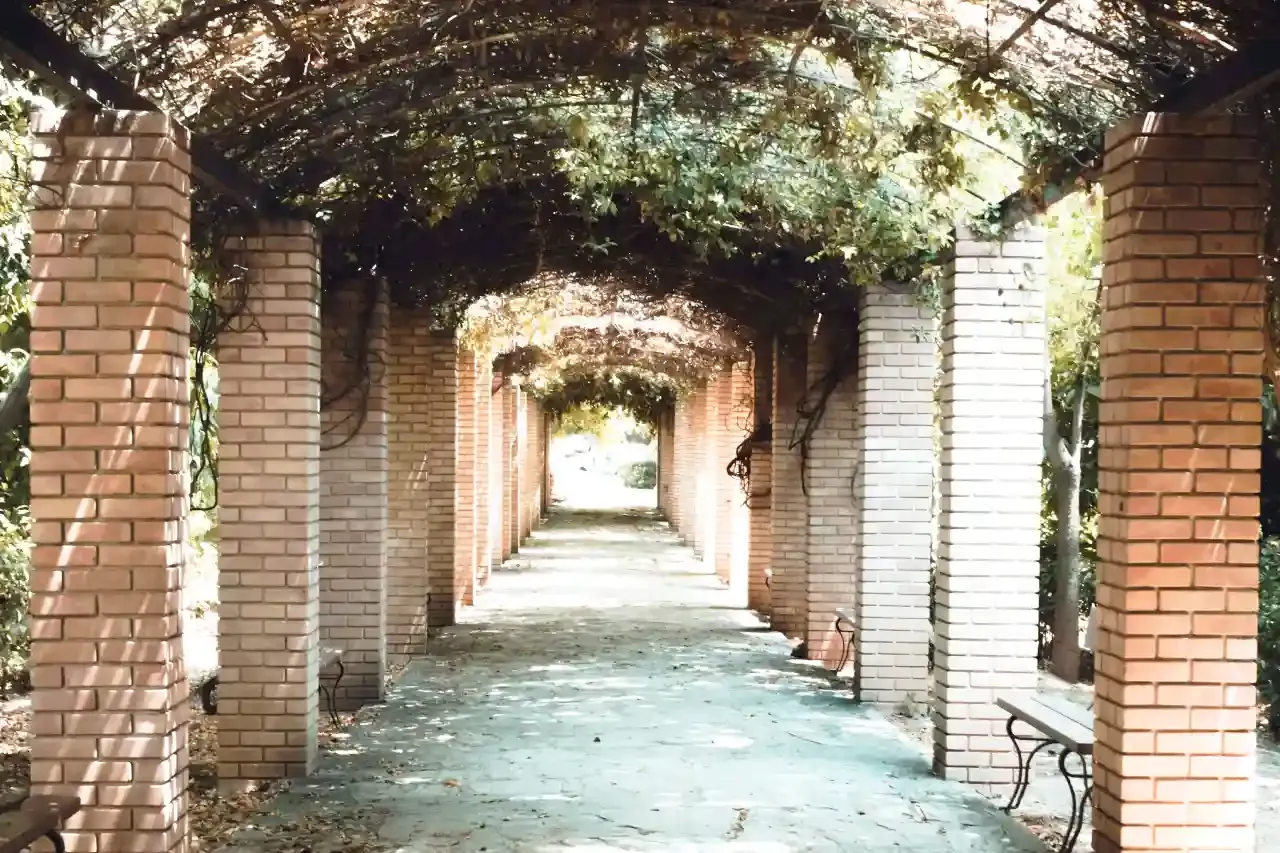
The National Garden
After hours of walking through sun-drenched archaeological sites, your body starts craving shade. That’s when the National Garden becomes exactly what you need, a 158,000-square-meter green oasis just east of the Acropolis.
The garden was commissioned in 1838 by Queen Amalia, the first queen of modern Greece, as the private Royal Garden. German agronomists designed it, planting over 500 species from around the world alongside native Greek flora. The grand Washingtonia palms at the entrance were planted by the queen herself in 1842.
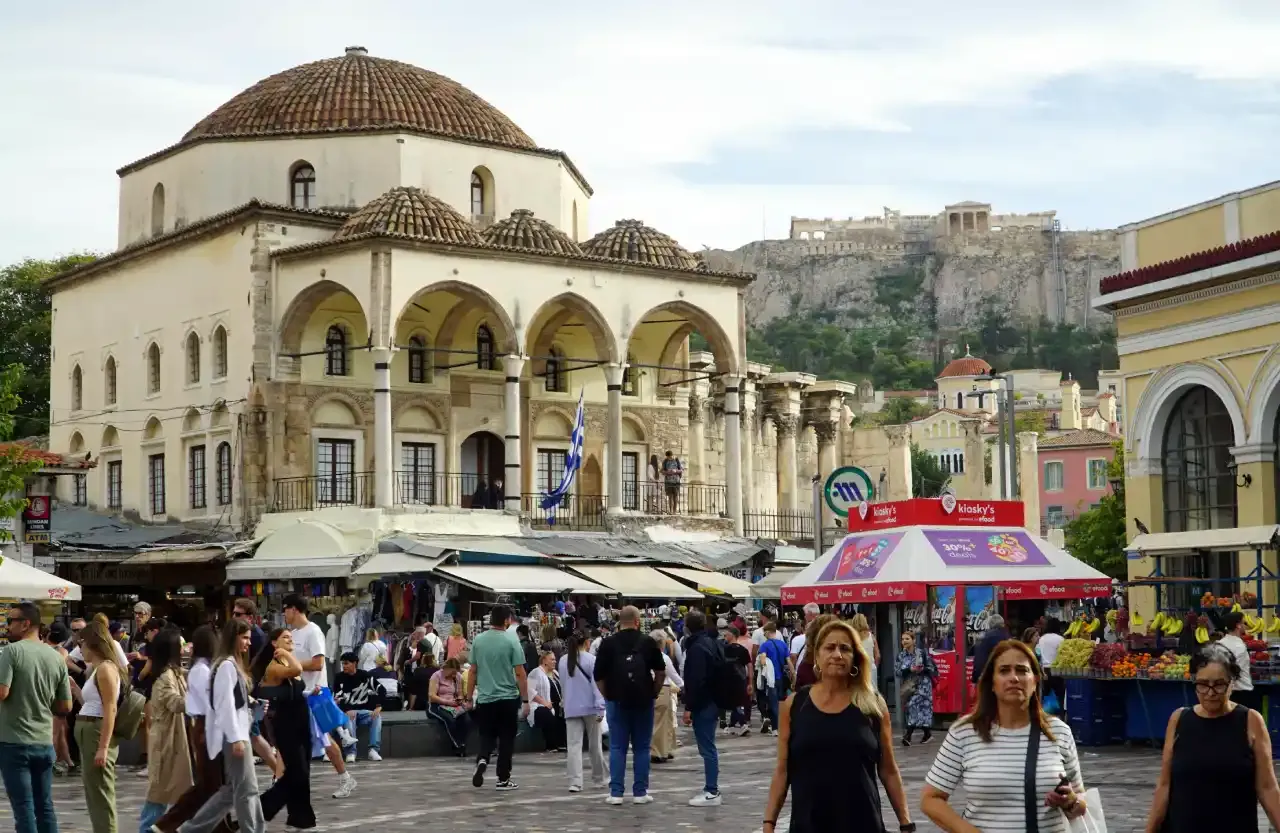
Exploring Monastiraki
Monastiraki is where Athens feels most alive. Here you can visit:
- The famous Monastiraki Flea Market is an adventure. On any day, the streets are packed with shops selling everything from souvenirs to handmade sandals. But for the real deal, go on a Sunday. The market explodes, with vendors laying out antiques, vinyl records, and all sorts of curios on blankets.
- The square itself is the energetic core. From here, you can see layers of history stacked together: a tiny Byzantine church, an 18th-century Ottoman mosque, and the sprawling ruins of Hadrian’s Library all within a few steps.
Dionysiou Areopagitou street
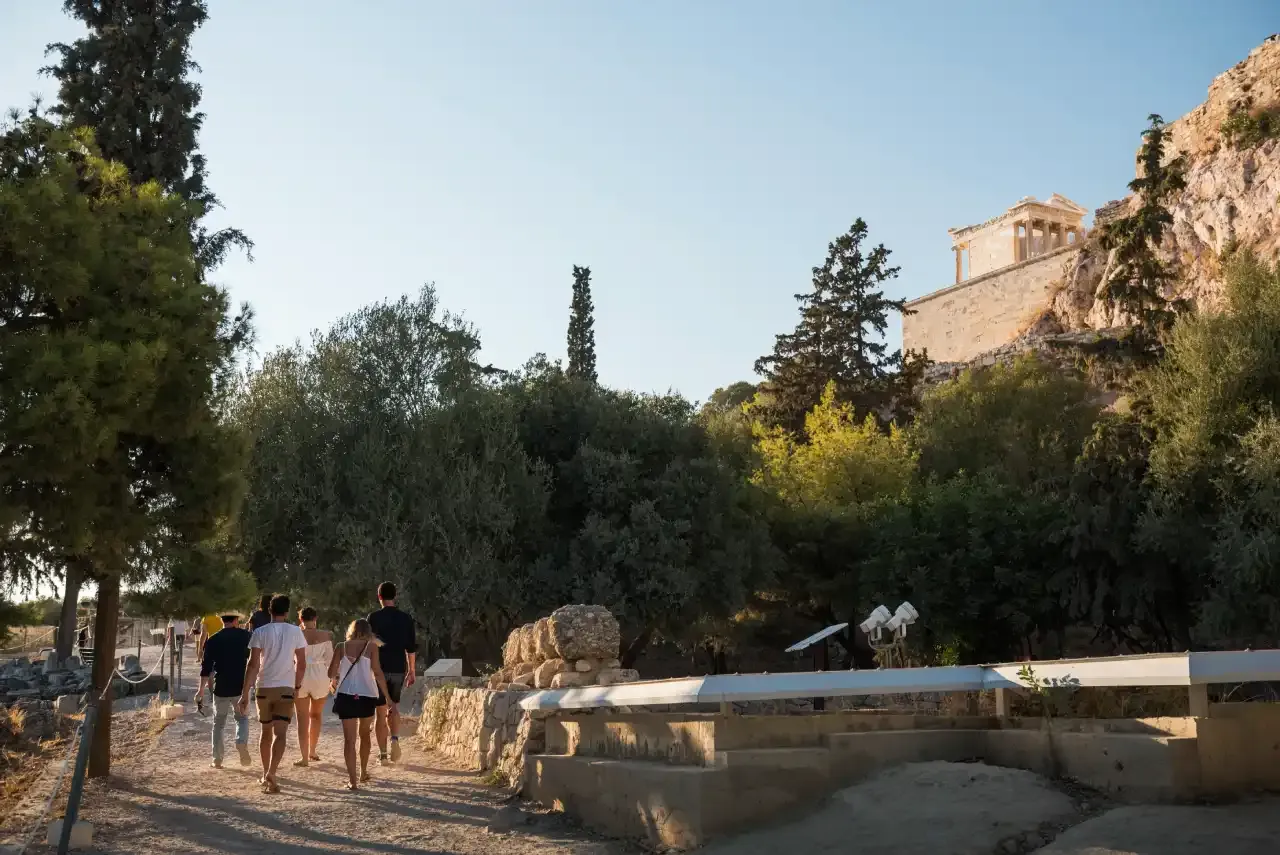
Dionysiou Areopagitou street
Some walks are just about getting from point A to point B. Others are destinations in themselves. Dionysiou Areopagitou Street, a wide, stone-paved pedestrian promenade, falls firmly in the second category.
Stretching for approximately 700 meters along the southern base of the Acropolis, it’s the central artery of a unified archaeological park, a 20th-century urban planning achievement that connects the city’s most important ancient sites.