Acropolis Guided Tour
This Acropolis and Parthenon guided tour allows visitors to explore the historical landmarks of Athens with a licensed archaeologist. Travelers bypass the main entrance lines to view the ancient structures directly. The experience combines a city sightseeing drive with a detailed walking exploration of the hilltop monuments.
Enjoy the best guided tour of the Acropolis
Acropolis guided tour itinerary
The itinerary details the route and sites for this 3.5-hour guided excursion through Athens. Participants transition from a central city coach drive to a walking exploration of the temples of the Acropolis:

1. Syntagma Square and Central Athens
The itinerary begins with a panoramic coach drive through the center of Athens. An air-conditioned bus transports participants past Syntagma Square to view the Greek Parliament, the Tomb of the Unknown Soldier, and the National Garden. The guide delivers factual data about the modern political history of these sites. The bus then continues along the perimeter of the National Garden, displaying the green spaces and plant collections to the participants. This initial driving segment outlines the development of contemporary Athens before the tour transitions to ancient monuments during guided tours of the Acropolis.
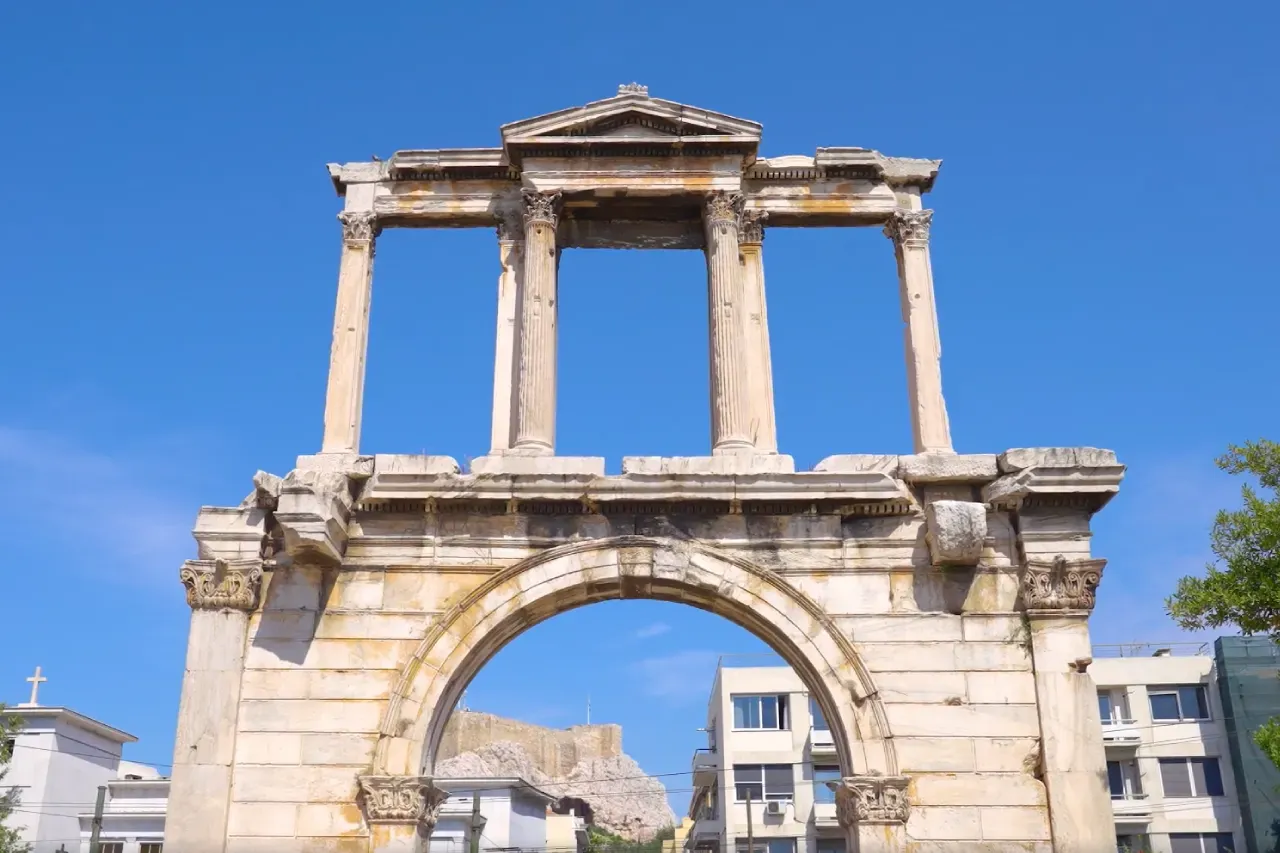
2. Hadrian's Arch and the Temple of Olympian Zeus
The coach tour routes participants past two adjacent classical landmarks: Hadrian's Arch and the Temple of Olympian Zeus. The guide explains how these structures marked the boundary of ancient Athens during the Roman period. Passengers view the marble archway and the remaining monumental columns of the Zeus temple from the windows of the zero-carbon vehicle. This portion of the drive introduces the architectural scale of the ancient city. The guide provides chronological facts linking these Roman-era monuments to the classical Greek structures that the group visits later on foot.
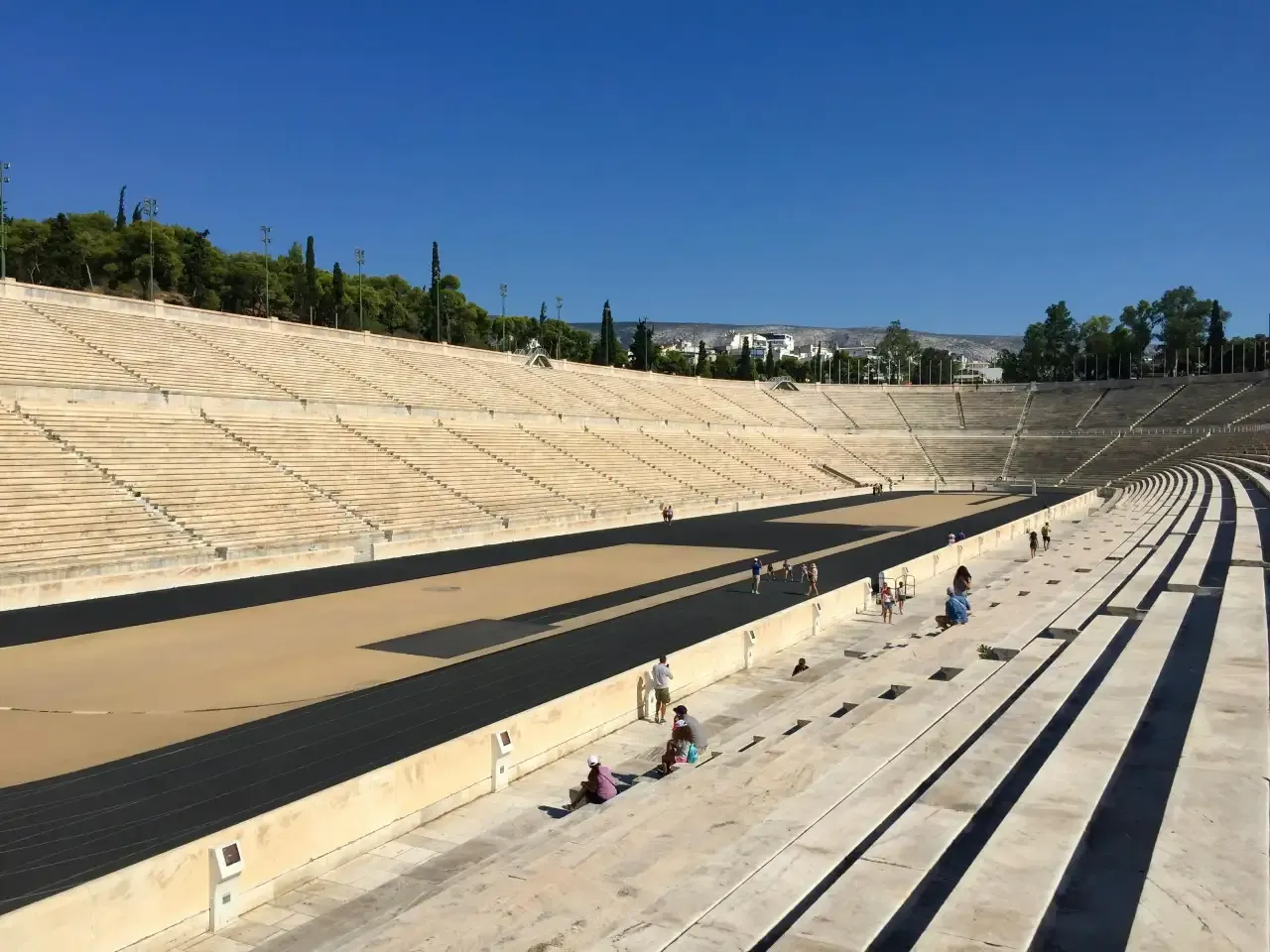
3. The Panathenaic Stadium
Following the panoramic drive, the bus stops at the Panathenaic Stadium for a dedicated viewing session. Builders constructed this entire sports arena from white marble, making it a unique structure globally. Historically, this site hosted the first modern Olympic Games in 1896. Visitors disembark the vehicle to observe the track and the seating arrangements that accommodate thousands of spectators. The guide explains the history of athletic competitions in Greece and the reconstruction process of the stadium. This stop allows travelers to photograph the marble architecture and understand the athletic heritage of the city before continuing the route.
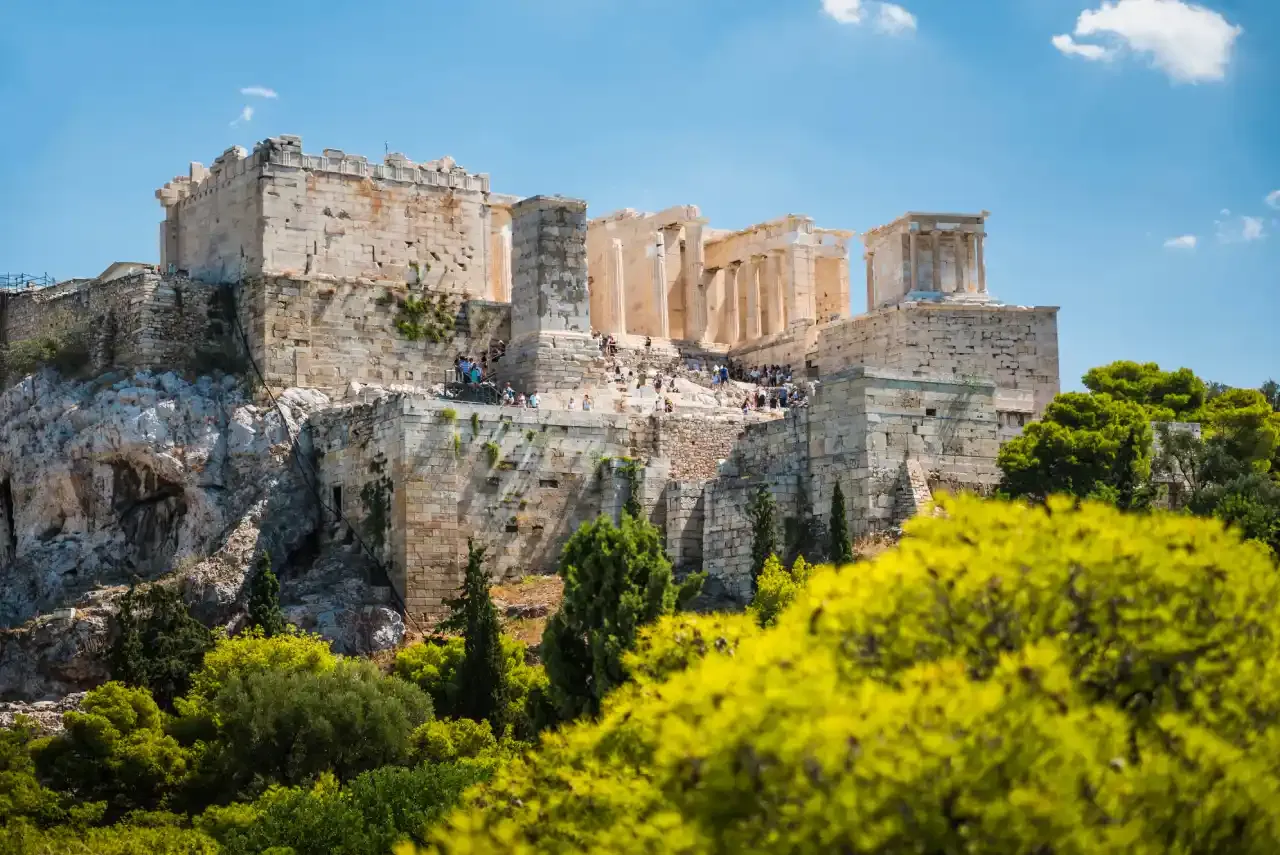
4. Arrival at the Acropolis Plateau and Summit
Travelers ascend on foot to reach the summit, known as the Acropolis plateau. This limestone rock rises 150 meters above sea level and provides a clear view of Athens. The licensed guide gathers the group at this location to explain the layout of the ancient sanctuary. From this point, visitors observe how the ancient Greeks organized their civic space. This area serves as the central location for the best Acropolis guided tour, allowing participants to orient themselves before they examine individual temples. The plateau contains the foundations of multiple destroyed monuments and historical altars viewed during guided tours of the Acropolis. Travelers walk along the stone pathways to transition between the northern and southern sectors of the summit.
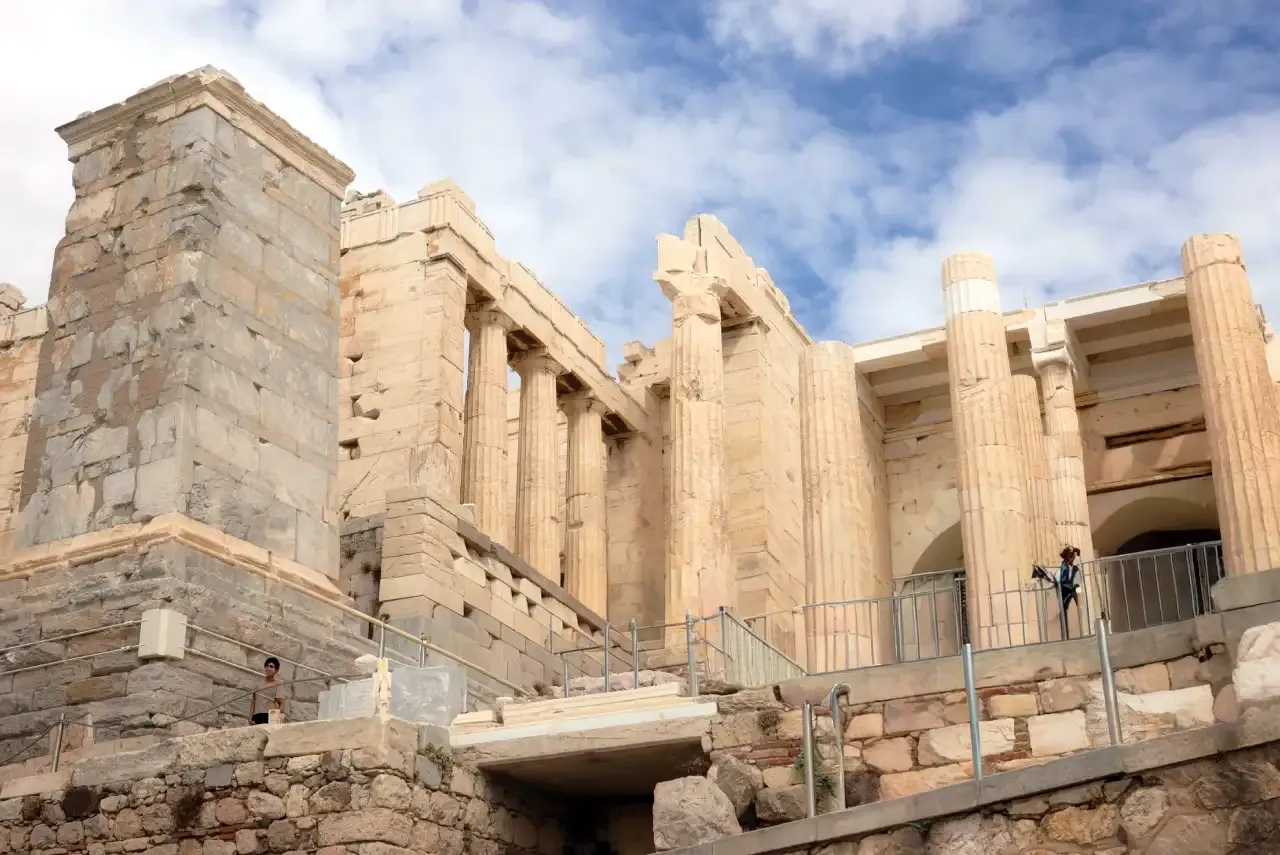
5. The Propylaea Gateway
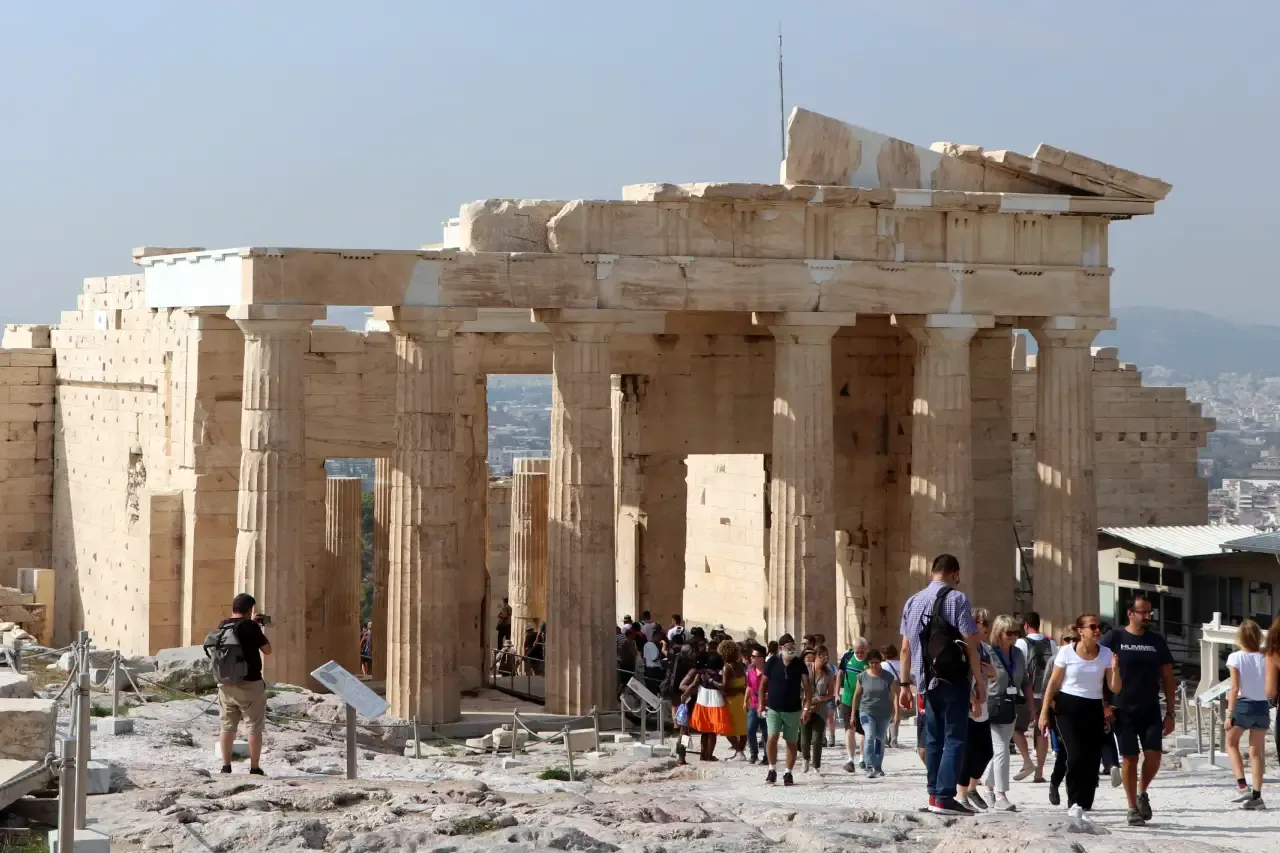
The tour group proceeds directly to the Propylaea, which serves as the gateway to the sanctuary. This marble structure controls access to the precinct of the hill. The ancient architect Mnesicles designed the building to facilitate the flow of religious processions during festivals. Participants walk through the central corridor of the gateway, observing the Doric columns that support the stone roof structure. The licensed guide highlights the architectural design of the building and discusses how its construction halted due to political conflicts in ancient Athens. This entry point prepares visitors for the main temples on the plateau during guided tours of the Acropolis.
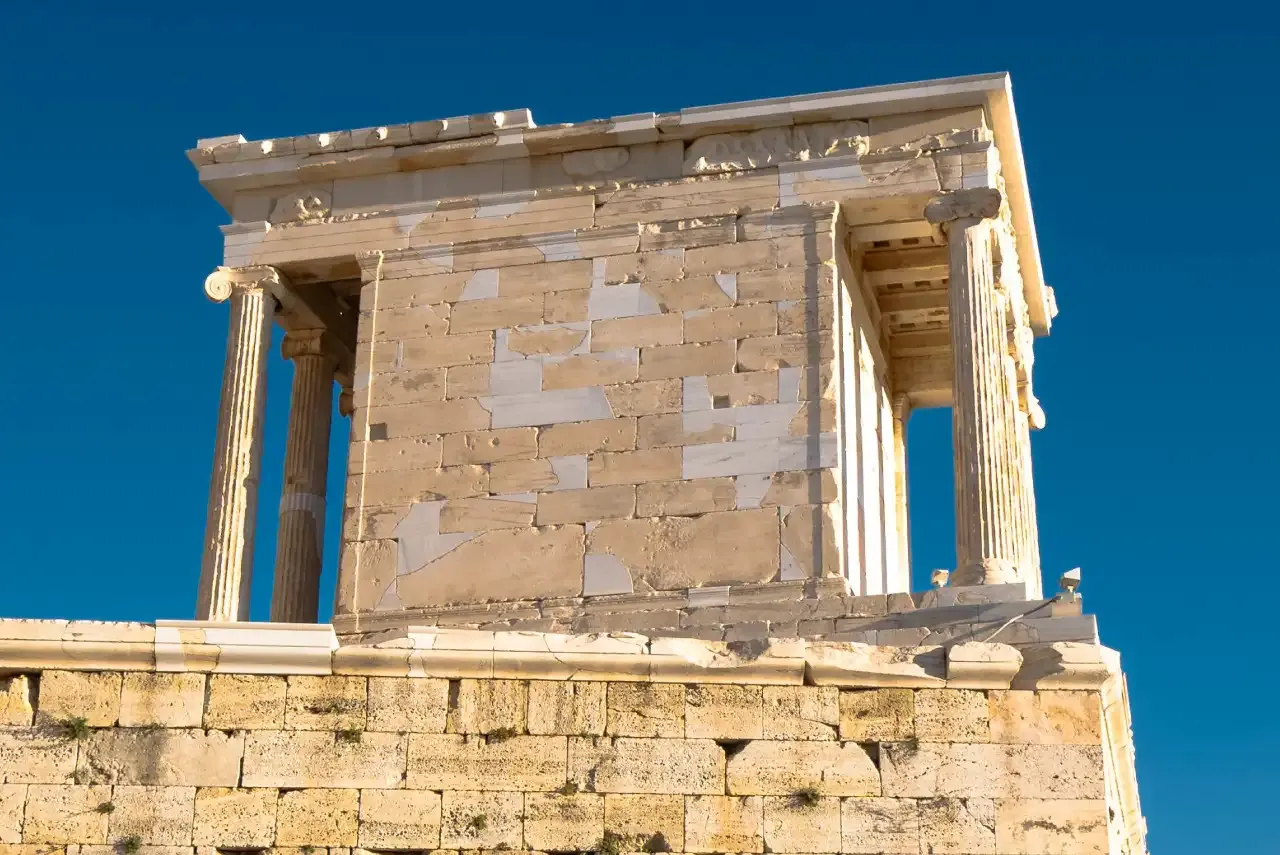
6. The Temple of Athena Nike
The Temple of Athena Nike stands on a stone bastion to the right of the Propylaea gateway. Builders constructed this Ionic temple during the fifth century BC to commemorate Athenian military victories over Persian forces. The guide explains the historical context of the Peloponnesian War and details the religious functions associated with this monument. Travelers observe the friezes that depict battles rather than purely mythological scenes. This location provides a vantage point where participants photograph the city of Athens and the Saronic Gulf. The stop forms a component of the best Acropolis guided tour, offering insights into the military history of ancient Greece before the group advances into the central plateau.
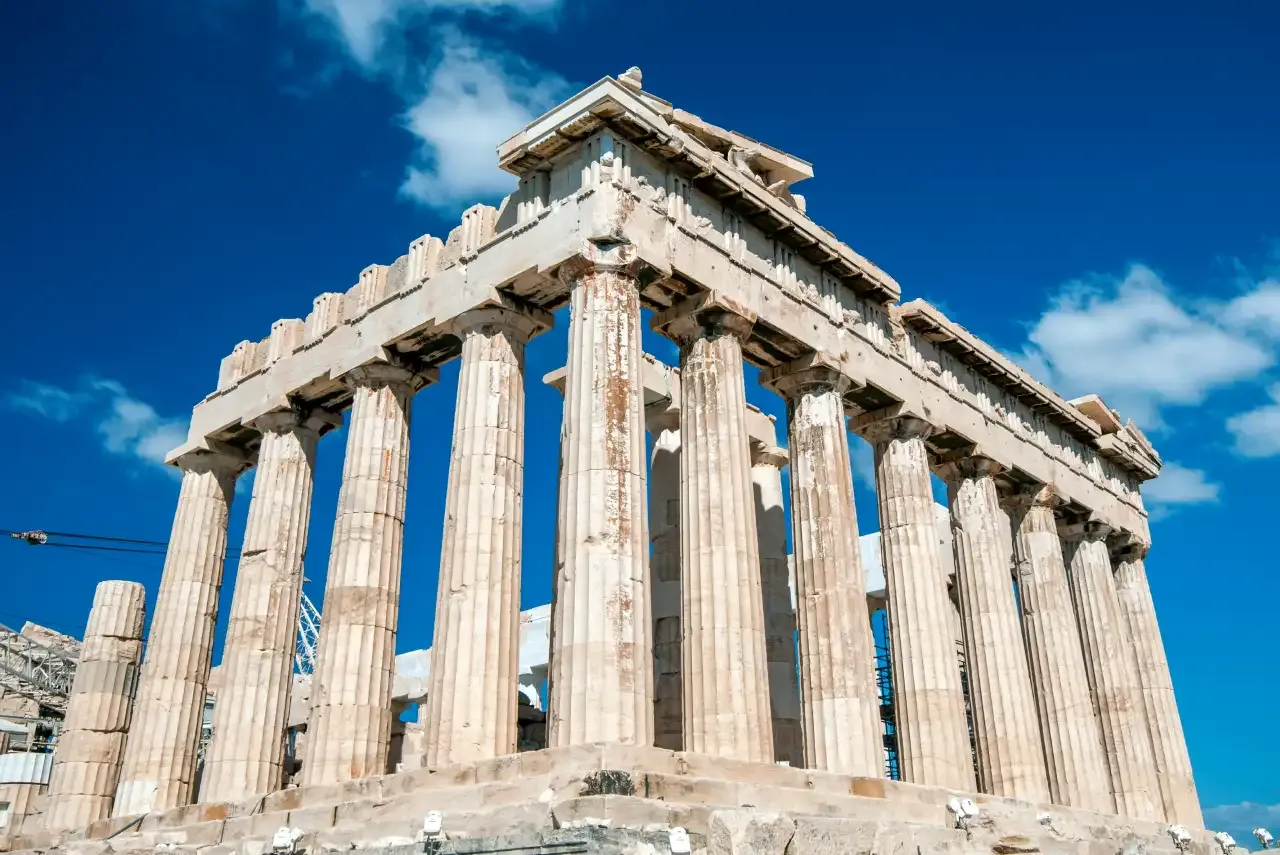
7. The Parthenon Temple
The itinerary continues to the primary structure of the site: the Parthenon. The city of Athens dedicated this large Doric temple to the goddess Athena during the fifth century BC. The politician Pericles and the sculptor Phidias supervised its construction. The guide instructs travelers on the specific optical illusions the architects incorporated into the marble columns to make the structure appear perfectly straight from a distance. Participants walk around the perimeter to examine the exterior colonnade and the remaining sculptural reliefs. The expert discusses the history of the building, detailing its transformation from a Greek temple into a church, and later into a mosque. This segment provides the core historical data for the Acropolis guided tour.
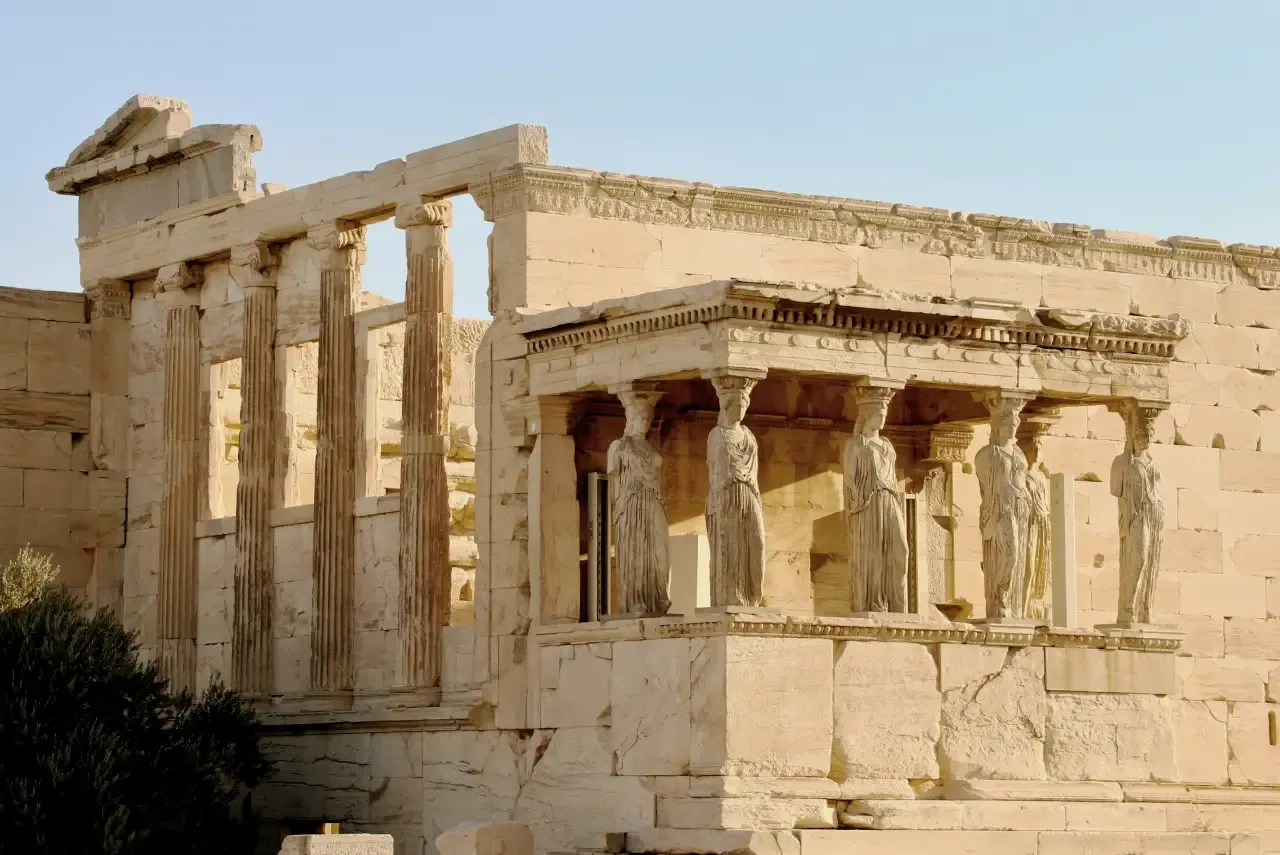
8. The Erechtheion and the Porch of the Maidens
On the northern side of the plateau, the group explores the Erechtheion. Builders constructed this complex temple on uneven ground to accommodate multiple religious shrines. The guide explains the mythological contest between Athena and Poseidon that supposedly occurred at this exact location. The Porch of the Maidens remains the most prominent feature of this building. Six sculpted female figures, known as Caryatids, function as supporting columns for the roof. Travelers observe these marble statues, while the guide clarifies that authorities installed replicas for preservation purposes. Museum curators protect the original sculptures in climate-controlled facilities. This stop concludes the structured portion of the visit, allowing participants to understand the diverse religious practices of the ancient city.
Why is a guided tour of the Acropolis worth taking?
Visitors maximize their historical experience in Athens by booking a guided tour of the Acropolis. This choice provides operational and educational advantages over exploring the archaeological site alone:
- Historical context: Licensed guides provide critical context that standard signage omits. They explain the architectural engineering behind the Parthenon and decode the religious myths connected to the Erechtheion temple. This information transforms marble ruins into a coherent narrative of Greek civilization.
- Logistical efficiency: Guides navigate the crowded complex efficiently. They steer groups through specific routes to manage crowd flow and utilize skip-the-line entry to eliminate long wait times at the entrance.
- Architectural analysis: Professionals highlight precise structural details, such as the intentional optical illusions in the column design, which standard tourists frequently overlook.
- Material history: Experts identify the specific origins of the Pentelic marble and describe the ancient transport methods that workers used to move heavy materials up the steep hill.
Ultimately, this structured approach saves time, minimizes logistical stress, and ensures an accurate education in classical history. Travelers gain analytical insights that printed guidebooks do not contain, making the service a practical investment.
Things to know before you buy your Acropolis guided tour
Visitors must review specific technical details and site policies before purchasing tickets for the excursion:
- Ticket policies: Tickets are non-refundable. Buyers cannot change the date or time after purchase.
- Inclusions: The ticket price covers Acropolis entrance fees, taxes, bus transportation, and the licensed guide services. The package omits hotel pick-up and drop-off. Visitors select the audio guide app as an optional add-on.
- Meeting logistics: Participants arrive at the Key Tours offices (26 Athanasiou Diakou) at least 15 minutes before the 08:15 departure time.
- Entry timing: Visitors who select the final daily slot enter the site during the first 30 minutes of that specific timeframe.
- Site regulations: Authorities strictly forbid visitors from touching or climbing the ancient ruins. Guards deny entry to pets.
- Preparation: Tourists wear flat shoes to navigate the steep steps. They carry water and sunscreen to manage the summer heat.
- Accessibility: The terrain features uneven surfaces and steep paths. This topography creates severe challenges for individuals with reduced mobility or those using wheelchairs.
How difficult is the walk up to the Acropolis?
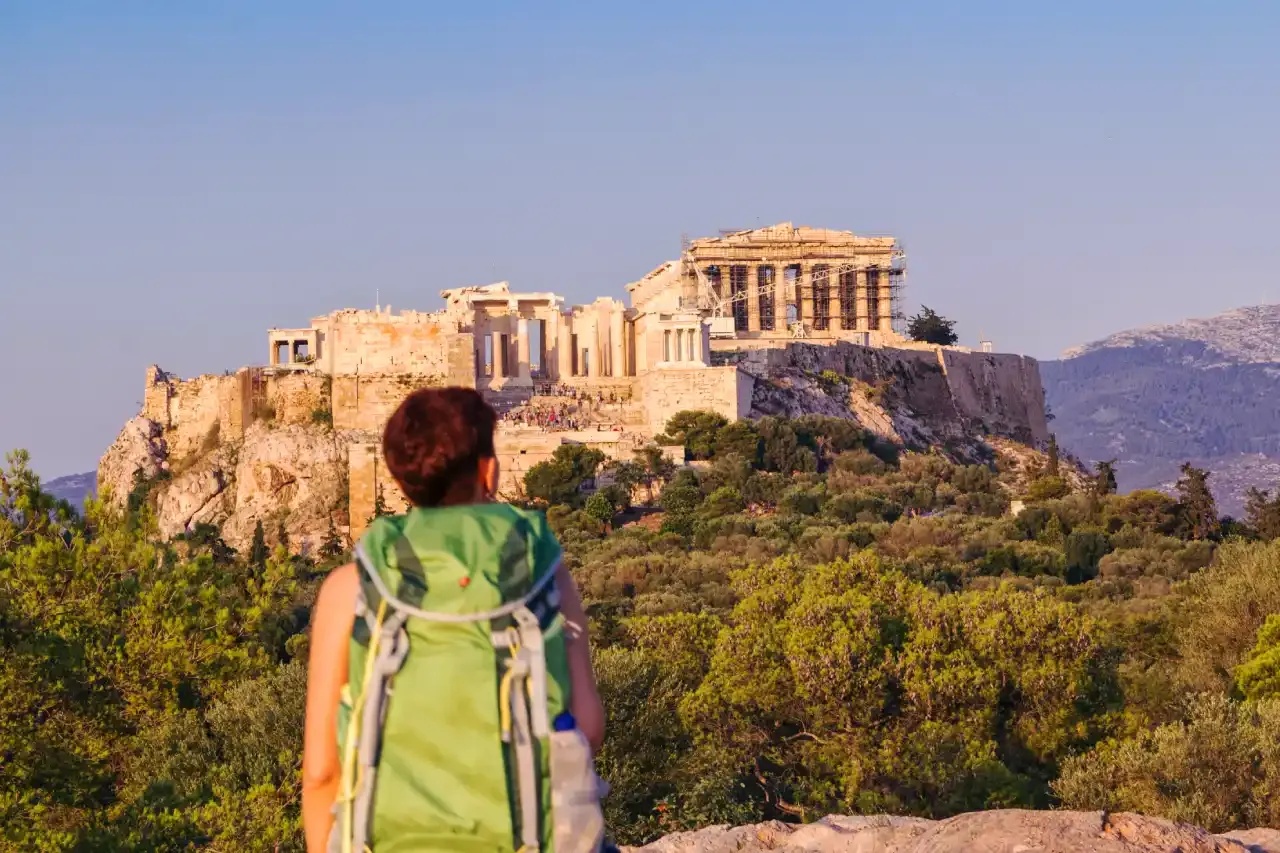
How difficult is the walk up to the Acropolis?
The walk up the Acropolis requires moderate physical exertion. The path features steep inclines, uneven stone surfaces, and numerous marble steps. These ancient stones become slippery, especially when dust accumulates or when light rain falls. Visitors navigate continuous uphill sections from the ticket entrance to the Propylaea gateway.
Individuals with limited mobility, respiratory issues, or those using wheelchairs face significant obstacles, as the terrain lacks modern accessibility ramps in several historical zones. Summer temperatures increase the difficulty, as the hill offers minimal shade. Travelers complete the ascent successfully by wearing flat, rubber-soled shoes, maintaining a slow pace, and resting at the viewing platforms along the slopes.