Acropolis of Athens, Greece
The Acropolis is the most famous and historical citadel in Athens, serving as a timeless symbol of Greek civilization. Below, we will explore the monuments that make up this site and share essential details about the Acropolis, the most notable of which is the Parthenon.
Support when you need it
Customer support to help you with everything you need from 8.00 a.m. to 6.00 p.m
Fast and online booking
Select your ticket for your needs and preferences and avoid the lines booking here.
Top attraction in Athens
Enjoy the art and history of ancient Greece at the Acropolis, a World Heritage Site.
What is the Acropolis of Athens?
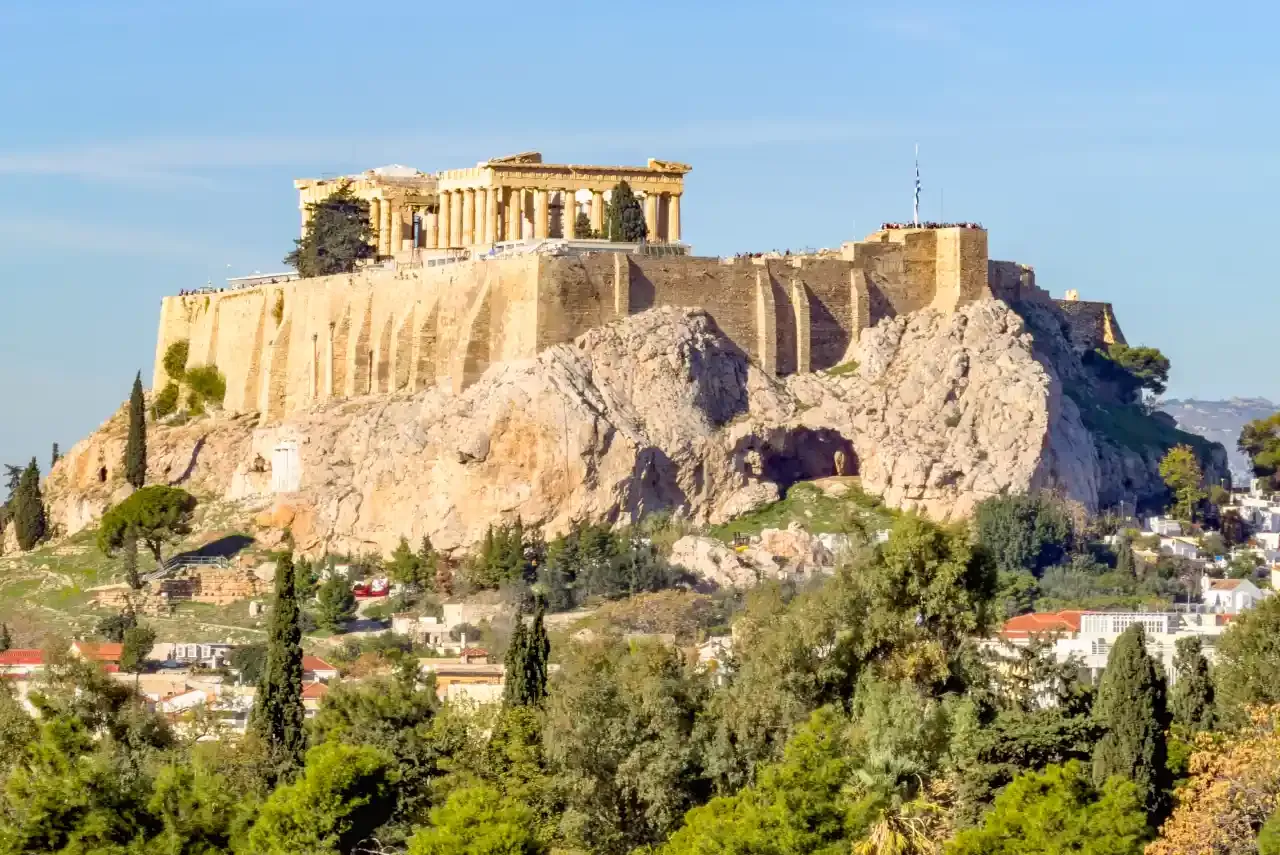
The Acropolis of Athens is the most famous ancient citadel in the world, whose name means “High City”. It is a rocky hill that rises 156 meters above the city, historically serving as a defensive fortress and, crucially, as the main religious sanctuary of the polis. Its peak came in the 5th century B.C., the “Golden Age” of Athens, under the leadership of Pericles. After being destroyed by the Persians in 480 B.C., it was rebuilt as an ambitious symbol of the power, wealth, and victory of Athenian democracy. This architectural program resulted in a series of masterpieces that defined classical art.
Today, the Acropolis is the most powerful symbol of Greek civilization, democracy, and the foundations of Western culture. For this reason, in 1987, the Acropolis of Athens was declared a UNESCO World Heritage Site due to its invaluable worth as a universal symbol of Greek culture and civilization.
What is there at the Acropolis?
If you are wondering what is on the Acropolis of Athens, or what you can find in it when you visit, the main monument is the Parthenon, dedicated to the goddess Athena Parthenos, a jewel of Doric architecture known for its optical illusions used to achieve visual perfection. Other key buildings include the Propylaea (the monumental gateway), the Erechtheion (famous for its Caryatids), and the Temple of Athena Nike.
While the buildings are massive, don’t overlook the artistic details: learning about the statues of the Acropolis will give you a much better context of what you are seeing.
Here is a list of everything you have to see if you book a ticket for the Acropolis:
The Parthenon: Symbol of Doric Perfection
The Parthenon: Symbol of Doric Perfection
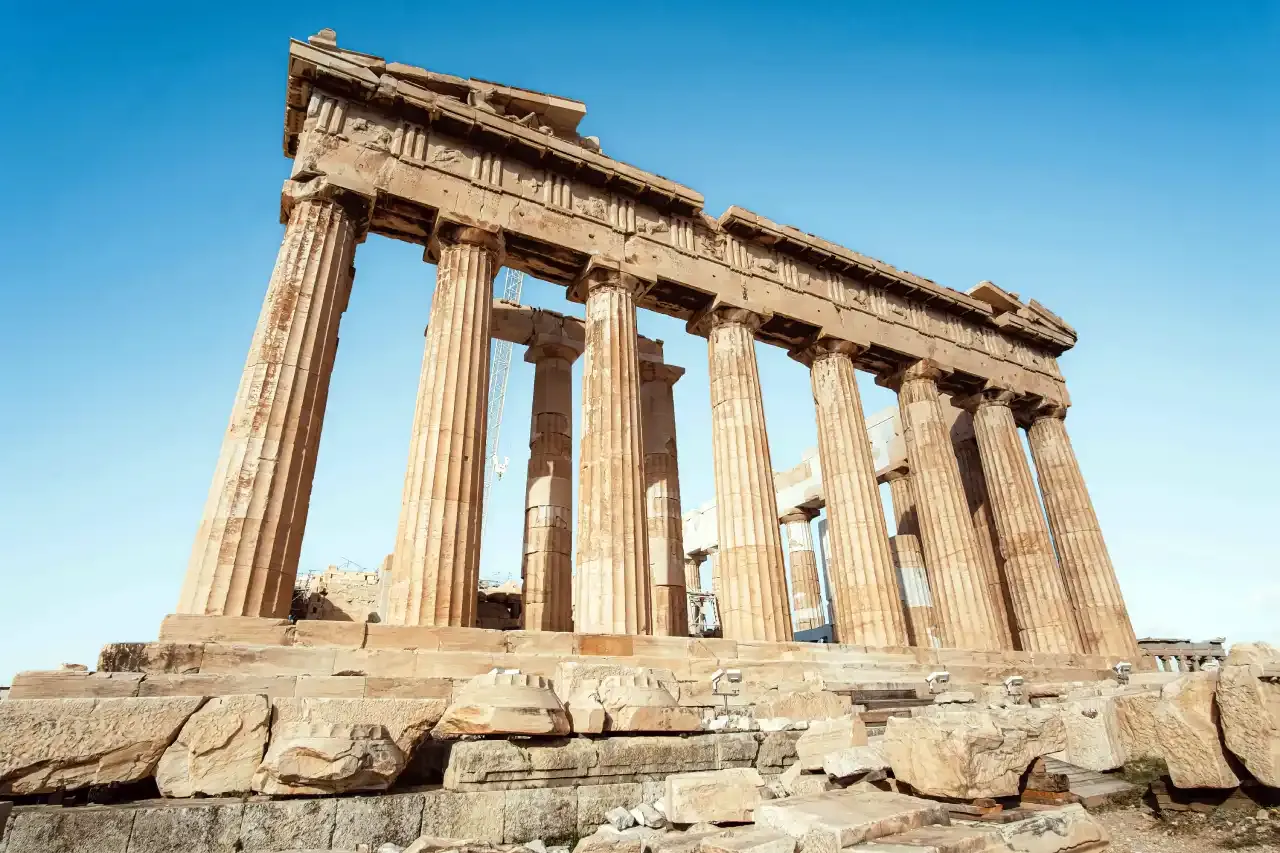
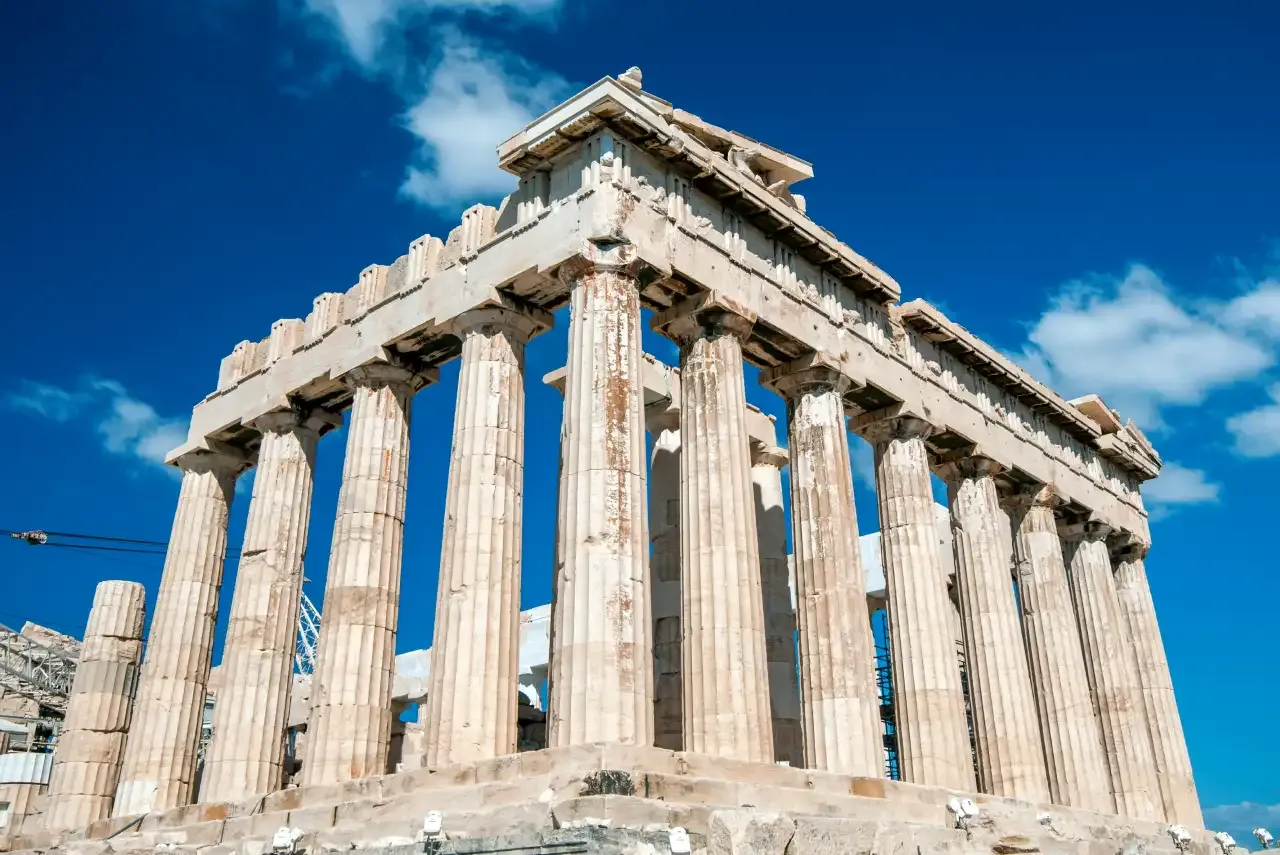
The Parthenon dominates the Acropolis as its most iconic structure, built between 447-432 BCE under the supervision of architects Ictinus and Callicrates. This masterpiece of Doric architecture was dedicated to Athena Parthenos and originally housed a colossal gold and ivory statue of the goddess created by Phidias.
What makes the Parthenon truly extraordinary are its optical illusions and mathematical precision, the columns lean slightly inward, the stylobate curves upward, and the corner columns are thicker, all designed to counteract visual distortions and create perfect proportions when viewed from below.
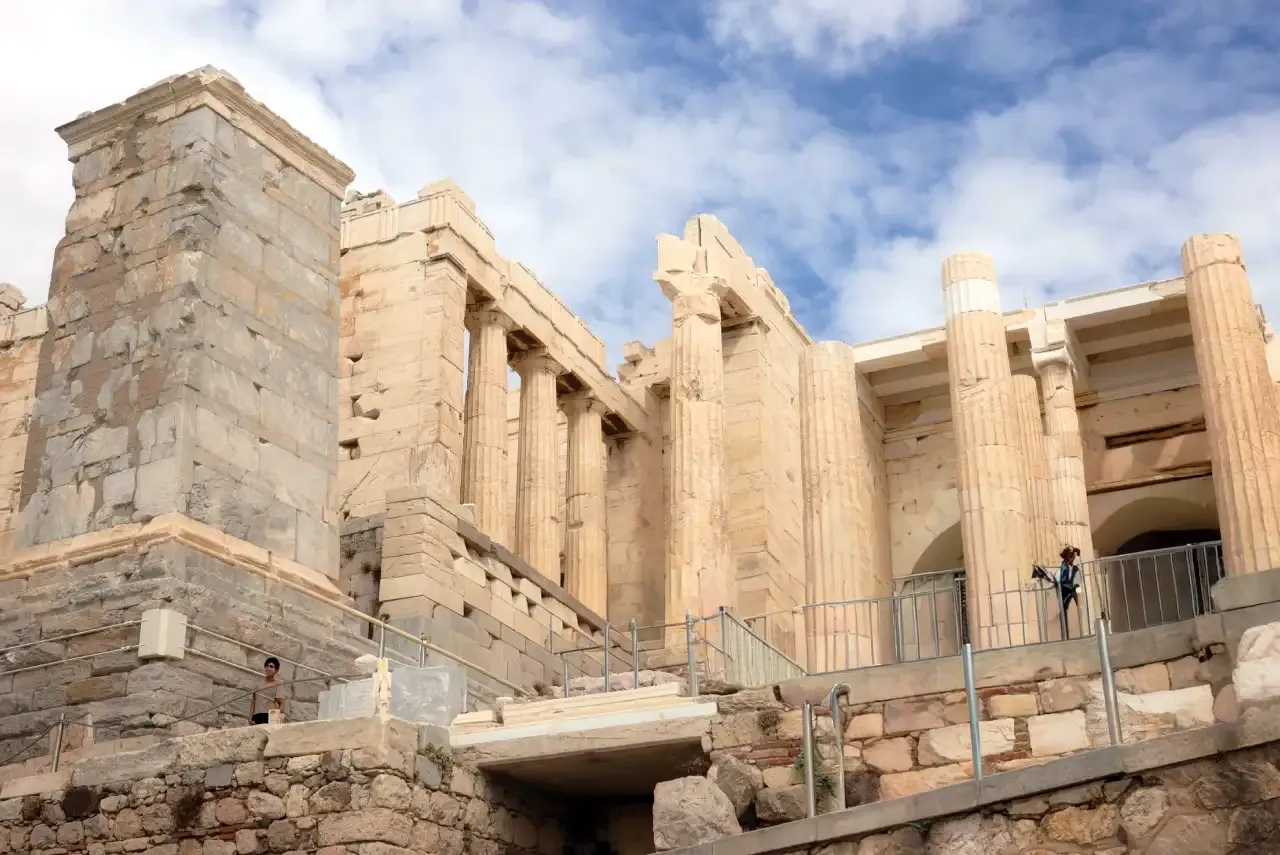
The Propylaea: Mnesicles' Monumental Gateway
The Propylaea serves as the grand entrance to the Acropolis, designed by Mnesicles and constructed between 437-432 BCE.
This imposing gateway combines Doric and Ionic architectural elements, creating a dramatic transition from the secular world below to the sacred space above. The structure features five passageways of varying widths, with the central passage reserved for processions and wheeled traffic, while the side passages accommodated pedestrians during the Panathenaic festivals.
The Erechtheion and the Enigmatic Caryatid Porch
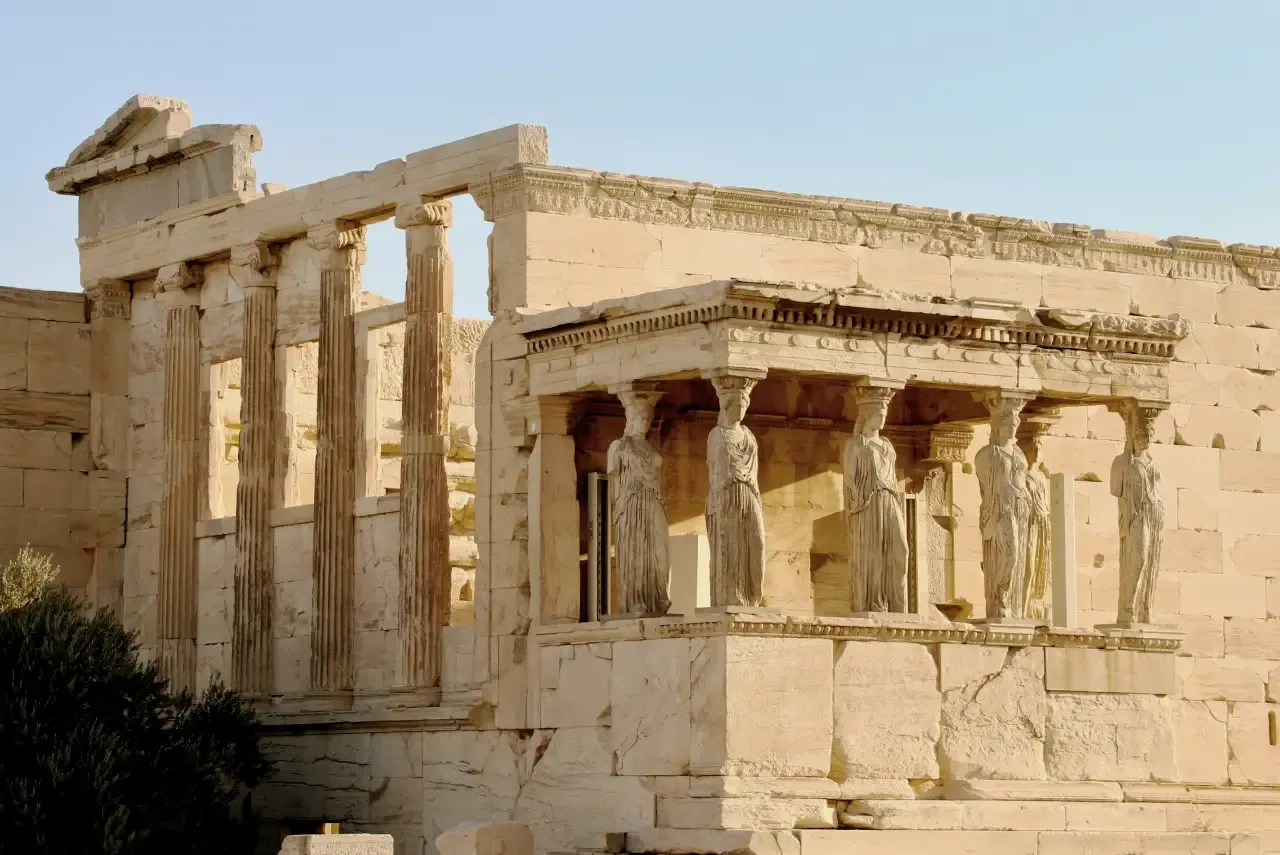
The Erechtheion and the Enigmatic Caryatid Porch
The Erechtheion, completed around 406 BCE, represents the most architecturally complex building on the Acropolis due to its irregular shape and multiple sacred functions.
The temple’s most famous feature is the Porch of the Caryatids, where six elegant female figures serve as columns supporting the roof. These masterfully carved maidens, each standing 2.3 meters tall, are positioned with their weight distributed in contrapposto stance, creating both structural stability and artistic beauty. The originals are now preserved in the Acropolis Museum, while faithful replicas stand on the site.
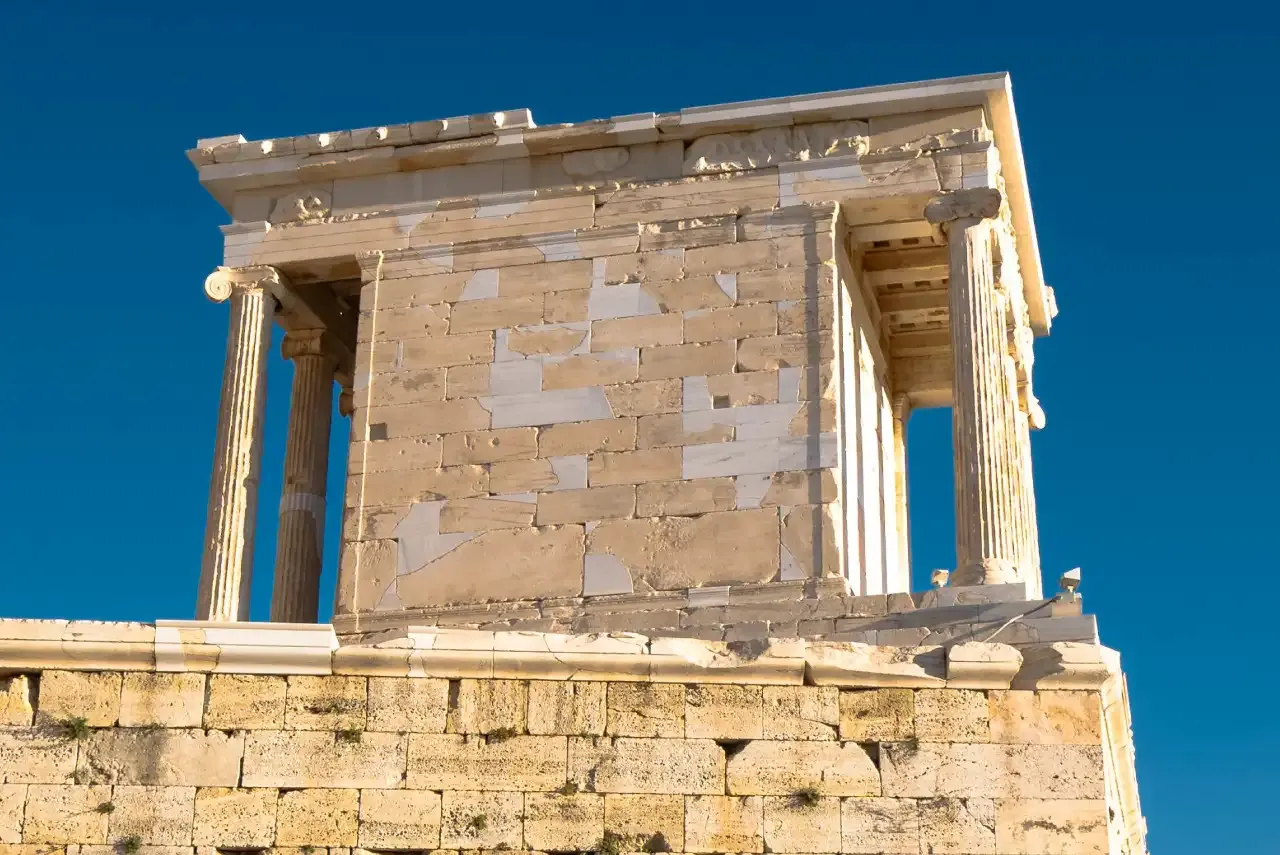
The Temple of Athena Nike
Perched on the southwestern edge of the Acropolis, the Temple of Athena Nike is a small but perfectly proportioned Ionic temple built around 427-424 BCE.
Despite its modest size, measuring just 8 by 5.5 meters, this temple played a crucial role in Athenian religious life, dedicated to Athena as the goddess of victory. The temple’s frieze depicts scenes from the Battle of Plataea, celebrating Athens’ triumph over the Persians, while its strategic position offers visitors some of the most spectacular panoramic views of modern Athens and the surrounding Attica region.
Old Temple of Athena
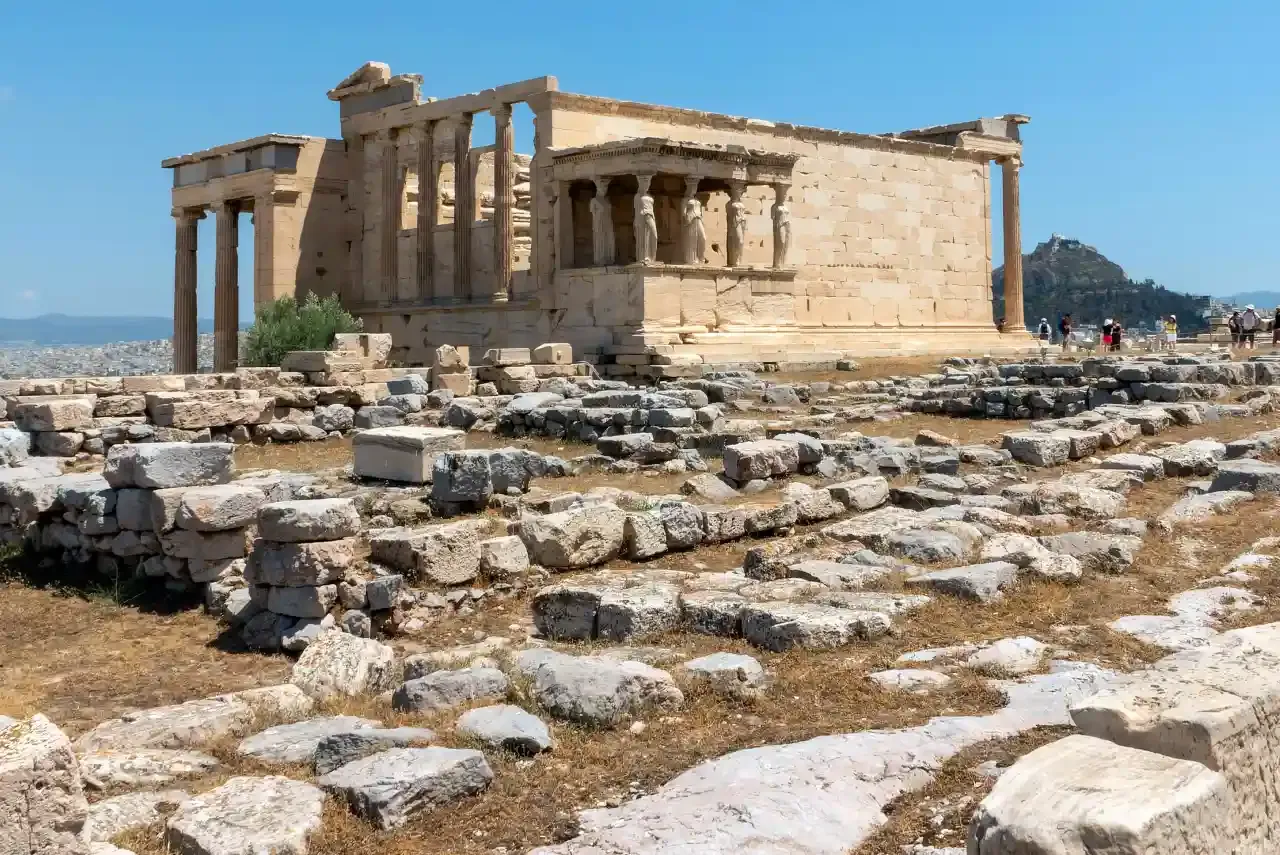
Old Temple of Athena
The Old Temple of Athena (Archaios Naos) represents the most ancient sacred structure on the Acropolis, predating the Parthenon by nearly a century. Built around 525-500 BCE during the Archaic period, this temple served as the primary sanctuary of Athena Polias, the city’s patron goddess, housing the sacred olivewood statue of Athena that was believed to have fallen from heaven.
Although largely destroyed during the Persian invasion of 480 BCE and now represented only by scattered marble blocks and foundation stones, archaeological evidence reveals it was a Doric peripteral temple with six columns on the short sides and twelve on the long sides.
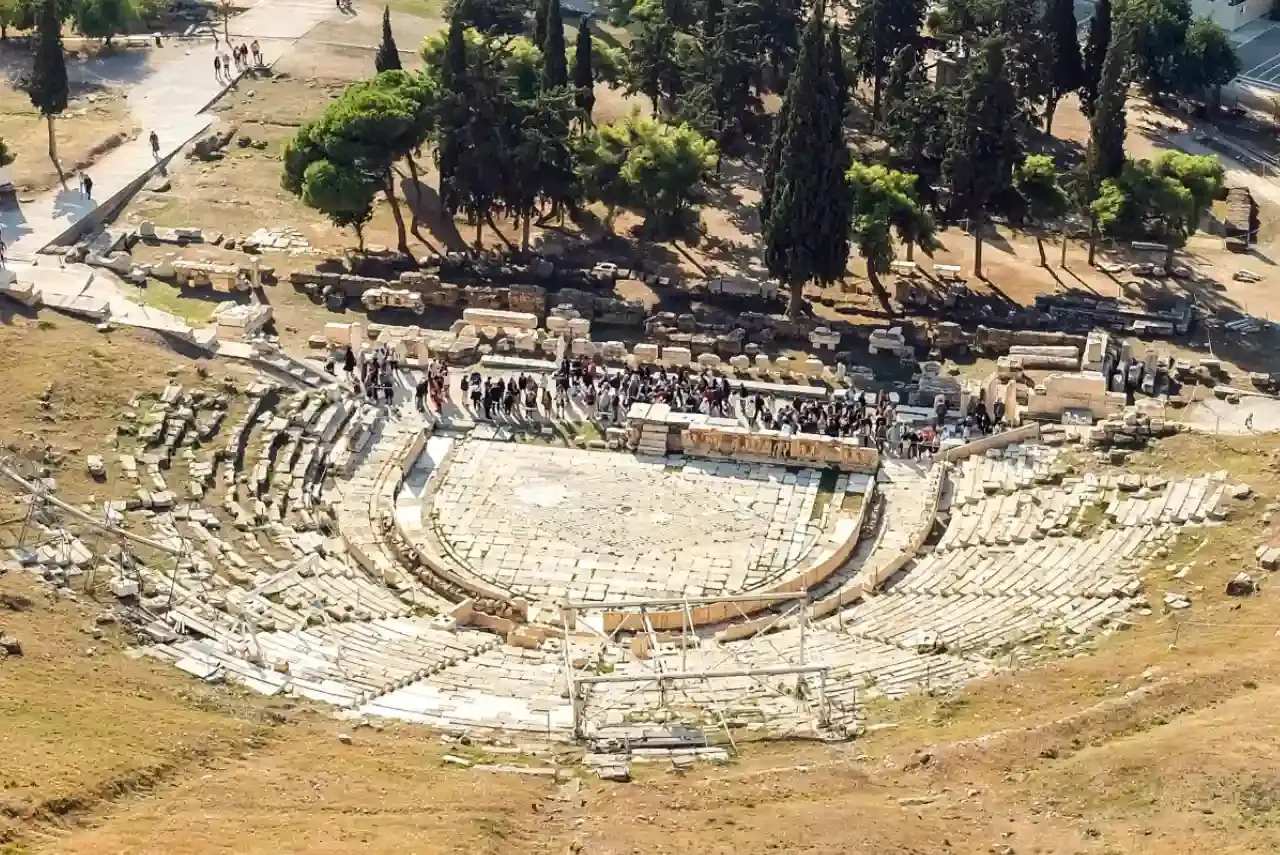
The Theatre of Dionysus
Located on the southern slope of the Acropolis, the Theatre of Dionysus holds the distinction of being the world’s first theater and the birthplace of dramatic art as we know it.
Originally constructed in the 6th century BCE and extensively renovated during the 4th century BCE, this ancient venue could accommodate up to 17,000 spectators across its semicircular stone seating arrangement. Here, the masterpieces of Aeschylus, Sophocles, Euripides, and Aristophanes premiered during the annual Dionysia festival, establishing the foundations of Western theater.
The theater’s remarkable acoustics, achieved through its precise geometric design, allowed even whispered words from the orchestra to reach the highest seats, a testament to ancient Greek engineering prowess that continues to amaze visitors today.
Odeon of Herodes Atticus
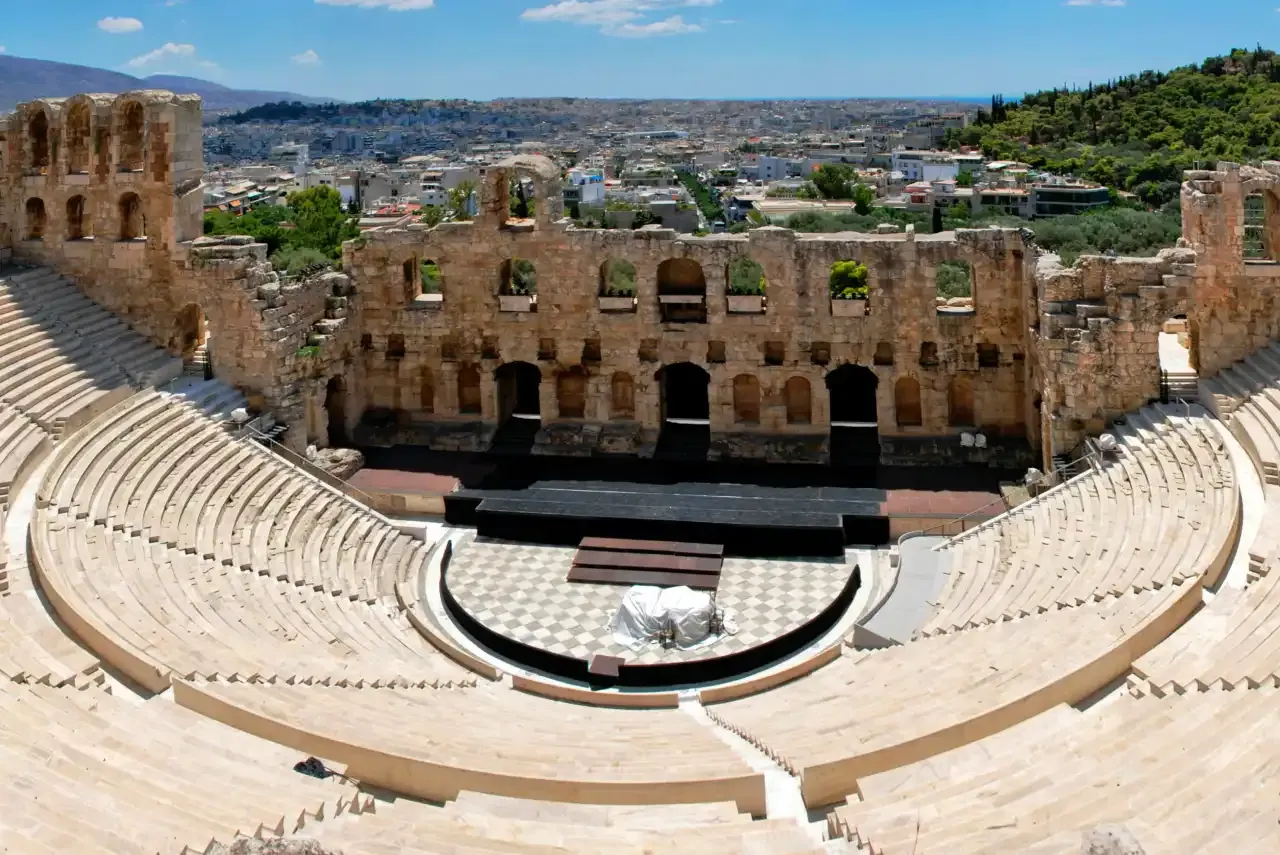
Odeon of Herodes Atticus
The Odeon of Herodes Atticus, built in 161 CE by the wealthy Athenian benefactor of the same name as a memorial to his wife, represents a stunning example of Roman architectural influence on the Acropolis complex.
This impressive stone theater, nestled into the southwestern slope of the Acropolis hill, originally featured a distinctive cedar wood roof and could seat approximately 5,000 spectators across its three-tiered seating arrangement.
Unlike its ancient neighbor, the Theatre of Dionysus, the Odeon was designed primarily for musical performances and recitations rather than dramatic productions.
Today, after extensive restoration in the 1950s, it serves as one of Europe’s most atmospheric concert venues, hosting the annual Athens Festival and attracting world-renowned artists who perform against the magnificent backdrop of the illuminated Acropolis monuments.
Tips for your visit to the Acropolis of Athens
Visiting the Acropolis of Athens requires good planning to enjoy the experience to the fullest. Here are some essential tips for your trip to the top of the city:
Avoid heat and crowds
For the best experience, visit first thing in the morning (8:00 a.m.) or late in the afternoon. When the site opens, the weather is cooler, and you can enjoy the monuments before large tourist groups arrive. If traveling in summer, strictly avoid midday hours (10:00 a.m. to 2:00 p.m.), as this is when temperatures are highest and crowds are at their maximum. Planning your visit for sunset also provides spectacular light for photos!
Buy your tickets in advance
Buy your tickets in advance and online to skip the ticket office queue, which can be very long during high season. Furthermore, instead of using the crowded main entrance, opt for the South/Southeast entrance (located near the Theatre of Dionysus). This secondary entrance usually has less traffic and allows for quicker access to the site.
Wear comfortable shoes
The Acropolis is built on rock and ancient marble. For your safety and comfort, it is essential to wear closed, comfortable footwear with a good non-slip sole. The ground can be extremely slippery and uneven.
Sun protection and hydration essentials
Since the Acropolis hill offers very little natural shade, it is crucial to protect yourself from the Mediterranean sun. Be sure to apply sunscreen generously, wear a hat or cap, and use sunglasses. Additionally, maintain your hydration by bringing a reusable water bottle (you will find designated spots within the complex where you can safely refill it).
More information about the Acropolis
History
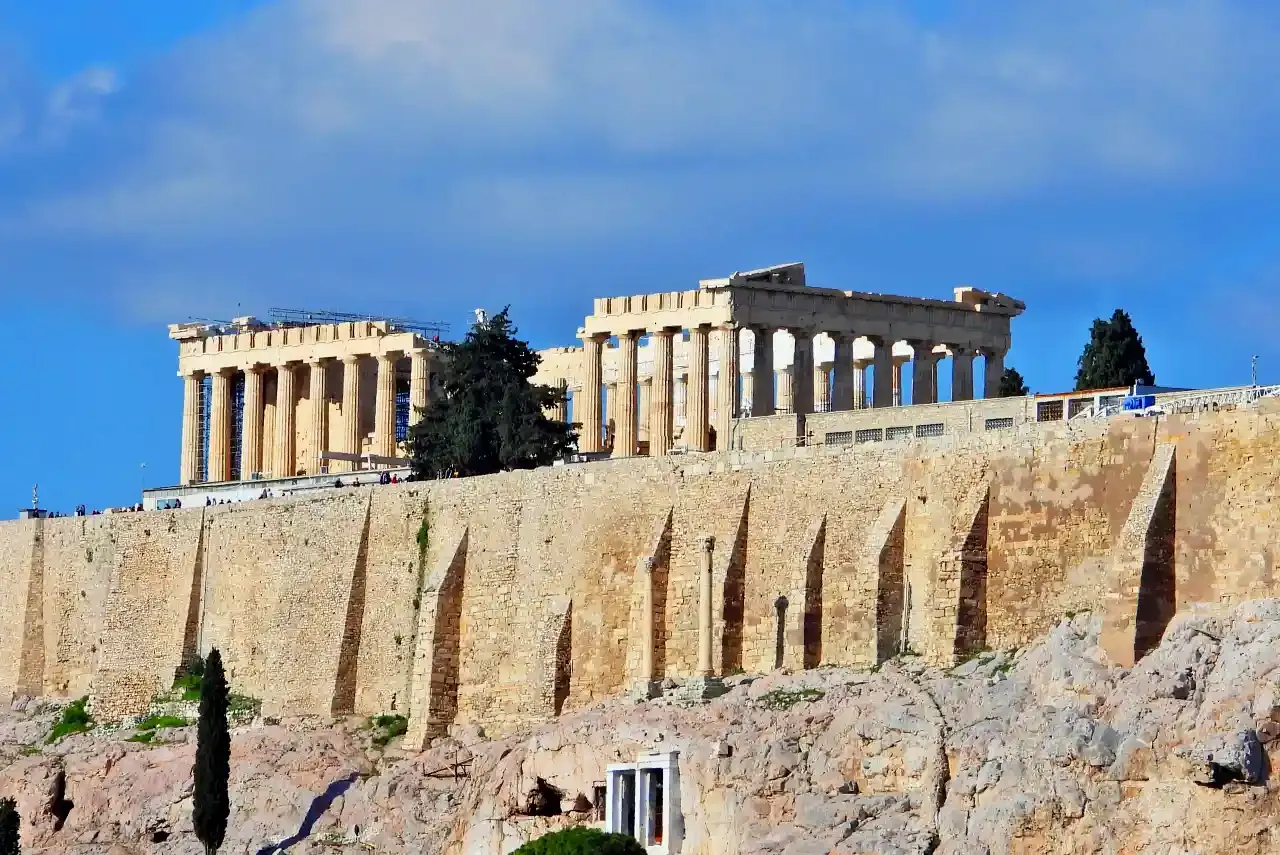
While the site was inhabited as early as the 4th millennium BC, its most glorious period began in the 5th century BC under Pericles, when masterpieces like the Parthenon were constructed. Throughout the centuries, the history of the Acropolis has been marked by dramatic changes, including the Persian destruction in 480 BC and its later conversion into a Christian church and an Ottoman mosque.
A clear perspective on the history of the Acropolis and its survival through medieval sieges and modern restoration efforts ensures that you truly appreciate the resilience of these ancient marble monuments during your visit.