
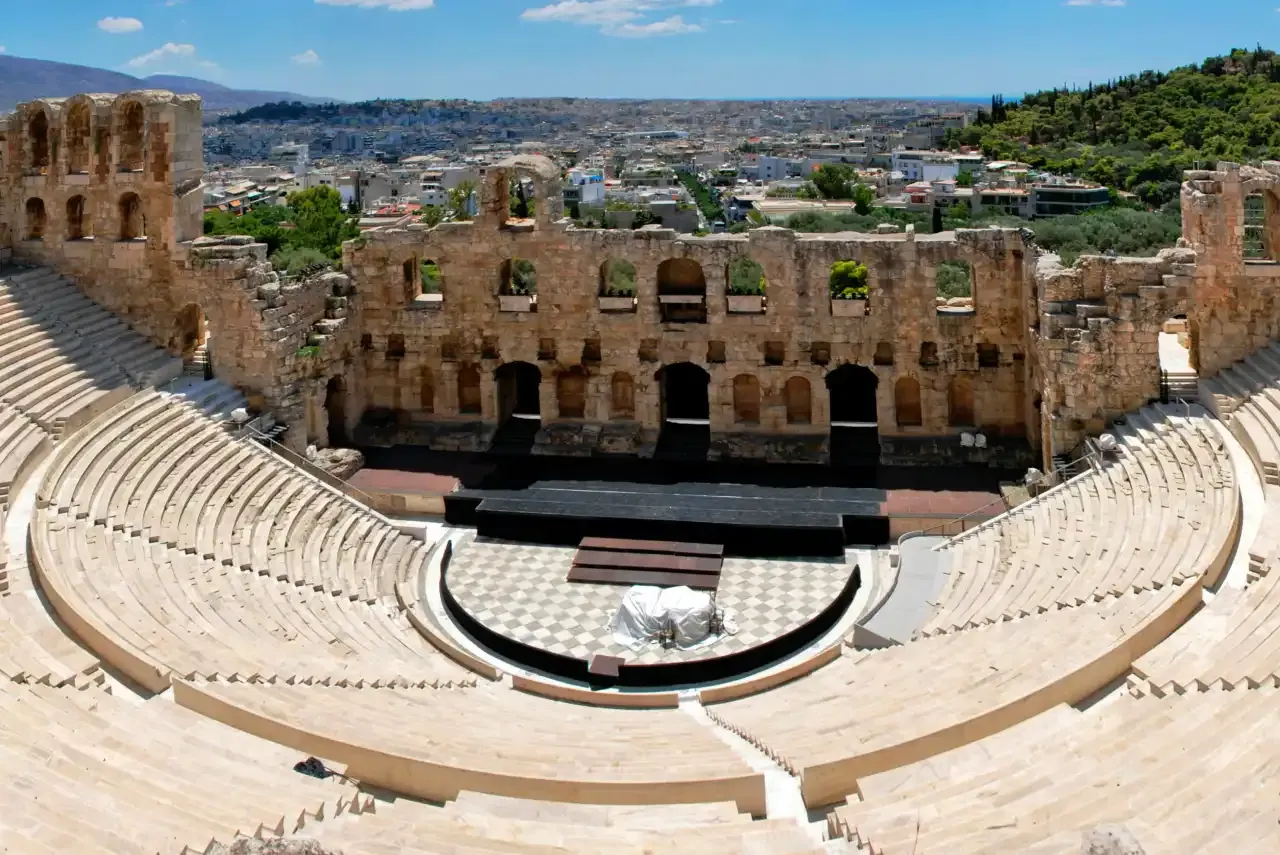
Odeon of Herodes Atticus Tickets
The Odeon of Herodes Atticus is one of the most historic in all of Greece. Discover why and learn about the events that are held there.
Events at the Odeon of Herodes Atticus
Experience the 2026 season of events at the Odeon of Herodes Atticus, featuring a program of music, theatre and dance or special events. Located on the slopes of the Acropolis, this venue hosts the annual Athens Epidaurus Festival in a historic Roman setting.
Music and concerts
| Event | Date |
|---|---|
| Víkingur Ólafsson: Works by Bach, Beethoven, and Schubert | June 3 |
| Stavros Xarchakos: Here and Now | June 5 and 6 |
| Athens State Orchestra (Lukas Karytinos): Αmerica by Manos X – Part I | June 10 |
| Estonian Philharmonic Chamber Choir & Tallinn Chamber Orchestra: Works by Arvo Pärt | June 15 |
| George-Emmanuel Lazaridis (Raining Pleasure): Αmerica by Manos X – Part II | June 17 |
| Einstürzende Neubauten: Ode to Avant Garde | June 18 |
| Lena Platonos and Maria Farantouri: Fortunes | June 19 |
| ERT National Symphony Orchestra: World Music Day | June 21 |
| Lykke Li: Greek Debut | June 22 |
| Athens State Orchestra (Michał Nesterowicz): Mahler’s Symphony No. 8 | June 29 |
| John Legend: A Night of Songs and Stories | June 30 |
Dance and theatre

Dance and theatre
Dance and Theatre performances at the Odeon of Herodes Atticus integrate performing arts and movement within a Roman stage setting. These productions adapt classical texts and contemporary choreography to the acoustic and spatial conditions of the ancient theater.
| Event | Date |
|---|---|
| Stamatis Kraounakis: Lysistrata (Operatic production) | June 12 and 13 |
| Stathis Livathinos: Hecuba by Euripides | June 25 and 26 |

Special events
The Special Events at the Odeon of Herodes Atticus are performances that utilize the Roman theater's acoustics and history for artistic productions. These events combine the ancient setting with music, dance, and theater, hosting diverse cultural programs at the foot of the Acropolis.
| Event | Date |
|---|---|
| The Avex Ensemble: Blade Runner Live (Film screening with live orchestra) | June 4 |
| Epilekto Epirus Ensemble: Epirus featuring Vasilis Kostas and Petroloukas Chalkias | June 9 |
Inside the Odeon of Herodes Atticus
The Odeon of Herodes Atticus is a preserved Roman-era amphitheater located on the south slope of the Acropolis of Athens. Built in 161 AD by the wealthy Greek Herodes Atticus, an influential and wealthy Greek nobleman and sophist who lived in the 2nd century AD. Hailing from an immensely rich Athenian family, he enjoyed a distinguished political career in the Roman Empire, rising to become a Roman senator and consul in 143 AD.
The Odeon was designed for musical and theatrical performances, with a seating capacity of up to 5,000 people. Today, it remains an important cultural attraction and a testament to the grandeur of ancient Greek and Roman architecture.
What is the history of the Odeon of Herodes Atticus?
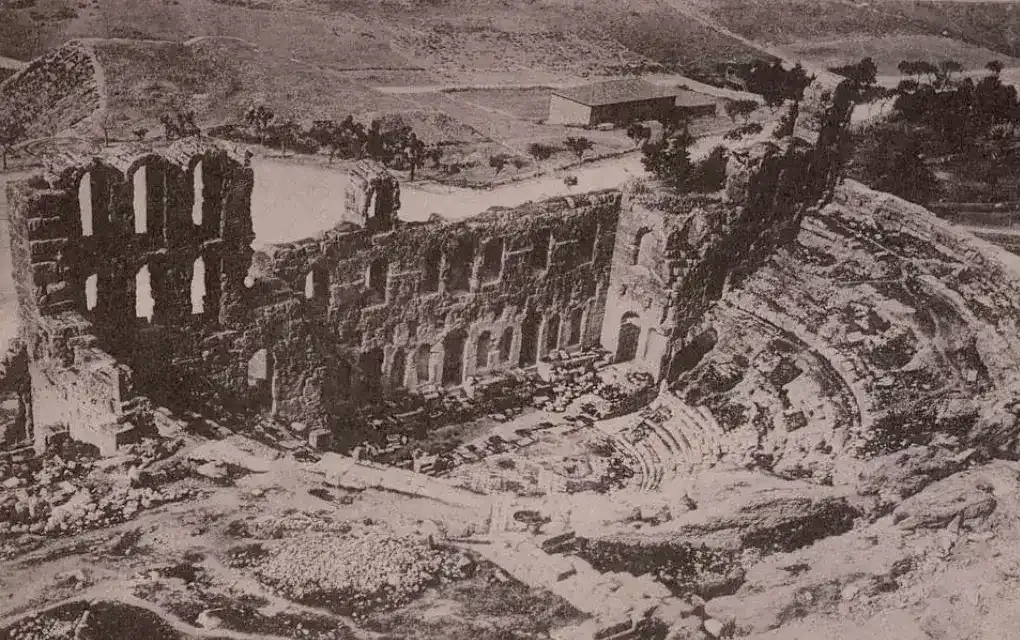
What is the history of the Odeon of Herodes Atticus?
The Odeon of Herodes Atticus was built in memory of his late wife, Aspasia Annia Regilla, a Roman noblewoman who died around 160 AD. Regilla had settled in Greece and served as a priestess of Demeter and Tyche. Herodes was a wealthy and influential Greek senator, known for his philanthropic activities. The Odeon was one of his many gifts to the city of Athens, an act of monumental conjugal love.
The Evolution of the Odeon of Herodes Atticus
It quickly became a popular venue for musical performances, but its splendor lasted just over a century:
Barbarian destruction
The Odeon’s demise began in 267 AD when Athens suffered a devastating invasion by the Heruli, a Germanic tribe who swept through the Roman Empire. This catastrophic event led to a massive fire that destroyed much of the lower city and, critically, burned away the Odeon’s expansive cedar wood roof and damaged the stage area, marking the abrupt end of its functionality in antiquity.
Abandonment and reuse
Following the invasion, the Odeon was abandoned, and unlike other damaged Acropolis structures, it was never repaired or rebuilt during the following centuries. Instead, its valuable marble blocks were systematically reused, known as spolia, as building material to reinforce the new defensive wall surrounding the Acropolis, called the Rizokastro. Over the next centuries, the structure became progressively covered in earth and debris, remaining largely buried.
Restoration of the Odeon of Herodes Atticus
The Odeon of Herodes Atticus underwent a major restoration in the mid-20th century to restore the ancient theater to its former glory. The restoration was funded by the Greek government and took several years to complete. The restoration process involved repairing and replacing the original stone seating, restoring the stage area, and improving the acoustics of the theater. Today, visitors can see the results of the restoration in the well-preserved seating area and the restored stage backdrop.
Now is used for various cultural events and performances, including concerts, plays, and dance performances, bringing the ancient theater back to life for modern audiences to enjoy.
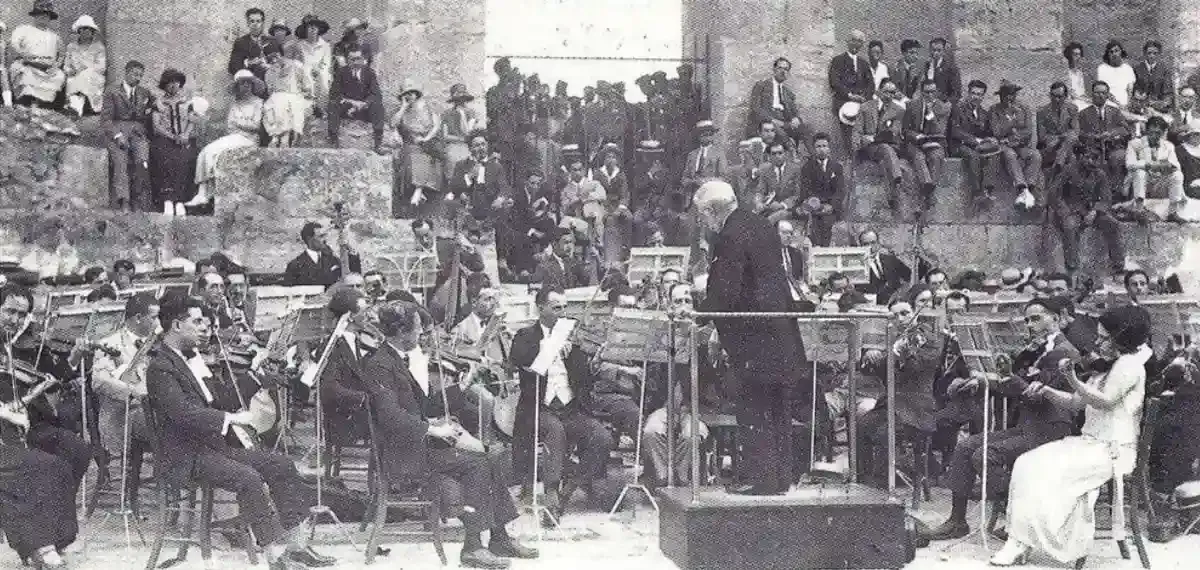
The cultural revival
Its modern use for major performances dates back to 1926, when Richard Strauss conducted a concert at the site. The theater’s acoustics and history have attracted international artists, including Maria Callas, Luciano Pavarotti, Frank Sinatra, Elton John, and Sting, as well as companies like the Bolshoi Ballet.
Since 1957, the Odeon of Herodes Atticus has been the primary venue for the Athens & Epidaurus Festival. For the 2026 edition, the artistic programme includes a series of productions scheduled at the theater, featuring a mix of local and international ensembles. These performances continue the tradition of using the Roman stage for global cultural exchange, as detailed in the recent official announcement.
Architecture of the Odeon of Herodes Atticus
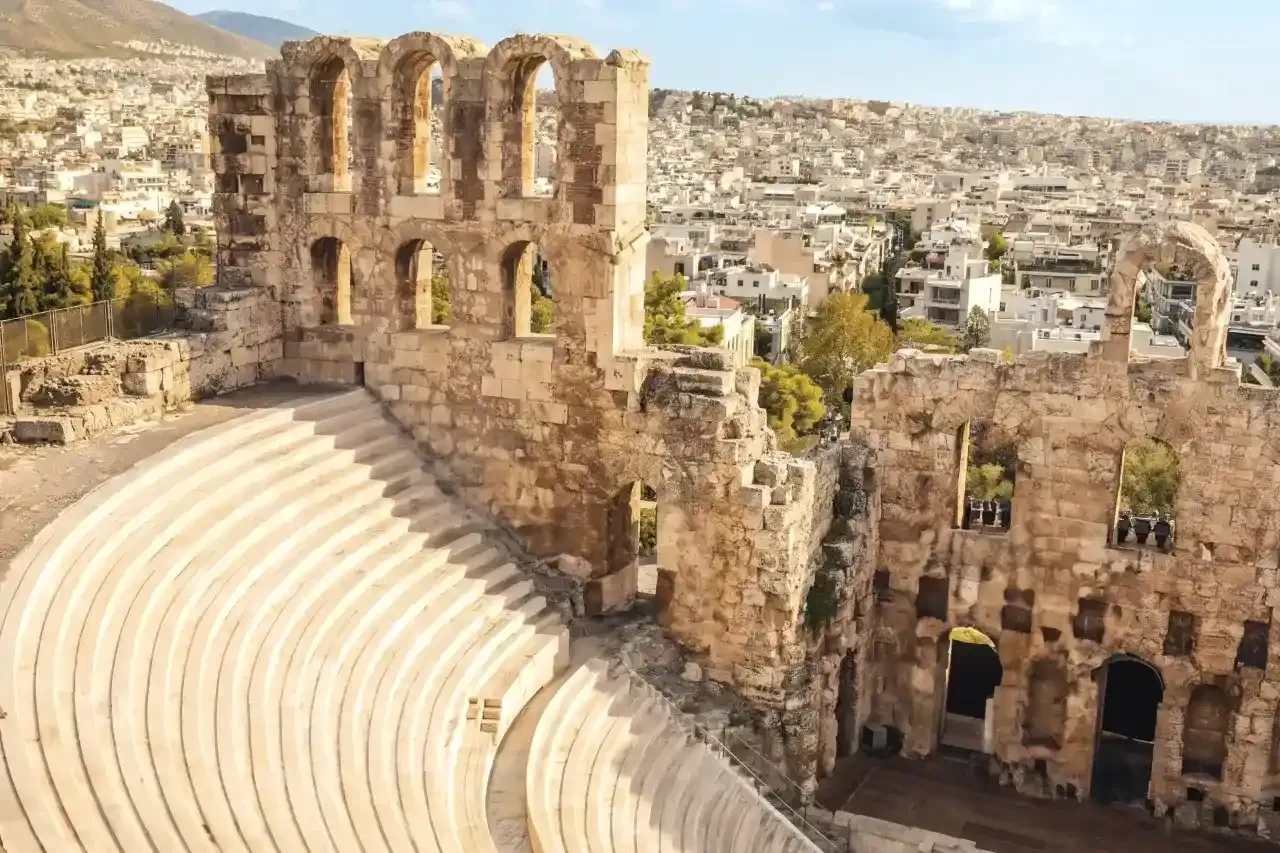
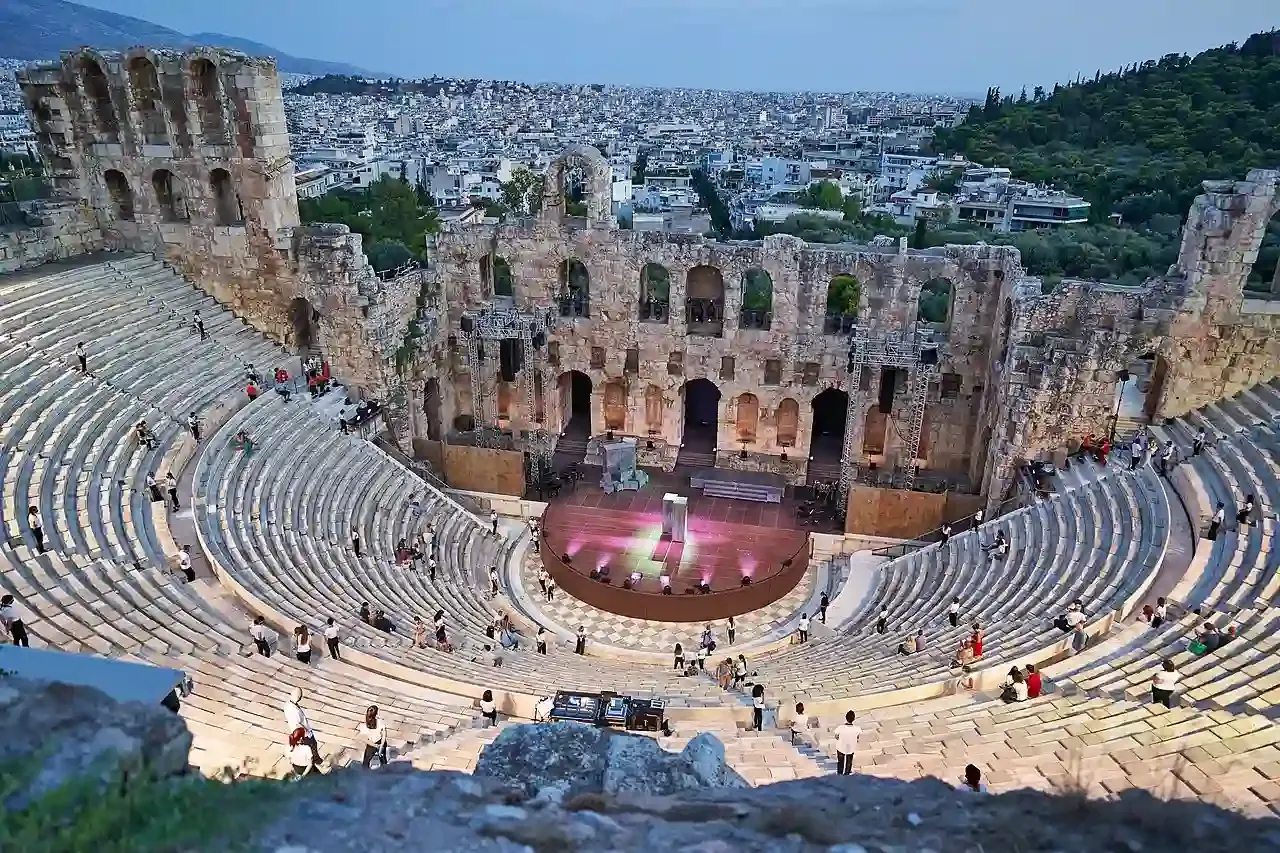
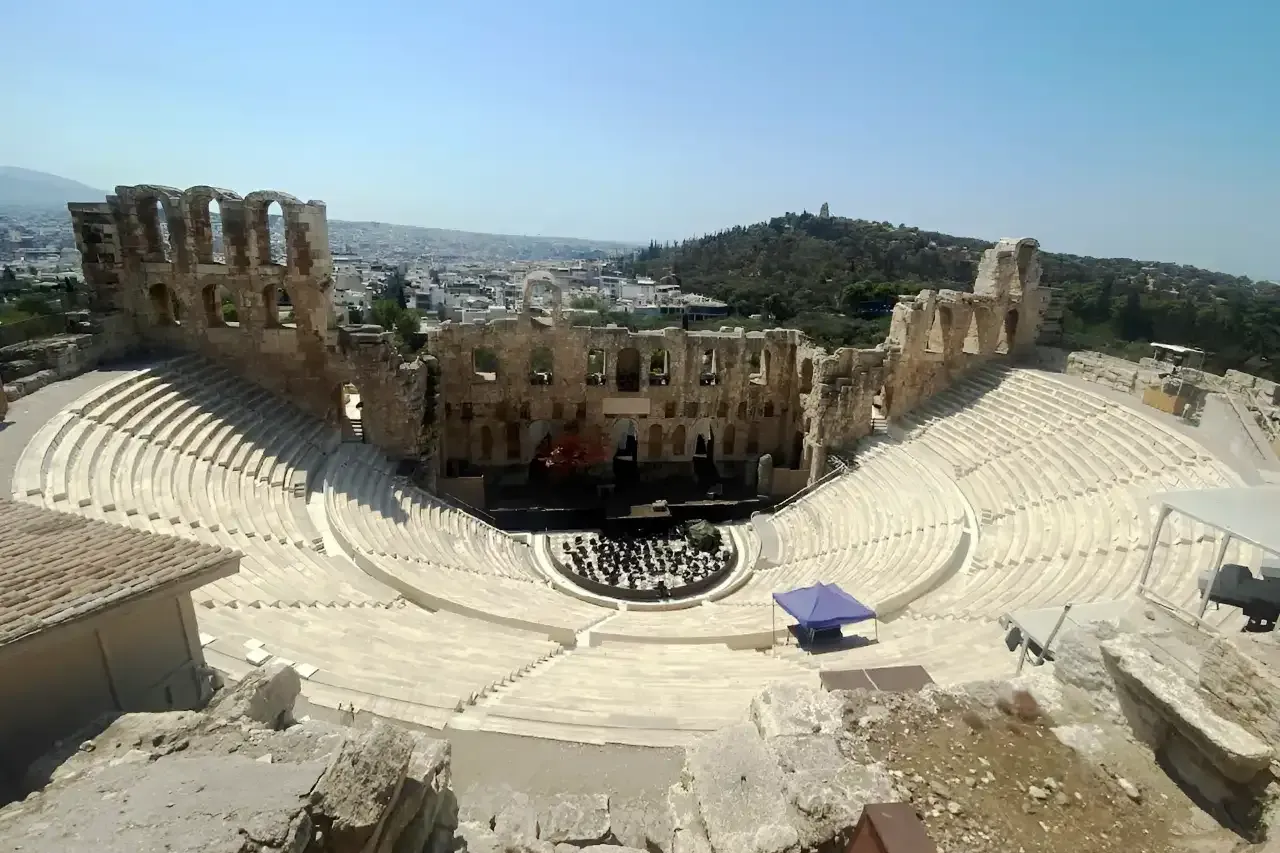
Designed in the Roman style, the Odeon of Herodes Atticus features many elements typical of Roman-era amphitheaters. The theater is built into a natural slope, and the semi-circular orchestra is surrounded by tiered seating. The stage is raised and framed by a tall back wall with niches for statues.
Its facade is made of white marble and features an impressive archway at the entrance. The archway is flanked by two columns topped with Corinthian capitals. The archway’s keystone is carved in the shape of a lion’s head, a common motif in Roman architecture.
The Odeon’s seating area is divided into three sections: the diazoma, the lower cavea, and the upper cavea. The diazoma is a walkway that separates the lower and upper cavea and allows access to the seating area. The lower cavea is divided into several sections, with rows of seats separated by staircases. The upper cavea is also divided into sections, with the seats arranged in a radial pattern.
A raised platform forms the Odeon’s stage, featuring a semi-circular area for performers. The back wall of the stage is divided into three sections, with the central section featuring a niche for a statue. This stage was originally covered with a wooden roof, but this was later removed.
Must see things in the Odeon of Herodes Atticus
Since the Odeon is seamlessly integrated into the slopes of the hill, we highly recommend booking your acropolis tickets in advance so you can seamlessly continue your journey up to the summit and explore the rest of the complex.
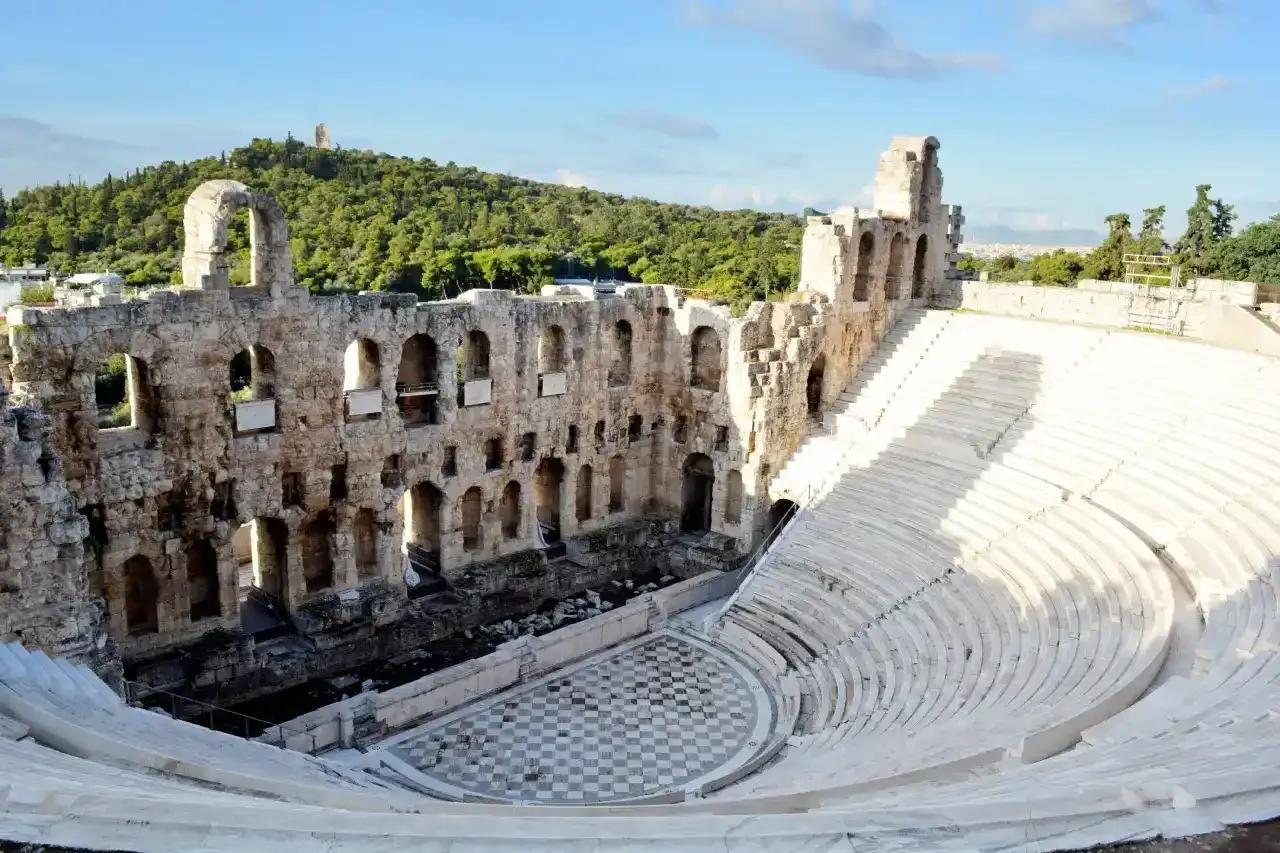
The stage and skene
The stage and skene of the Odeon represent the architectural core of the Roman theater. The performance area features a floor paved with multicolored marble, while the skene rises as a monumental three-story wall. Originally, this facade was decorated with marble columns and intricate carvings that showcased Roman craftsmanship.
Today, the standing ruins allow visitors to visualize where the ancient scenery was placed. The skene was not merely decorative; its internal chambers served practical purposes, including storage for props and dressing rooms for the performers. This massive stone backdrop also functioned as a sound reflector, ensuring that the actors' voices reached the highest tiers of the seating area.
Other landmarks in the Acropolis complex
To help you visualize how the theater fits into the ancient citadel and plan your route, make sure to check out our detailed Acropolis map before your visit.
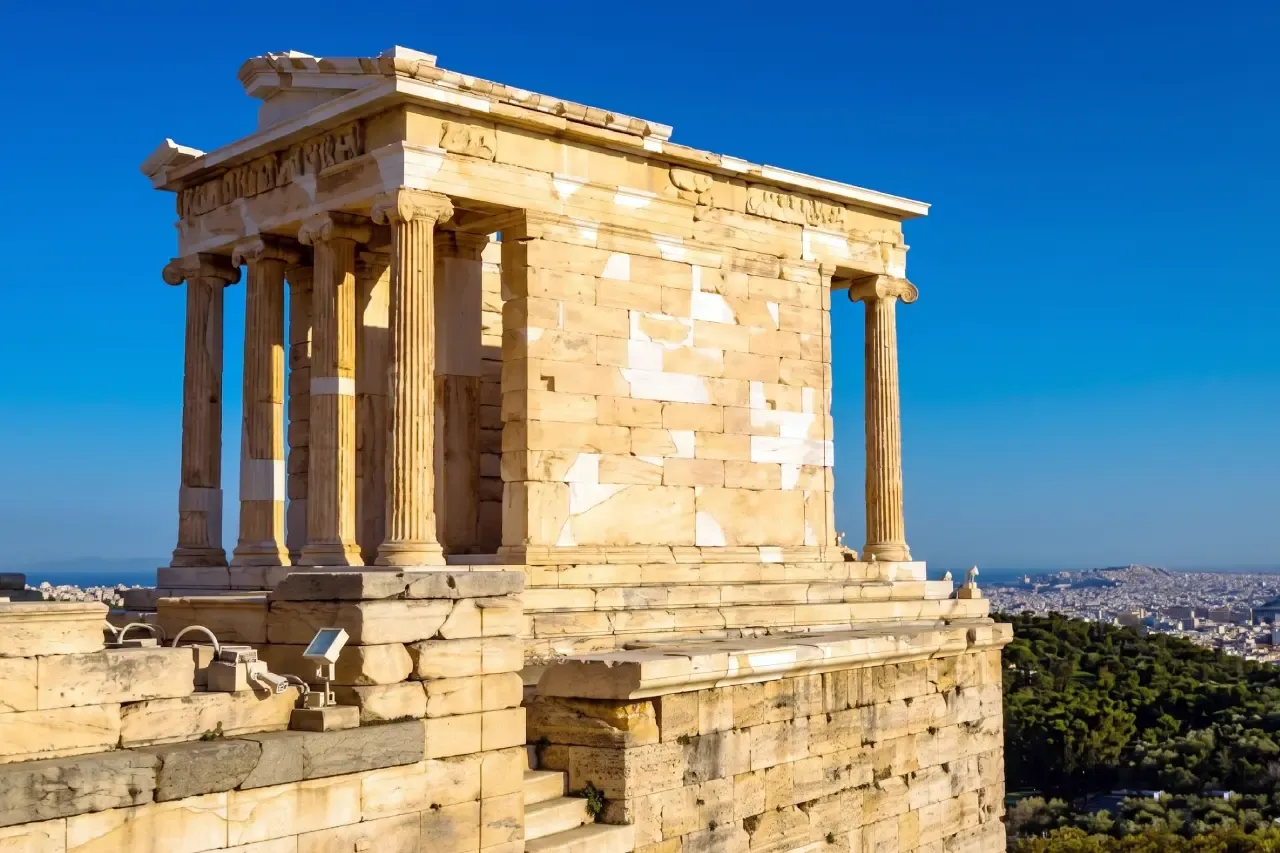
The Temple of Athena Nike
Perched elegantly on a steep bastion right next to the entrance, the Temple of Athena Nike is a masterpiece of Classical architecture dedicated to the goddess of victory.
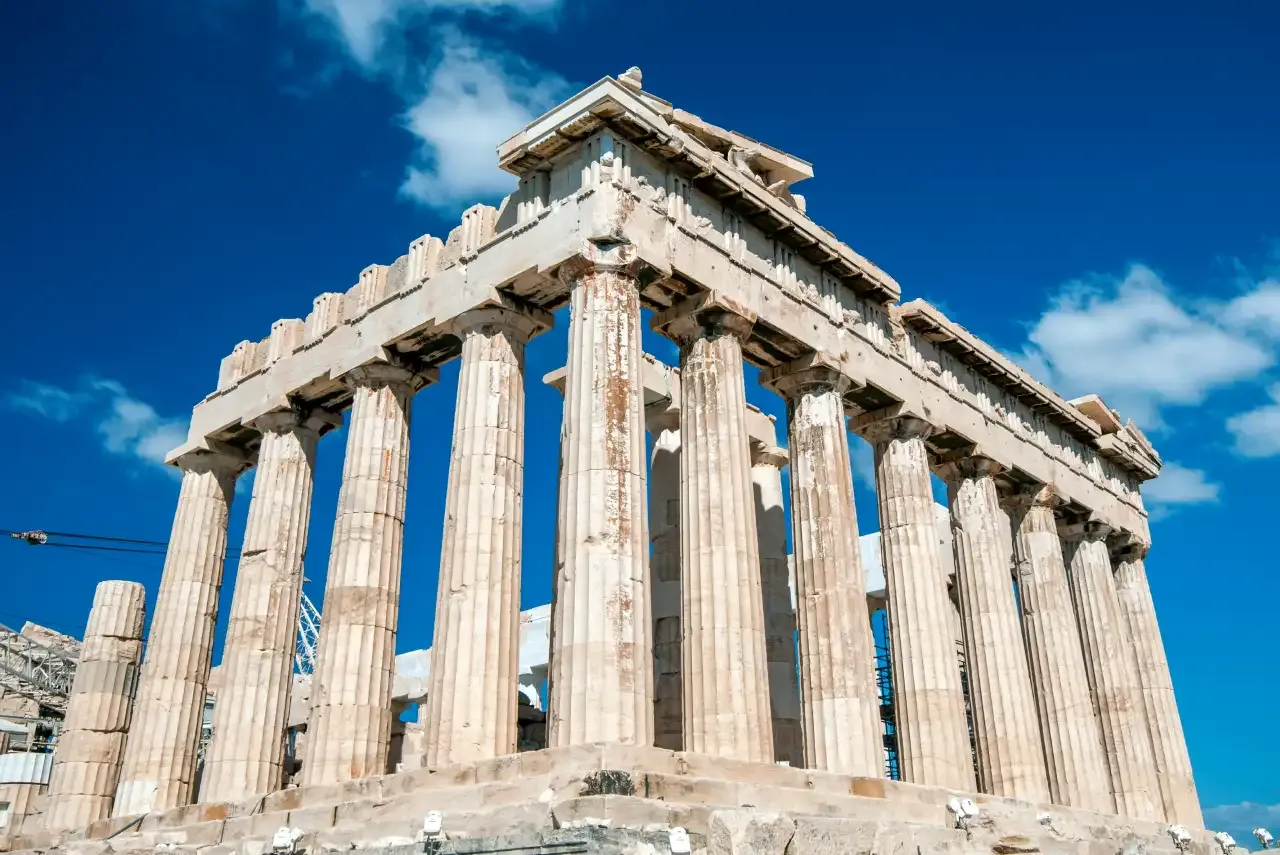
Parthenon vs. Acropolis
First-time visitors often confuse the famous temple with the hill it sits on, so understanding the key differences between the Parthenon and the Acropolis will completely change how you view the site.
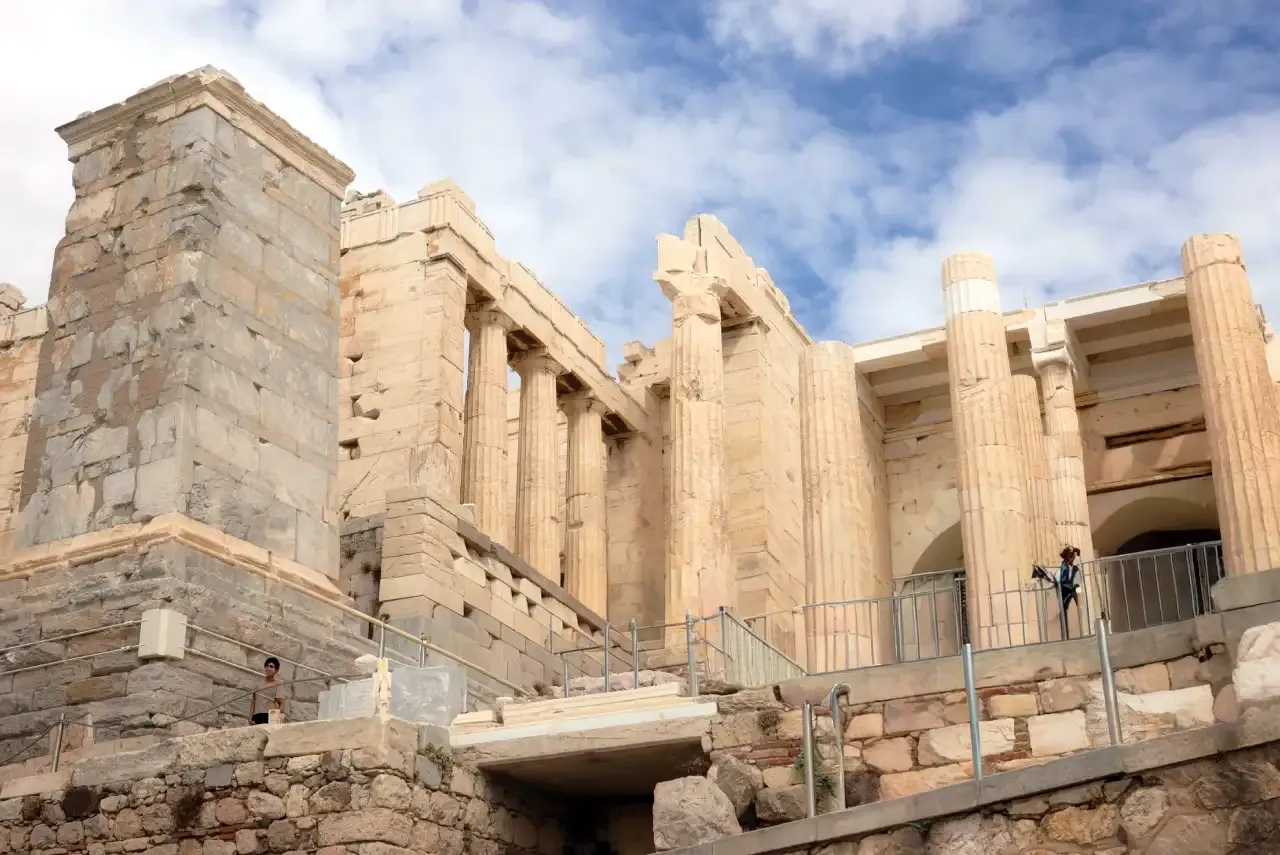
Propylaea
Serving as the grand entrance to the Acropolis, walking through the towering columns of the Propylaea offers a breathtaking and imposing welcome to the sacred rock.