
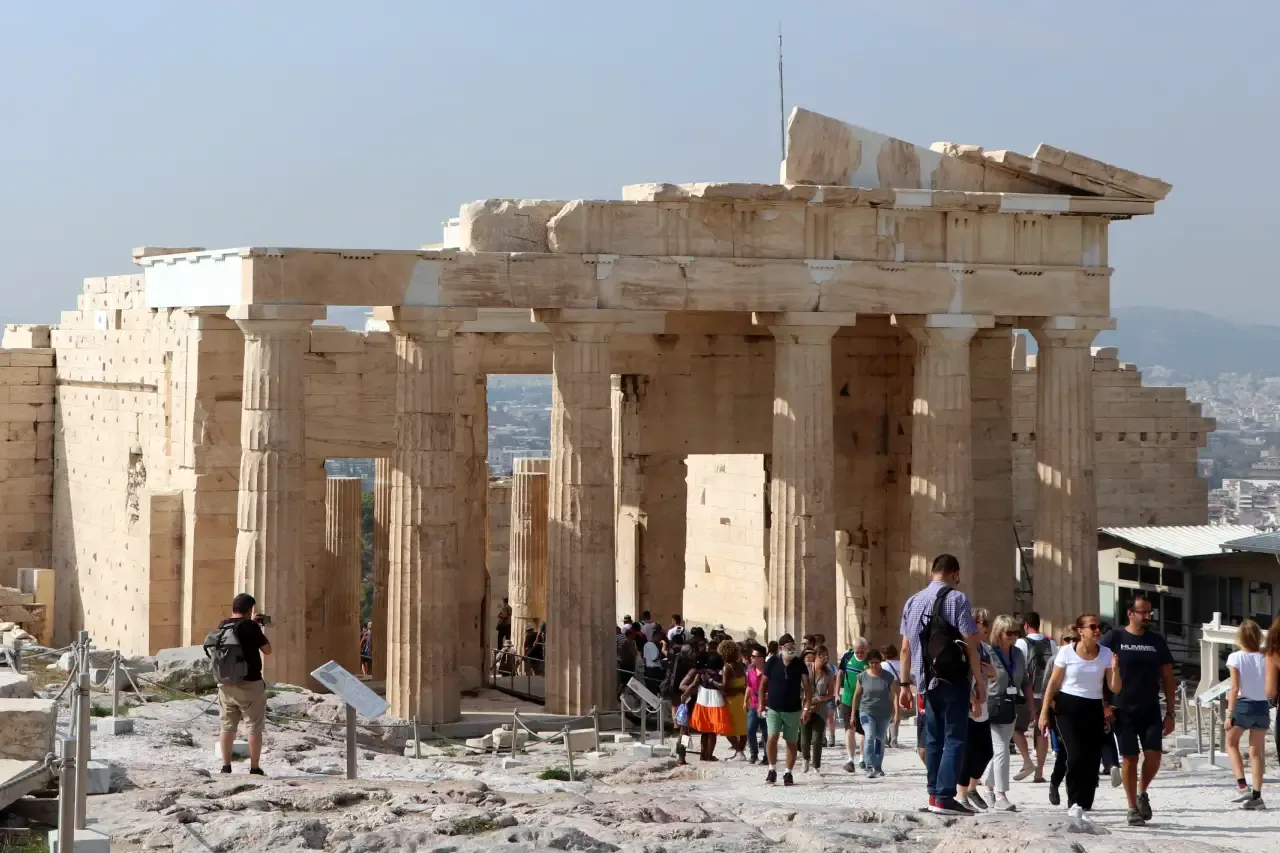
Touring the Acropolis of Athens
To ensure a smooth experience, it is essential to properly plan your visit to the Acropolis by considering factors like ticket booking and peak hours. Taking the time to organize these details in advance will help you navigate the crowds and fully enjoy the architectural wonders of ancient Athens.
What you have to know to visit the Acropolis?
Acropolis and Museum Opening hours
Getting to the Acropolis
Acropolis Complex Map
Best time to visit the Acropolis
Things to do near
Entry tickets to the Acropolis
How to visit the Acropolis?
The Acropolis of Athens contains several magnificent ancient monuments, each with its own historical significance and architectural marvels. While it might seem tempting to explore randomly, following a strategic route will help you appreciate the site’s full story while avoiding crowds and maximizing your photography opportunities.
This guide assumes that you start at the main western entrance and walk clockwise around the summit before descending the southern slope. This route minimizes backtracking and allows you to visit all the sites in about 2-3 hours total:
Propylaea
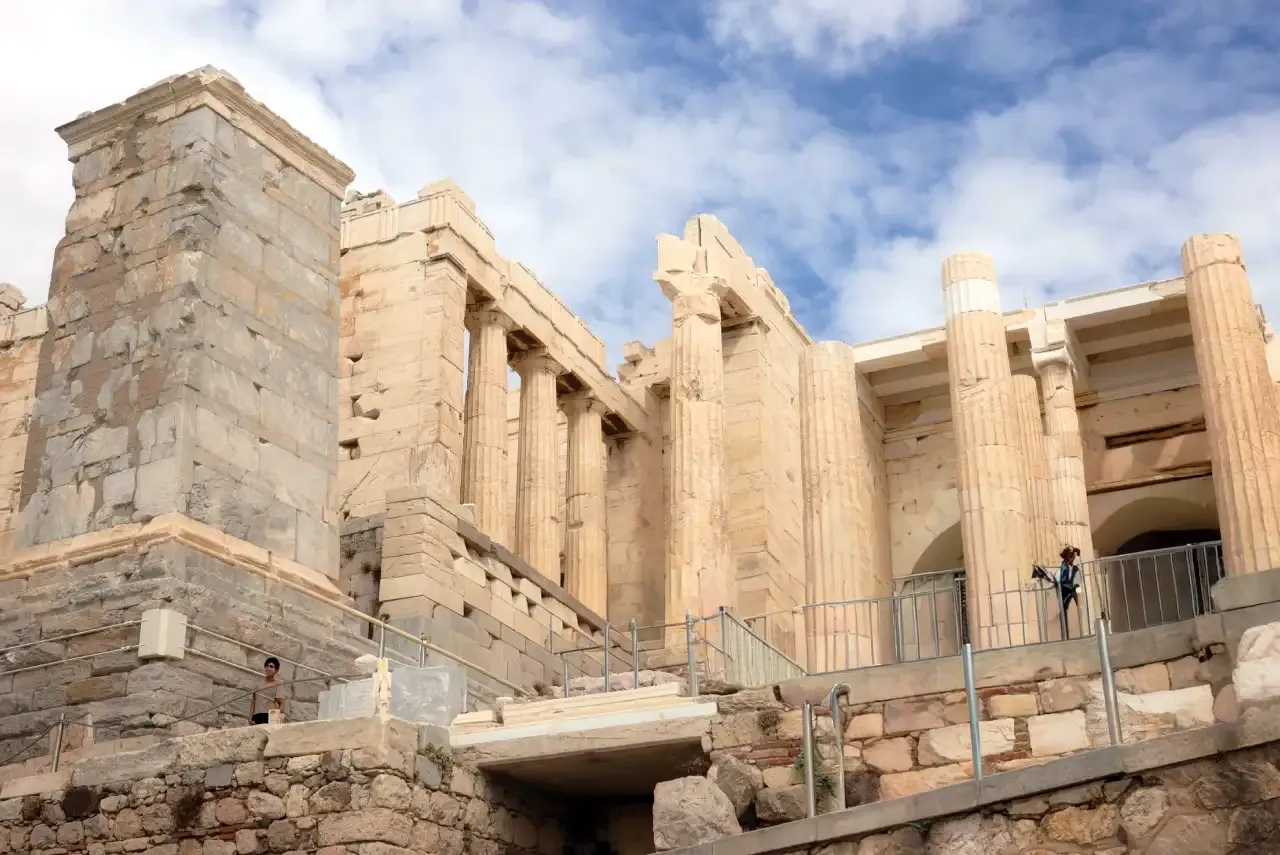
Your Acropolis journey begins at the Propylaea, the monumental gateway that served as the grand entrance to the sacred precinct. This impressive marble structure, built between 437-432 BCE, features a central hall with massive Doric columns and smaller Ionic columns in the side wings. As you pass through this ancient threshold, you’ll walk the same path that Athenian citizens took during religious festivals, and you’ll get your first breathtaking views of the Parthenon ahead.
Estimated visit time: 15-20 minutes.
Temple of Athena Nike
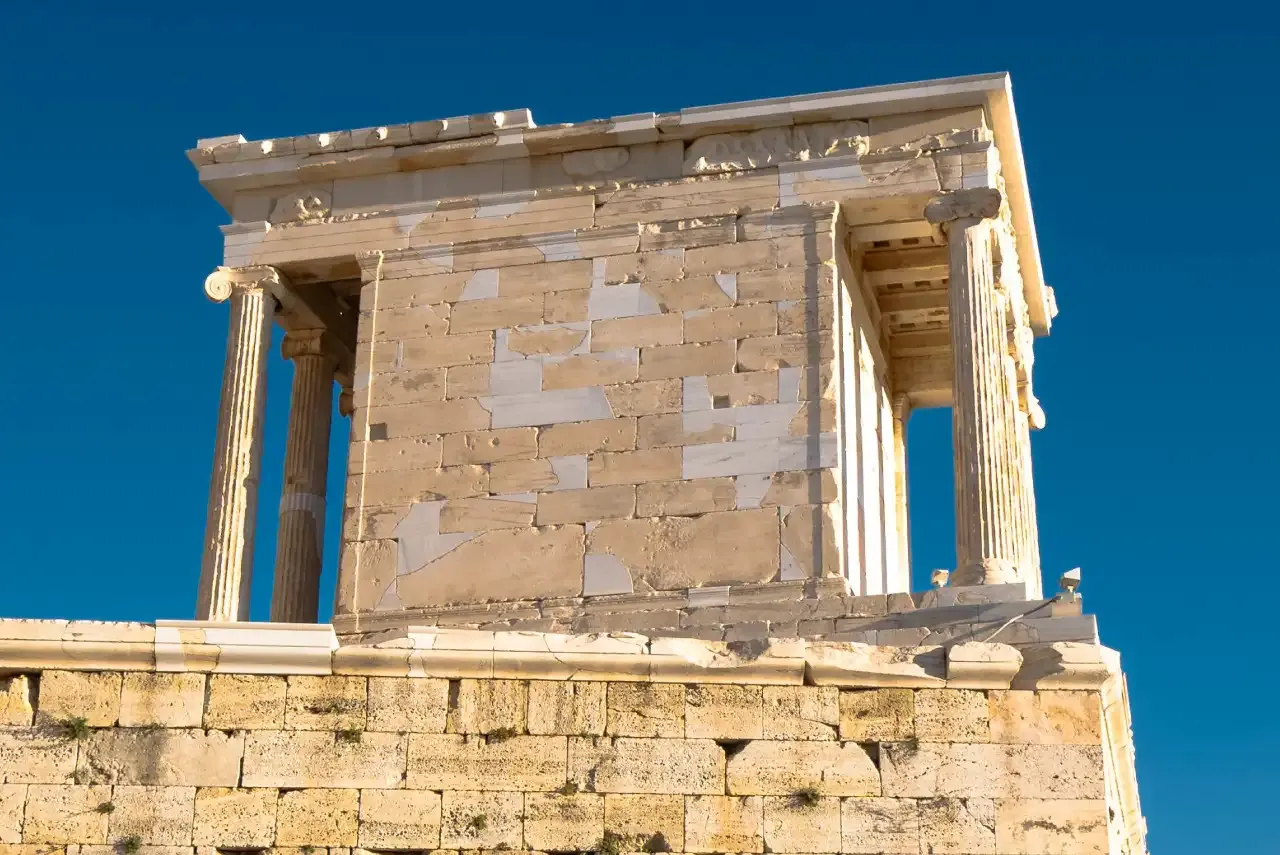
Just to your right after entering through the Propylaea, you’ll find the small but perfectly proportioned Temple of Athena Nike perched on a bastion overlooking the city. This elegant Ionic temple, dedicated to Athena as the goddess of victory, offers stunning panoramic views of Athens below. Despite its modest size, the temple’s delicate marble reliefs depicting Greek victories make it a masterpiece of classical architecture.
Estimated visit time: 10-15 minutes.
Parthenon
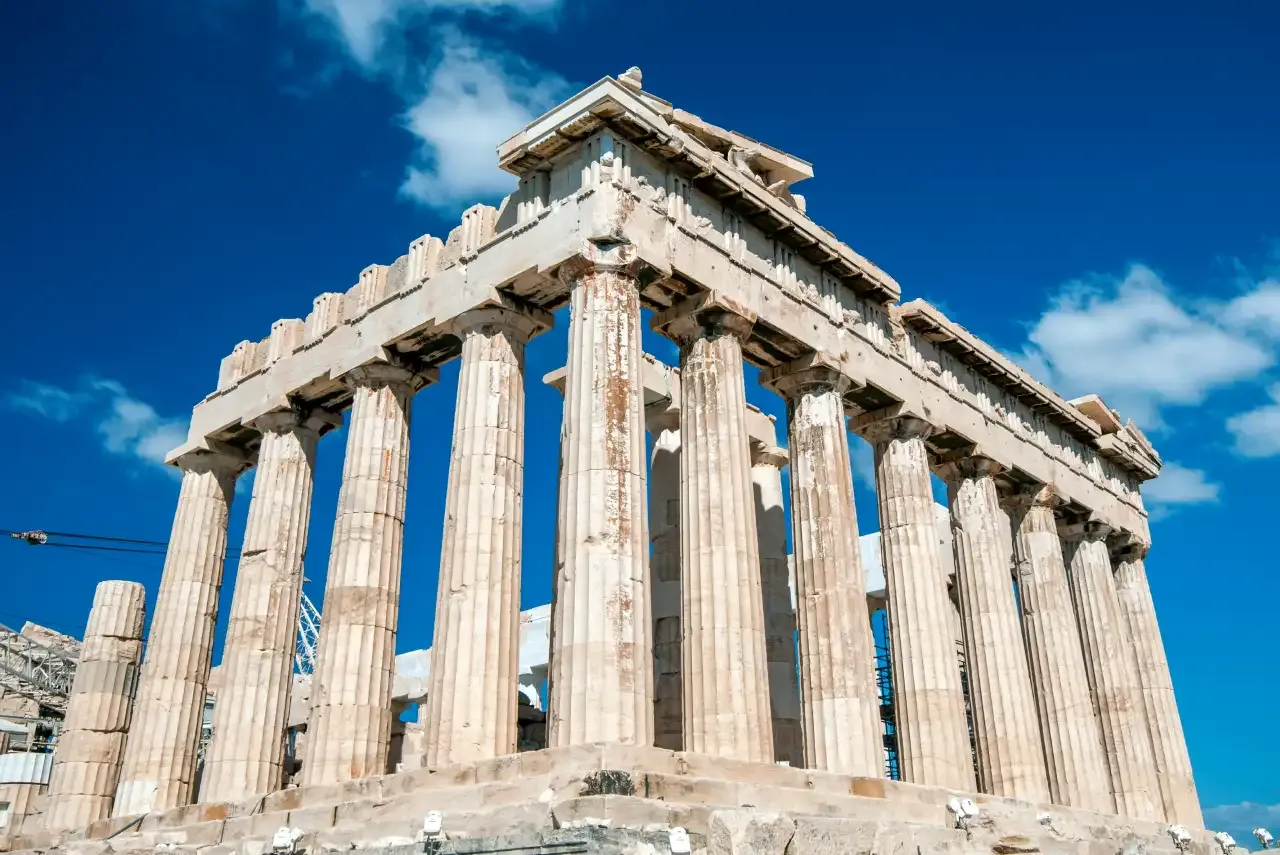
The crown jewel of the Acropolis, the Parthenon. Built between 447-438 BCE, this Doric temple dedicated to Athena Parthenos showcases the pinnacle of classical Greek architecture. While you can’t enter the interior, walking around its perimeter reveals intricate sculptural details, optical illusions in its design, and the subtle ways ancient architects achieved visual perfection.
Estimated visit time: 30-45 minutes.
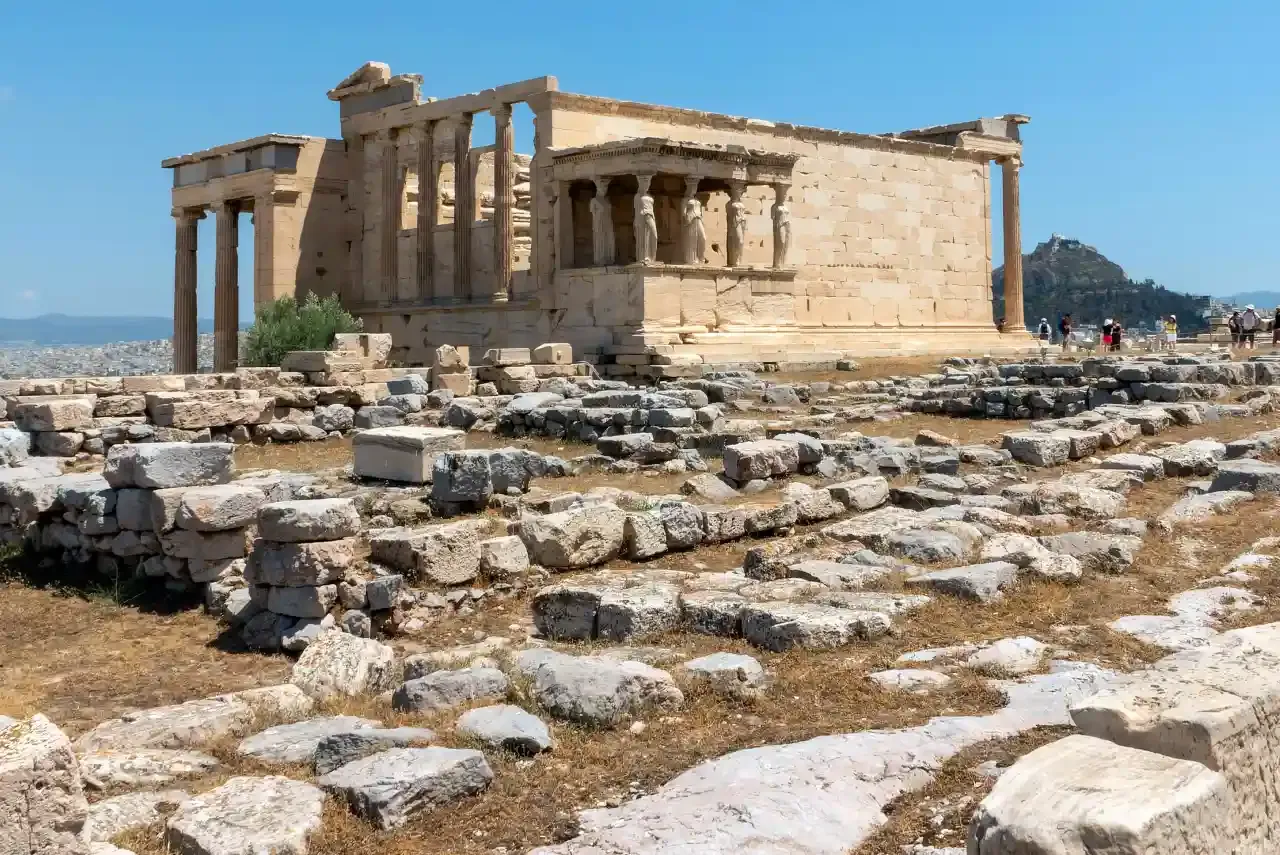
Old Temple of Athena
Located between the Parthenon and the Erechtheion, the foundations and scattered remains of the Old Temple of Athena tell the story of the Acropolis before the Persian destruction. Though only ruins remain of this archaic temple that once housed the original wooden statue of Athena, the site helps visitors understand the continuity of worship on this sacred hill.
Estimated visit time: 10-15 minutes.
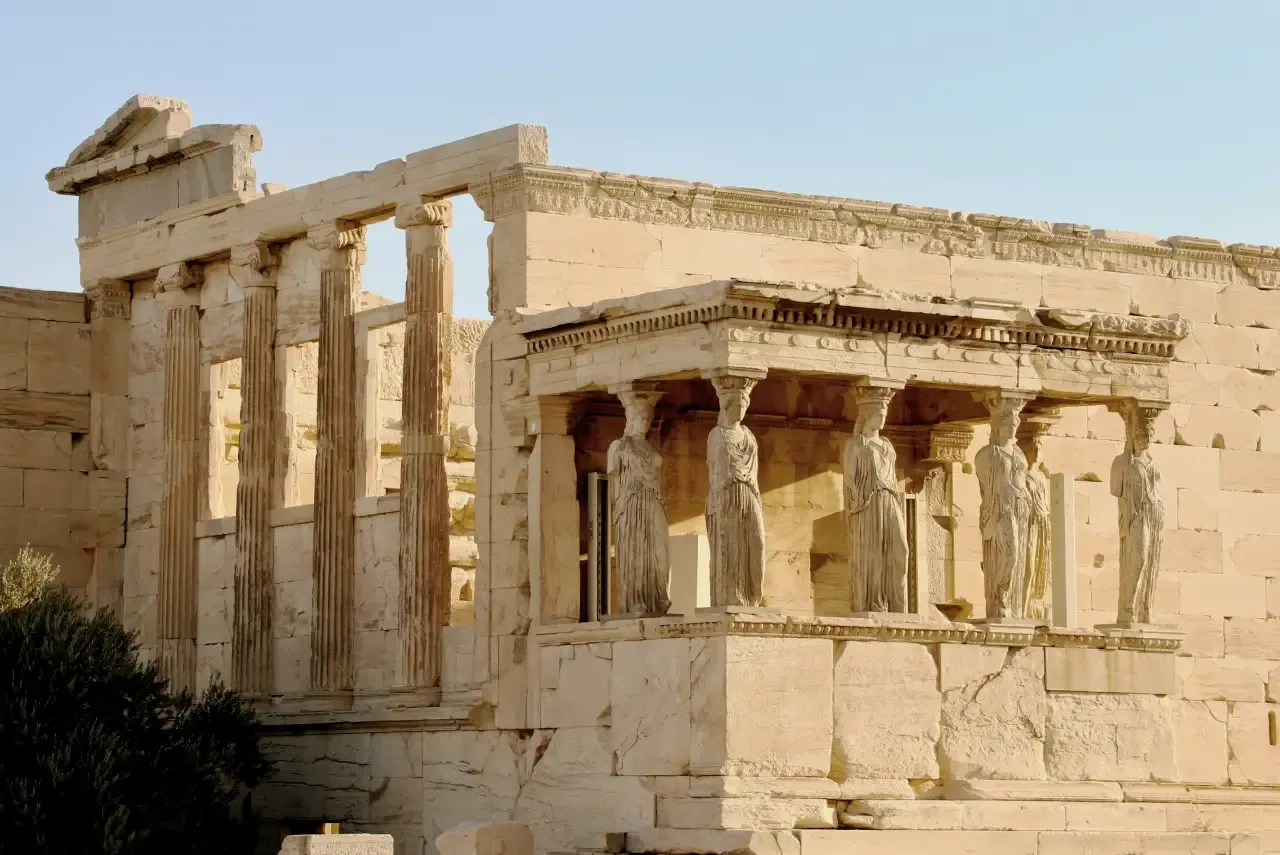
Erechtheion
The most architecturally complex building on the Acropolis, the Erechtheion is famous for its Porch of the Caryatids, where six sculpted maidens serve as columns supporting the roof. Built on the most sacred spot of the Acropolis, this temple accommodated multiple ancient cults and the legendary contest between Athena and Poseidon for Athens’ patronage. The building’s asymmetrical design and different ground levels showcase the ingenuity of ancient architects working with challenging terrain and religious constraints.
Estimated visit time: 20-25 minutes.
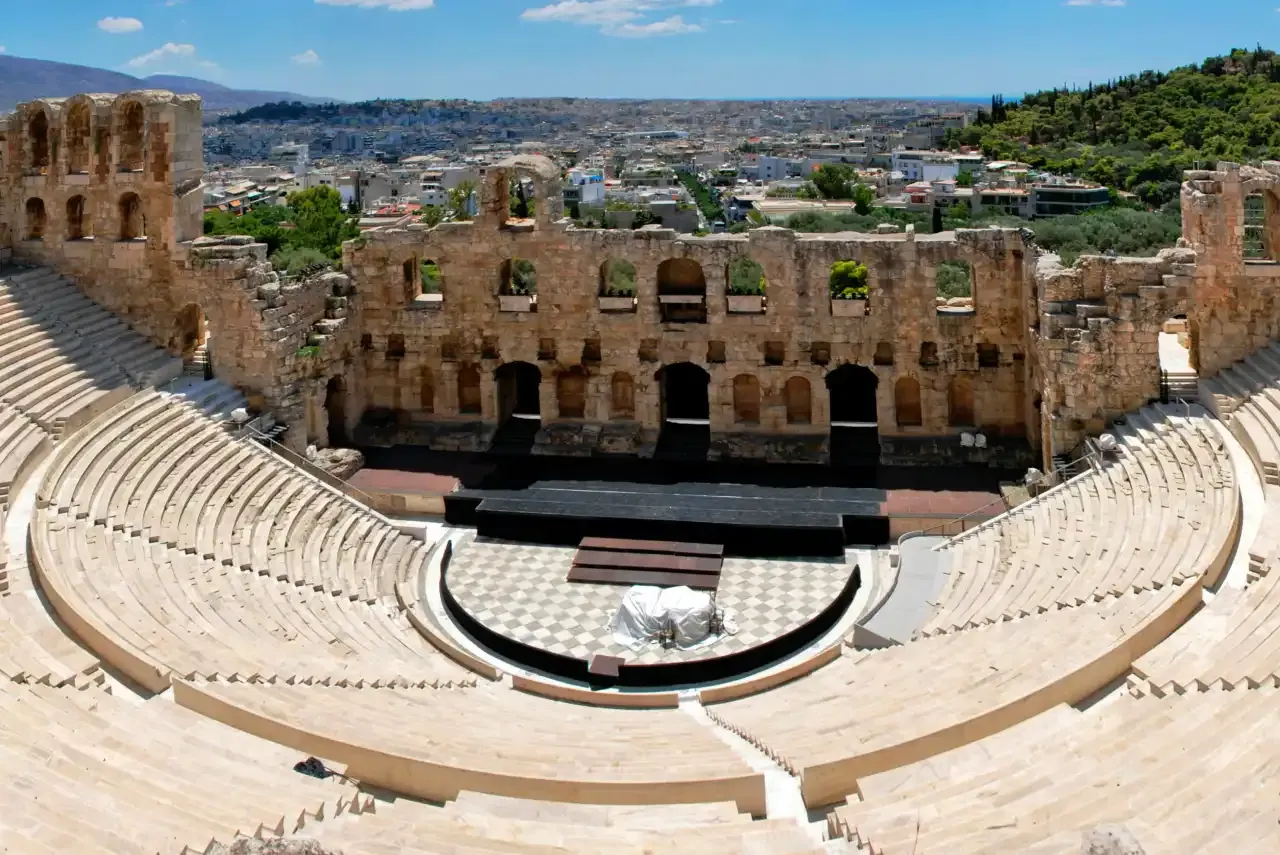
Odeon of Herodes Atticus
Located on the southwestern slope of the Acropolis, this well-preserved Roman theater was built in 161 CE and still hosts performances today. The steep stone seating carved into the hillside could accommodate 5,000 spectators, and the restored marble seats and stage area give visitors a clear sense of ancient theatrical experiences. Even if you can’t enter during performances, viewing this impressive structure from above demonstrates how the Acropolis served cultural as well as religious purposes.
Estimated visit time: 15-20 minutes.
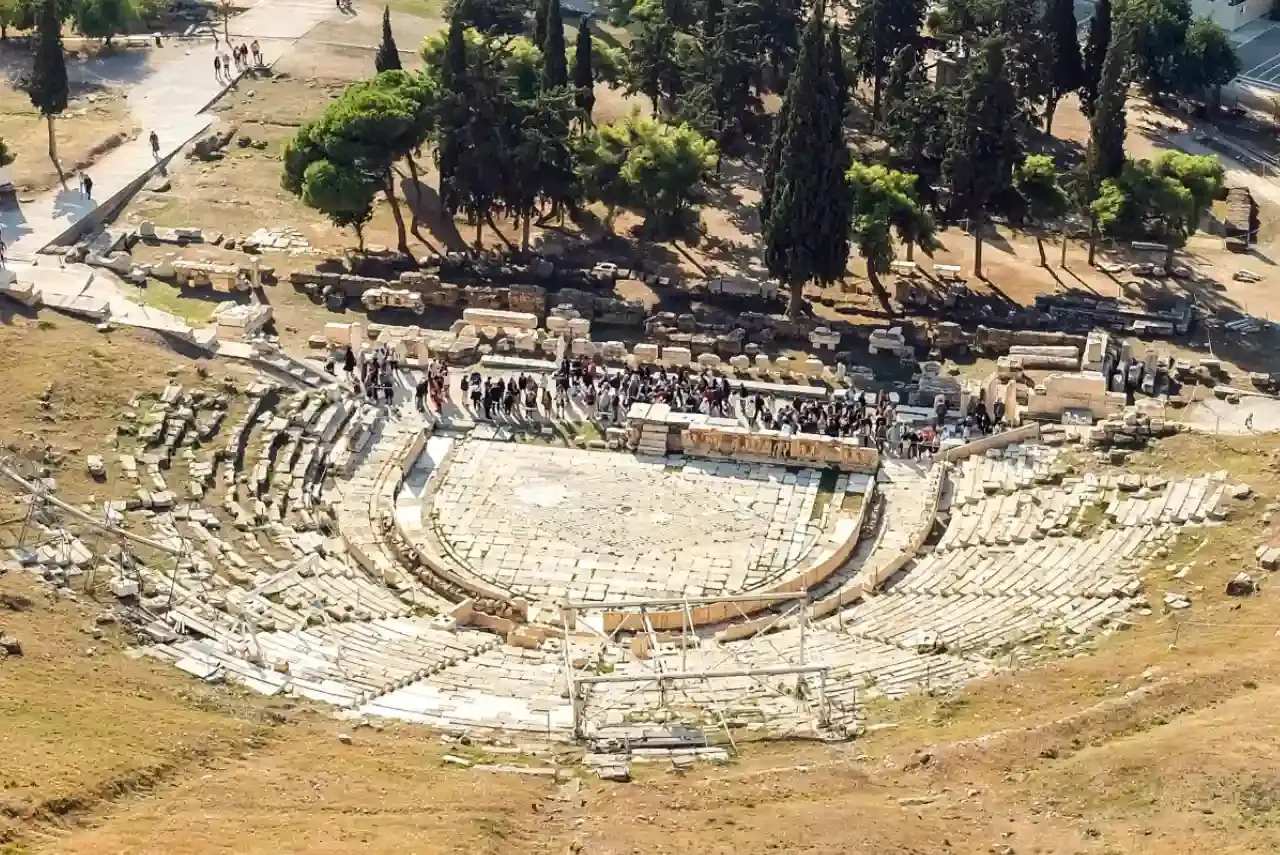
Theatre of Dionysus
Conclude your visit at the birthplace of Greek drama, where the works of Aeschylus, Sophocles, and Euripides were first performed. Located on the southern slope, this ancient theater reveals the evolution of dramatic architecture through its various construction phases from the 5th century BCE through Roman times. The surviving marble thrones reserved for priests and officials, along with the remains of the stage and orchestra, help visitors imagine the religious festivals and dramatic competitions that shaped Western theater tradition.
Estimated visit time: 20-25 minutes.
Location of the Acropolis
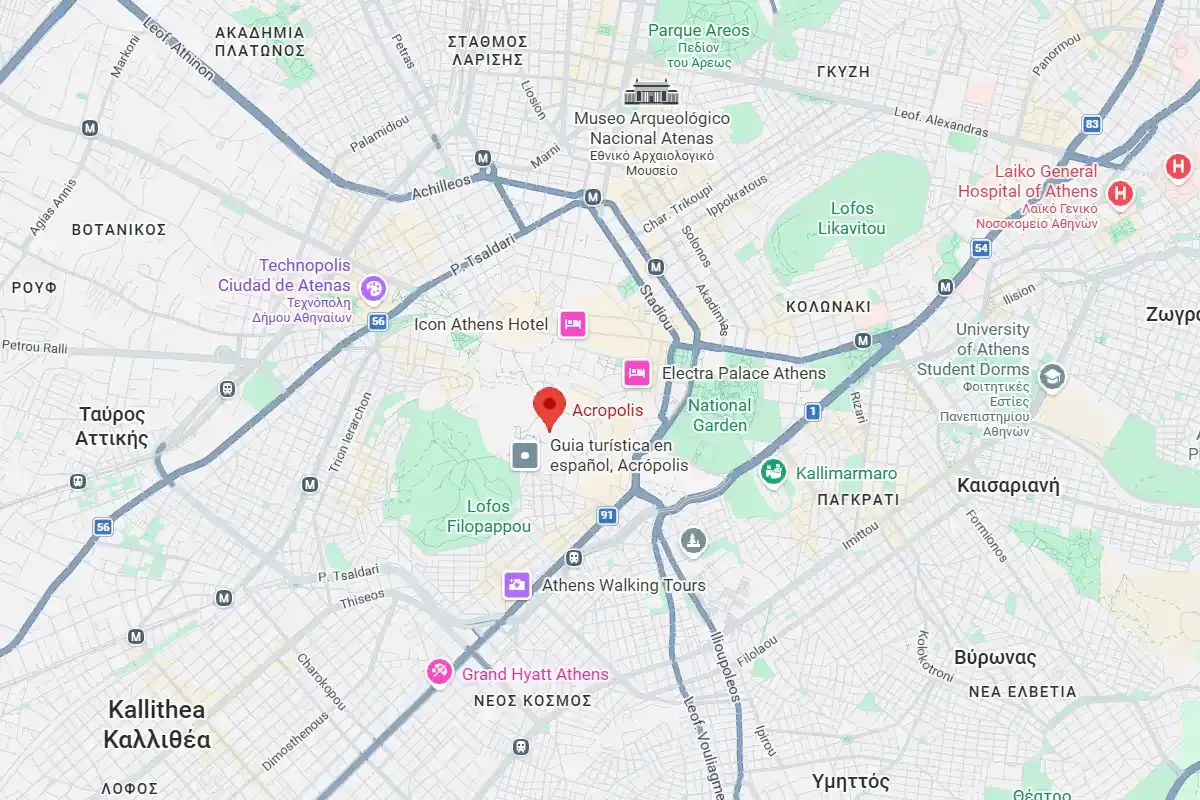
Location of the Acropolis
Address: Athens 105 58, Greece.
The Acropolis of Athens is located on a rocky outcrop above the city of Athens, Greece. It is situated in the central part of Athens, just a short distance from the historical district of Plaka.
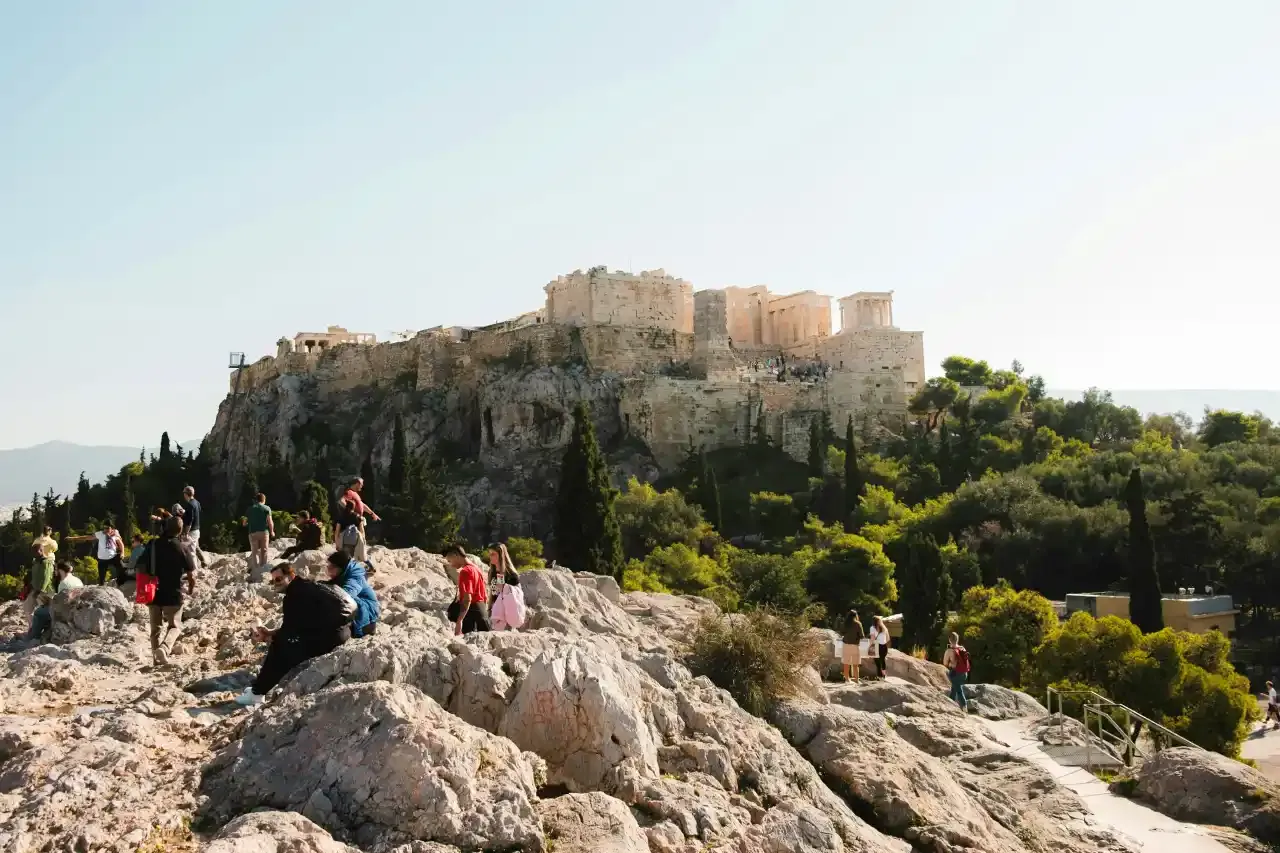
How to get there?
There are several ways to arrive at the Acropolis of Athens. One of the most convenient options is to take the Athens Metro to the Acropolis Station, which is located just a short walk from the entrance. If you prefer to take a bus, several public bus routes have stops near the Acropolis, including routes 24, 40, and 230.
Taxis are also readily available in Athens and can drop you off at the entrance of the Acropolis. If you are driving, there are several parking options near the Acropolis, but it is recommended to park outside of the city center and take public transportation to avoid traffic and parking difficulties.