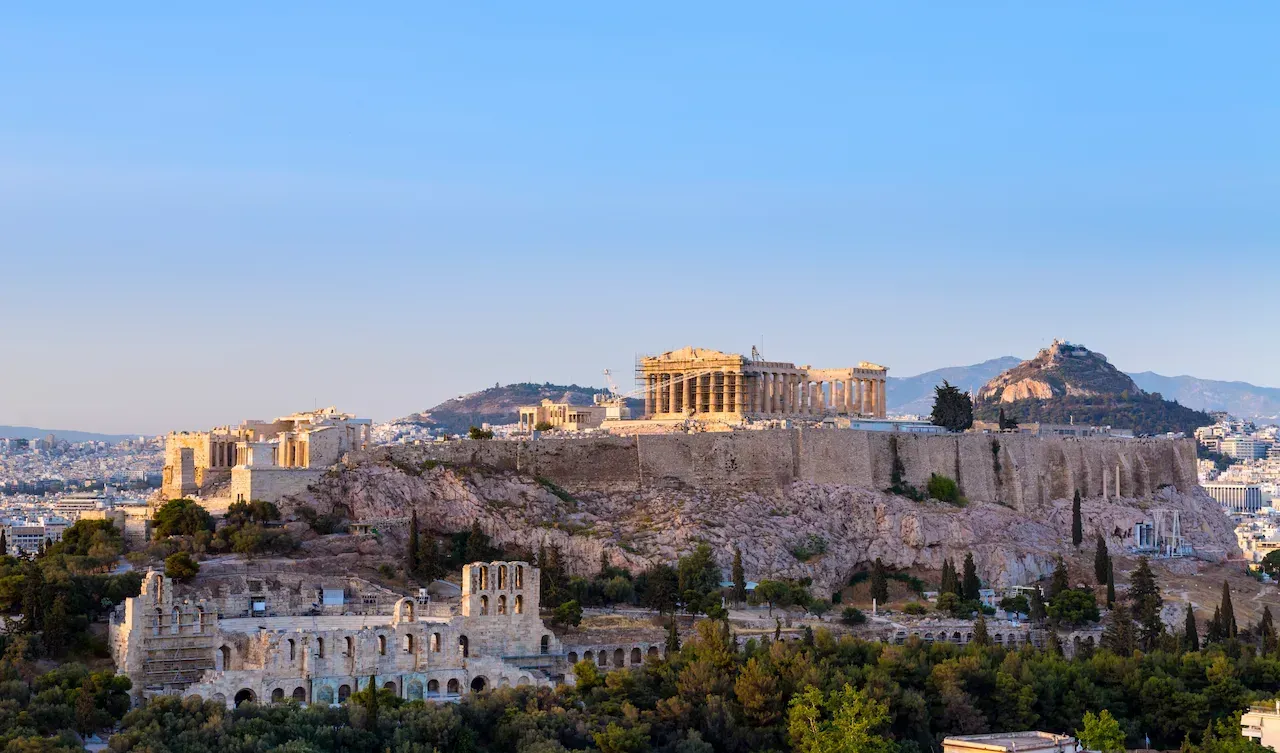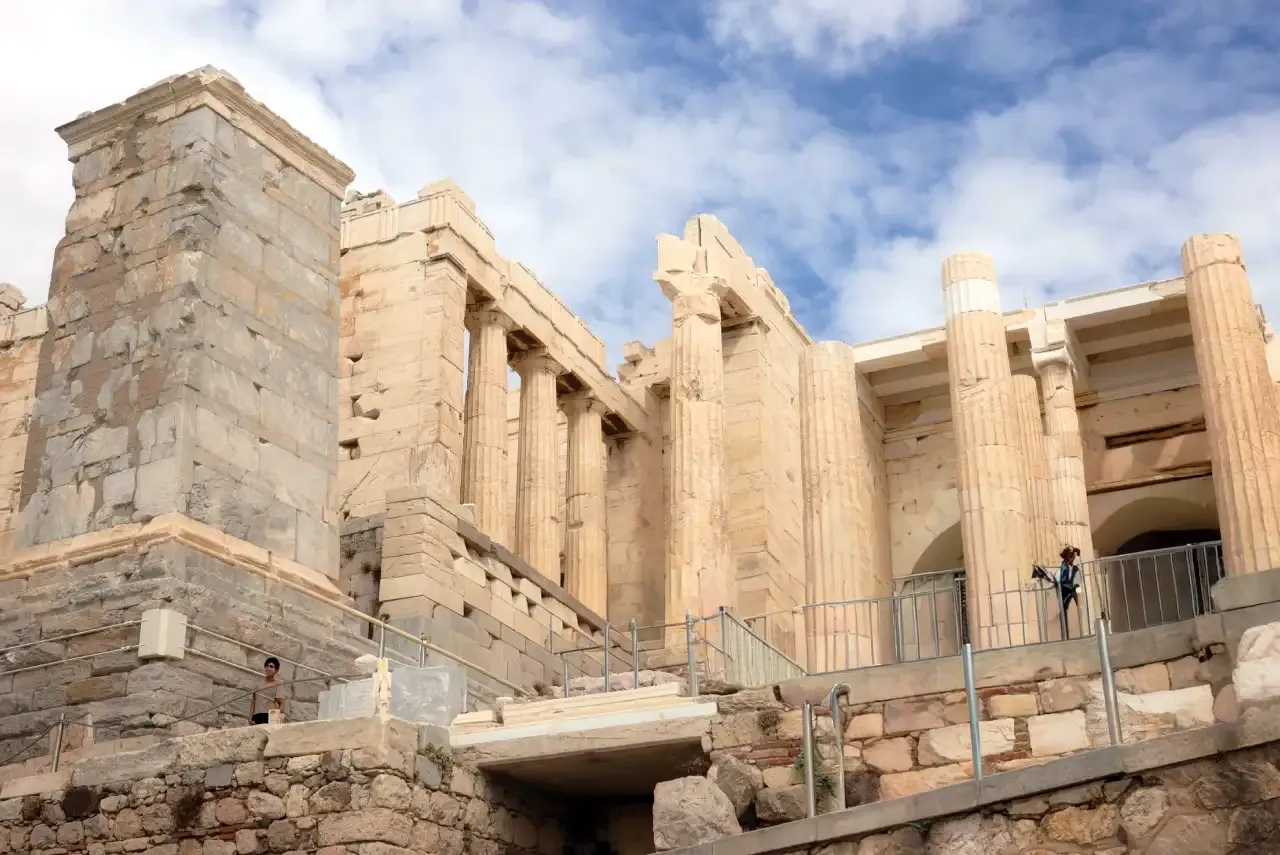
Propylaea, Acropolis
The Propylaea is the monumental gateway that serves as the grand entrance to the Acropolis of Athens. Designed by the architect Mnesicles, it is celebrated for combining both Doric and Ionic architectural orders to create an impressive sense of arrival for pilgrims.
Where is the Propylaea?
Where is the Propylaea?
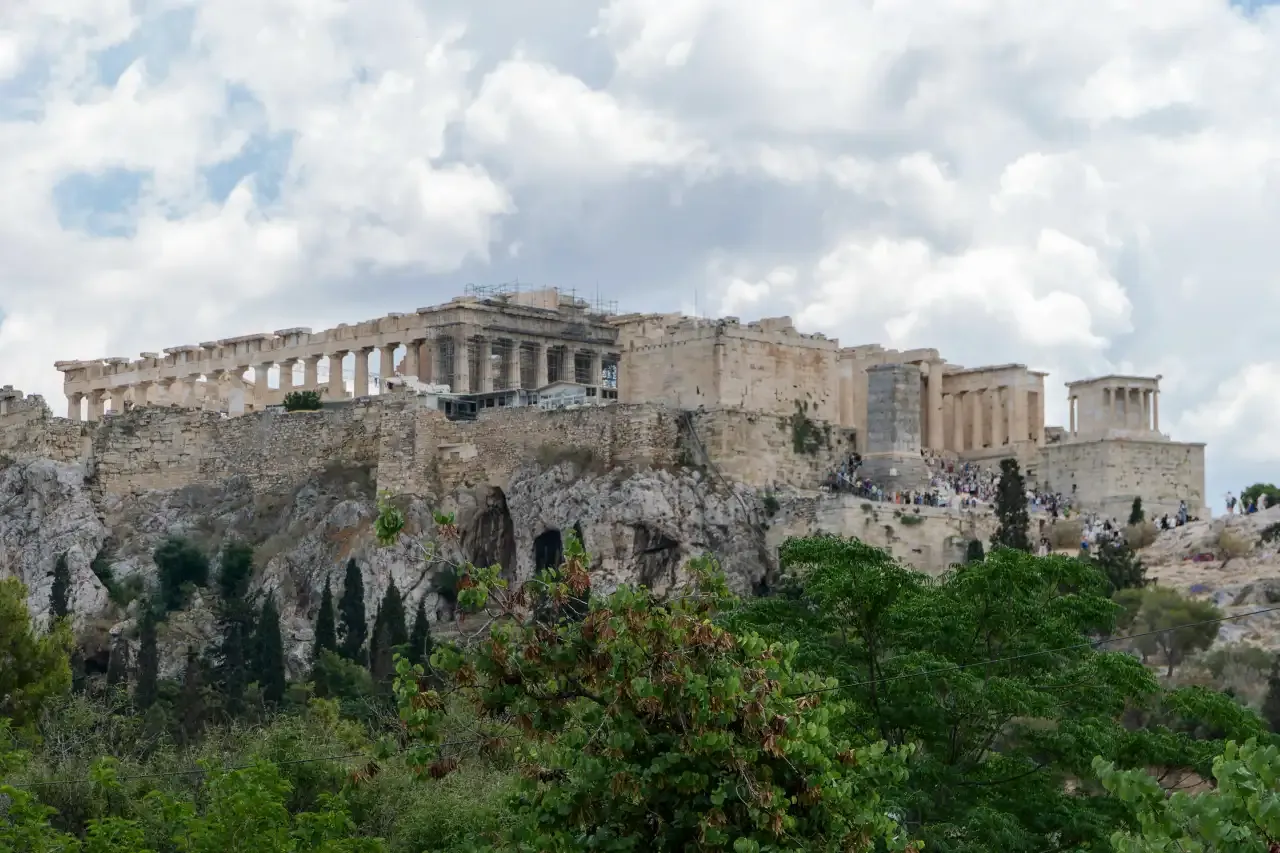
The Propylaea is located in Athens, Greece, situated directly on the western edge of the Acropolis hill. Serving as the grand, monumental entrance to the entire archaeological complex, it functions as the definitive gateway that all visitors must pass through to reach the hilltop.
It sits positioned right at the top of the steep, stone ramp on the western slope, flanked by the Temple of Athena Nike. Because of its prominent location at the main threshold, this ancient structure offers travelers their very first close-up look at the classical architecture of the historic sanctuary.
Do you need tickets for Propylaea?
Yes, you do need a ticket to visit the Propylaea. Because this monumental gateway is structurally built directly into the western edge of the Acropolis, it sits located inside the main security checkpoints of the archaeological site.
Therefore, you cannot walk through or closely approach the Propylaea without purchasing a admission ticket for the Acropolis. Once you scan your ticket at the hillside entrance gates below, the path naturally guides you straight up the stone ramp and directly through the historic columns of this grand structure.
Book tickets to visit Propylaea
Features and architecture of the Propylaea
A monumental entrance way that was built in the fifth century BC, during the height of Athens’ power, and was designed by the architect Mnesicles. The Propylaea of the Acropolis served as the main entrance to the sacred hill. It is regarded as one of the best works of Greek architecture, and it still serves as an inspiration to designers and artists.
History of Propylaea
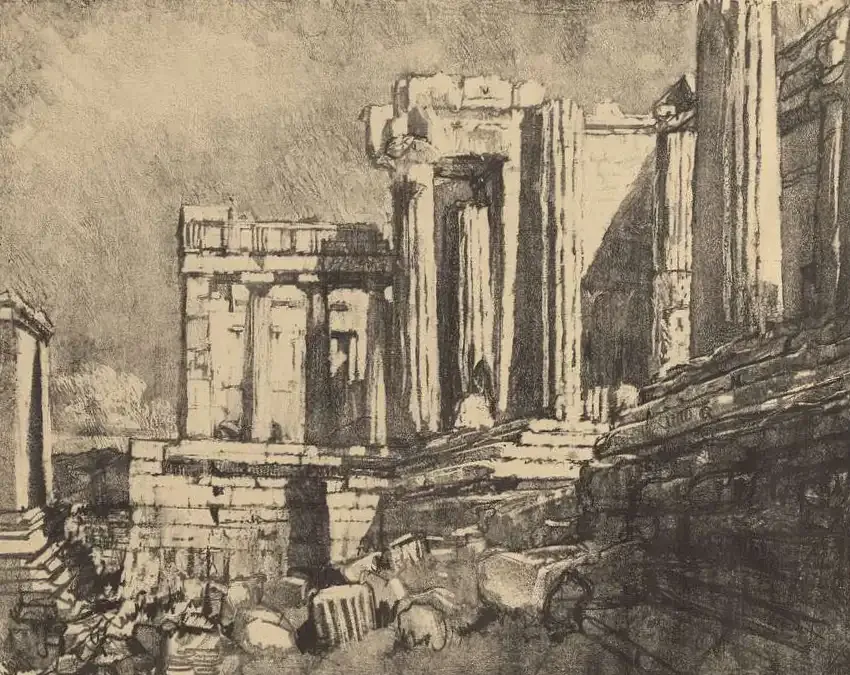
In 437 BC, the architect Mnesicles began constructing the Propylaea as the formal entrance to the Athens Acropolis. This project followed the Athenian victory in the Greco-Persian Wars and aimed to represent the city's status. However, the outbreak of the Peloponnesian War in 431 BC forced a halt to the labor. Work remained suspended for two decades until the structure reached completion in 410 BC.
For centuries, the Propylaea functioned as the primary gateway for religious processions and cultural ceremonies held on the hill. Despite the political shifts and military conflicts of the period, the building stood as a central symbol of Athenian influence and architectural development during the fifth century BC.
Why was the Propylaea never finished?
As we mentioned before, the construction of the Propylaea was abruptly halted in 431 BC due to the outbreak of the Peloponnesian War between Athens and Sparta. As resources and funds were rapidly diverted toward the war effort, the ambitious building project was suspended.
Additionally, political friction and religious objections from conservative Athenians blocked parts of the original plan, as the massive structure threatened to encroach upon neighboring sacred ground, such as the sanctuary of Artemis Brauronia. When the war finally ended in 404 BC, Athens had lost its empire and wealth, leaving the monumental gateway permanently incomplete, with several planned wings left unbuilt and many stone blocks unfinished.
Restoration of the Propylaea
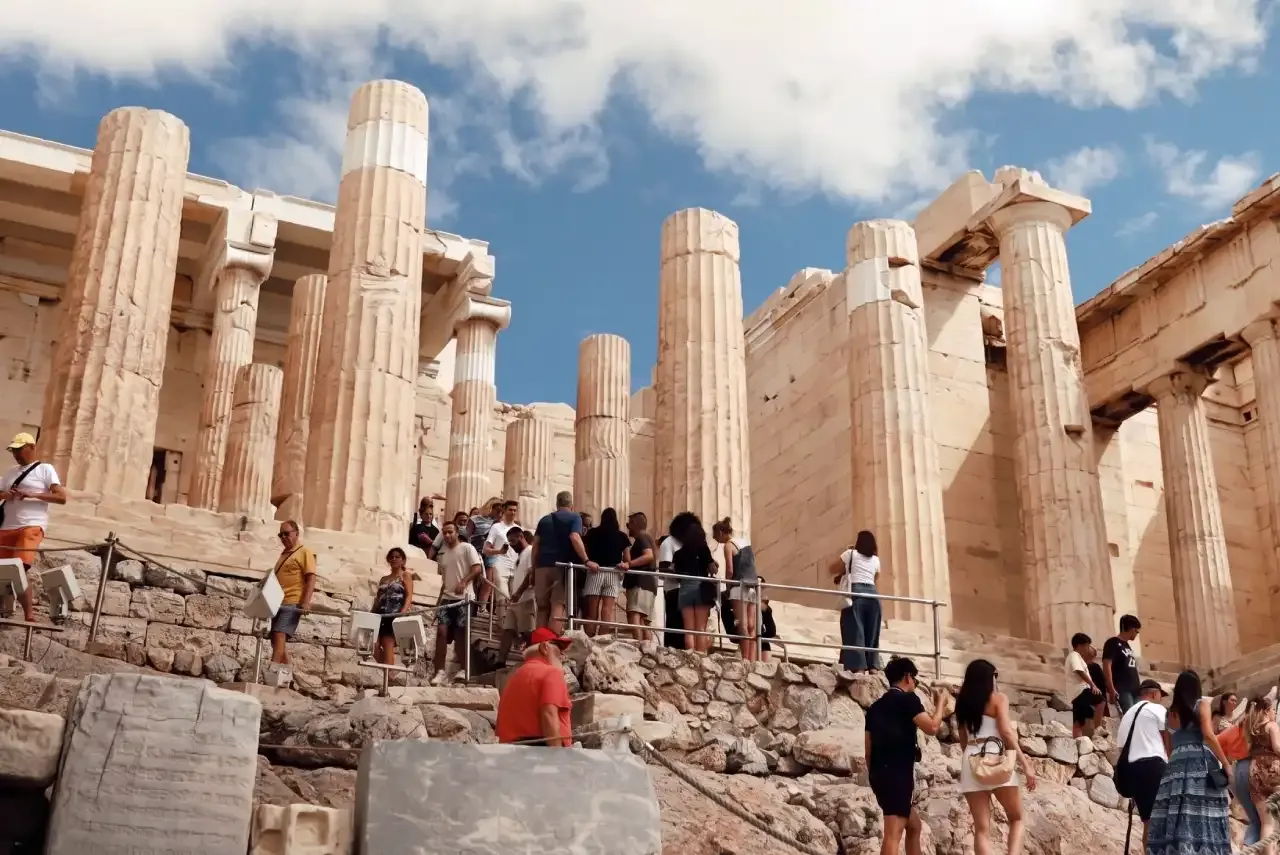
Restoration of the Propylaea
In the centuries that followed, the Propylaea underwent several modifications and repairs, as it was damaged by earthquakes, wars, and other natural disasters. However, its basic design and layout remained unchanged, and it continued to serve as an iconic symbol of ancient Greek architecture and culture.
Today, the Propylaea of the Acropolis is one of the most popular tourist attractions in Athens, and it continues to inspire architects, artists, and scholars from around the world.
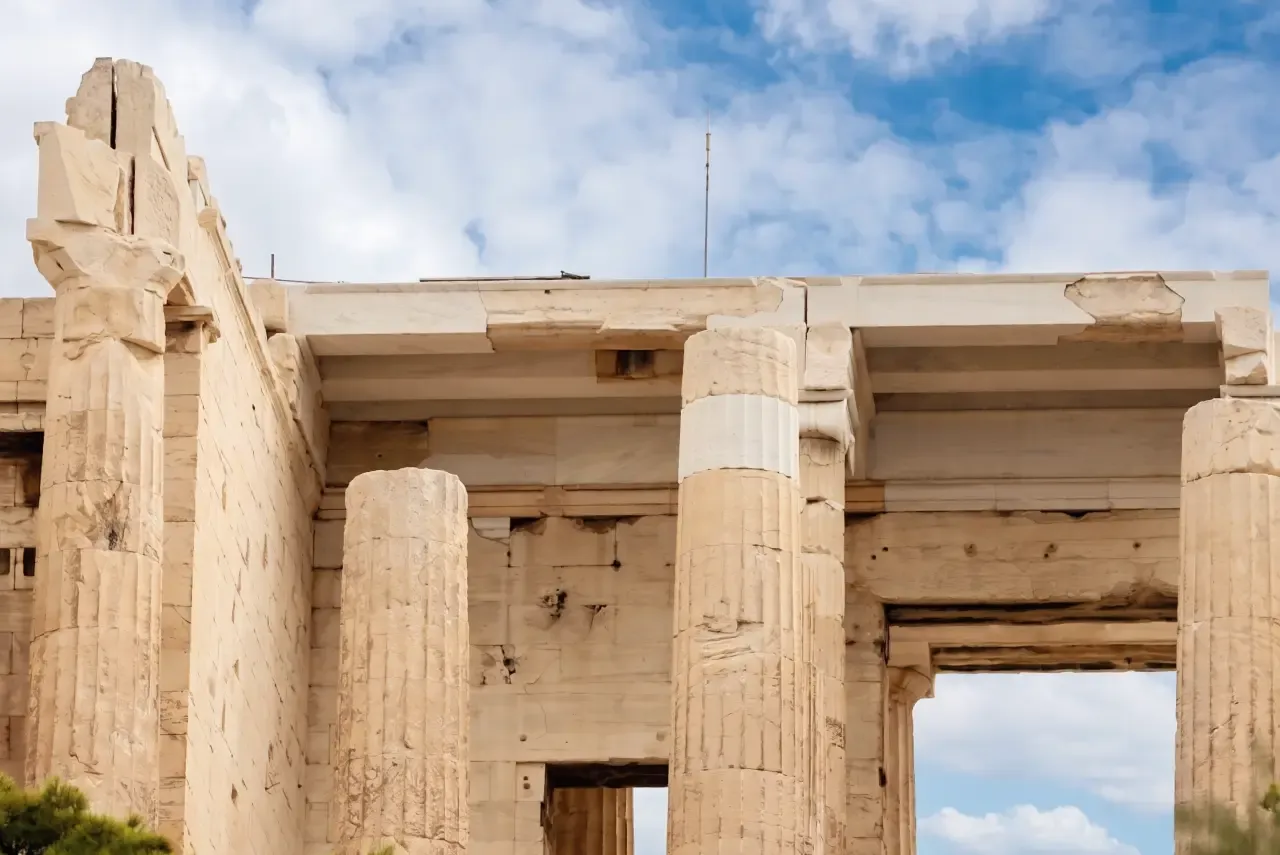
Architecture of the Propylaea
Propylaea can be considered a example of ancient Greek classical architecture. The central building of the Propylaea is a rectangular structure with a large hall with a marble floor. The hall is surrounded by columns, which support a coffered ceiling made of marble slabs. The columns are Doric in style, with fluted shafts and simple capitals. The walls of the central building are made of limestone blocks, and they are decorated with friezes and sculptures.
The two wings of the Propylaea have different heights and are asymmetrically arranged, in order to compensate for the sloping terrain of the Acropolis. The north wing is wider and lower than the south wing, which is taller and narrower. Both wings have Doric colonnades, which have columns that are made of Pentelic marble. The columns of the colonnades are fluted and have simple capitals, like those of the central building.
What to see at the Propylaea
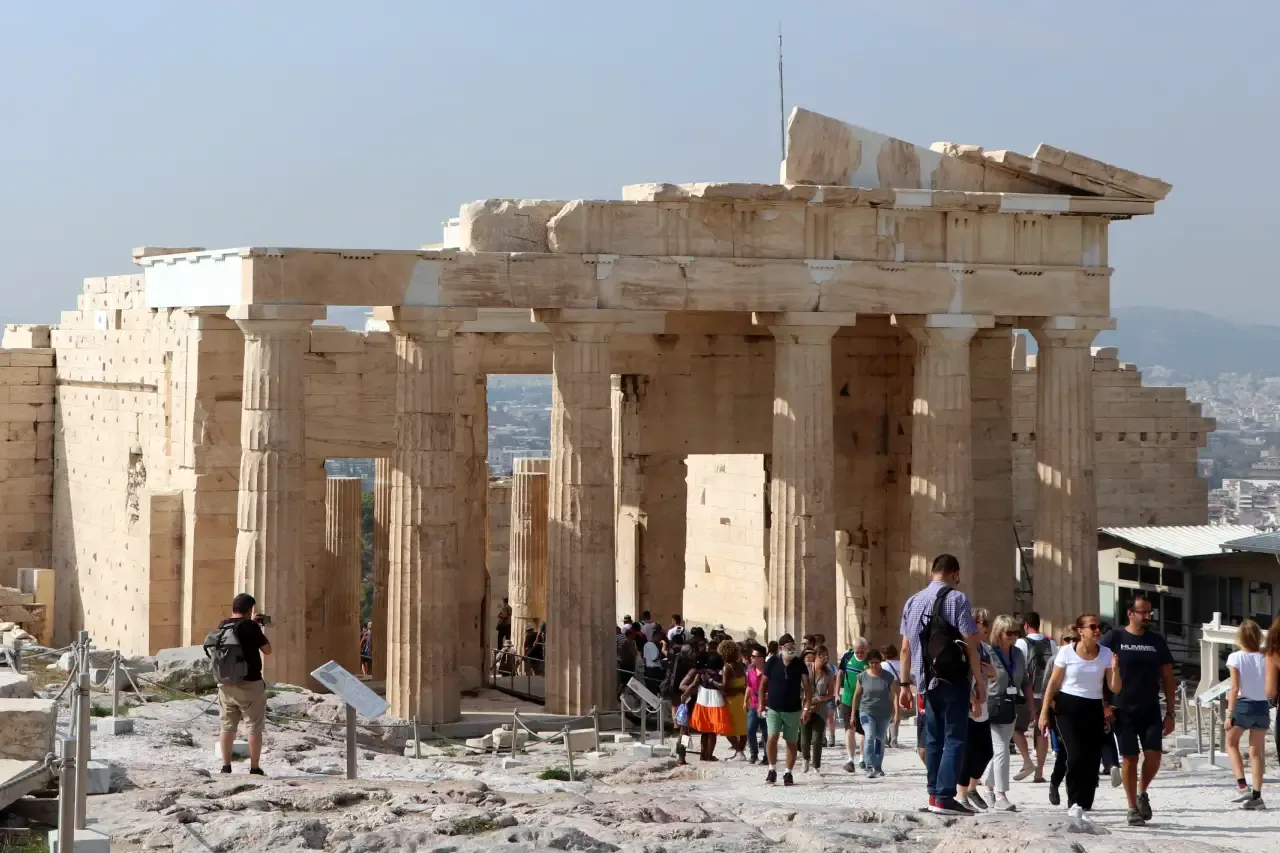
The Central Hall
The central hall of the Propylaea functions as the primary architectural core of the gateway to the Acropolis. This expansive area was specifically designed to accommodate large crowds during significant religious processions and state ceremonies in ancient Athens. Constructed with a floor made of high-quality marble, the space is defined by its structural alignment and the rows of columns that support the massive stone ceiling.
The hall served as a transitional zone, marking the boundary between the secular city and the sacred precinct. Its layout demonstrates the advanced engineering techniques of the fifth century BC, providing a functional yet imposing environment for citizens.